Best Influencer Platforms for Agencies: Food & Beverage
A sourced comparison of influencer marketing platforms for agencies with food and beverage clients: Jupiter, CreatorIQ, Later, Captiv8, Upfluence, Archive, Aspire and GRIN, judged on multi-brand setup, client sharing and retail sales attribution.
The best influencer marketing platforms for agencies with food and beverage clients combine multi-brand setup, client sharing, retail sales attribution and food creator depth. CreatorIQ and Captiv8 suit multi-category rosters, Later suits social-first agencies, and Jupiter is built only for food and beverage CPG, with Instacart, receipt-verified and SPINS-based sales reporting.
Key takeaways
- Agencies with food and beverage clients should judge influencer platforms on multi-brand setup, client collaboration, retail sales attribution, food creator depth, product seeding, content approvals and pricing model.
- CreatorIQ's agency page lists talent pitch sheets, shared content review, exportable wrap reports and a co-branded view-only client database (checked 28 October 2026).
- Captiv8's Advanced tier lists an account hierarchy with sub-organizations, white labeling with a custom domain, an API and the Captiv8 Pixel for sales metrics.
- GRIN's pricing page lists no agency plan; multi-brand support starts on its Growth plan, and its sales tracking centers on Shopify.
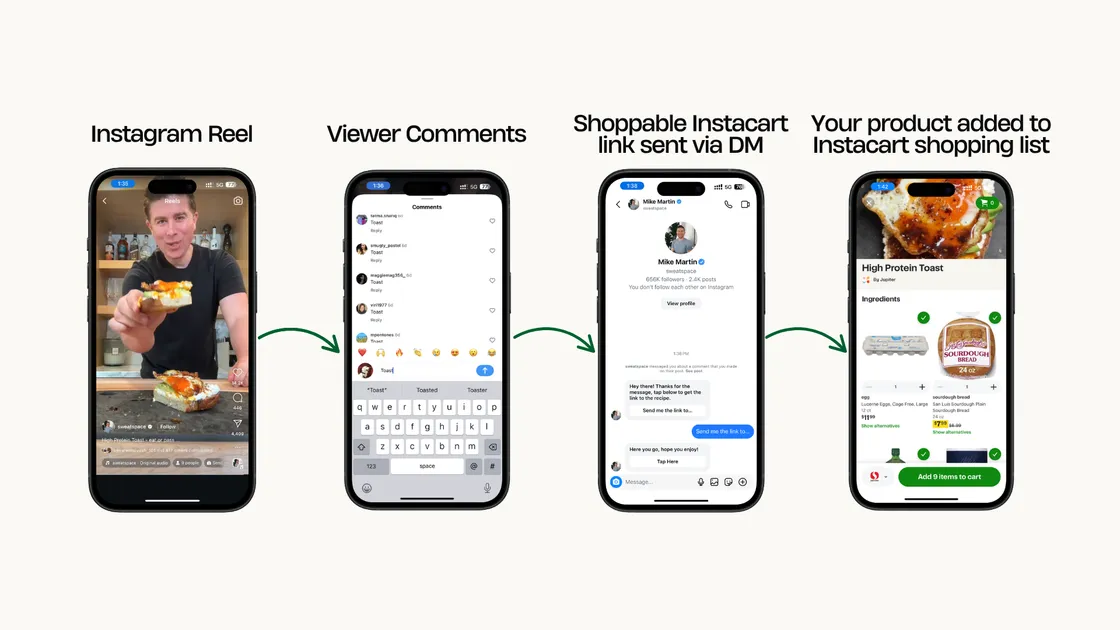
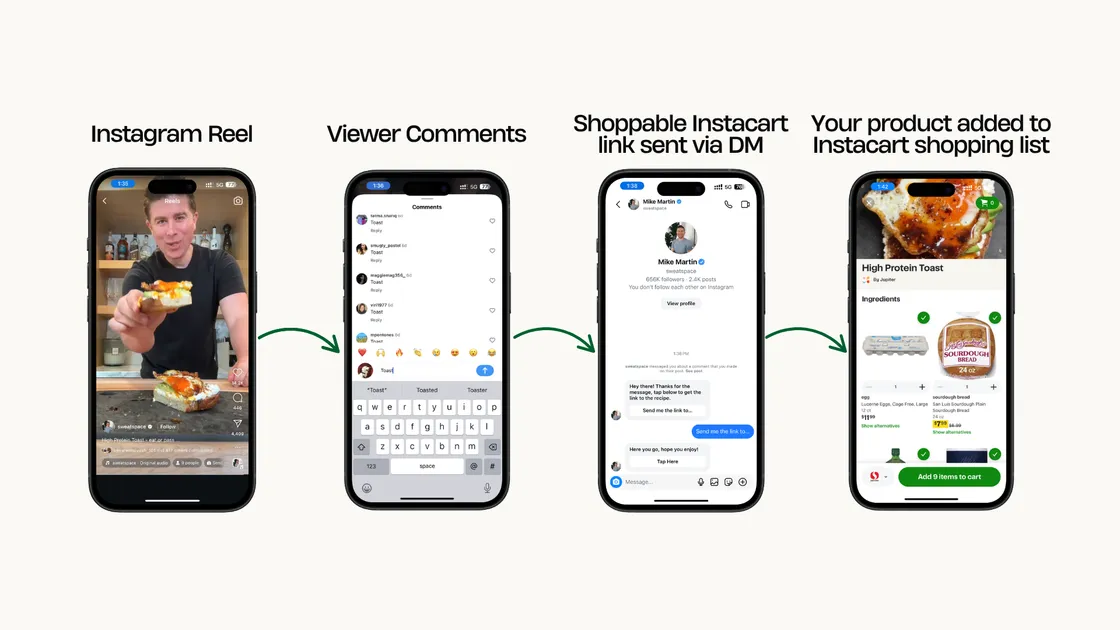
- Jupiter is built only for food and beverage CPG and reports Instacart comment-to-cart, receipt-verified in-store and SPINS-based sales results by brand.

On this page▼
- How should agencies judge an influencer marketing platform?
- Best influencer marketing platforms for agencies: comparison table
- Platform-by-platform notes
- Jupiter
- CreatorIQ
- Later Influence
- Captiv8
- Upfluence
- Archive
- Aspire
- GRIN
- Which platform fits which kind of agency?
- Demo checklist: bring a live client brief
- How Jupiter works with agencies
The best influencer marketing platforms for agencies with food and beverage clients do four things well: run several client brands in one account, give clients a clear view of the work, prove retail sales, and find creators who cook. On the vendor pages we reviewed, grocery retail attribution was the rarest of the four.
Our view: most agencies with food and beverage clients end up running two tools. An enterprise suite covers the multi-category roster, and a food specialist covers the grocery clients whose buyers ask about Instacart and in-store sales.
Jupiter works with agencies. It's one of the platforms compared below, and the comparison uses each vendor's own public pages, checked on 28 October 2026, so you can verify every claim before a demo.
Platform choice matters more for agencies than for single brands. In CreatorIQ's State of Creator Marketing 2025-2026 report, agency respondents reported average annual creator investment of $4.4M, against $2.9M for brands. That is a vendor-commissioned global survey, so treat it as directional for US agencies.
How should agencies judge an influencer marketing platform?
Judge it on the work you repeat for every client. A platform that saves an hour on one brand saves twenty across twenty brands, and a gap that annoys one brand team becomes a margin problem for an agency.
Criterion | What to test in a demo | Why it matters for food and beverage clients |
|---|---|---|
Multi-brand setup | Switch between two client brands and filter results to one | Every client report must show only that client's data |
Client collaboration | Share a creator shortlist and a campaign report with a client | Approvals stall when clients can't see the work |
Retail sales attribution | Show sales evidence for a brand sold through grocery retail | Grocery buyers ask about Instacart and in-store sales, not checkout revenue |
Food creator depth | Search for recipe creators near a specific retailer's stores | Food clients need creators who cook, in the regions where the product sells |
Product seeding | Ship product to creators and track who posted | Most food programs start with seeding before paid posts |
Content approvals | Approve, request changes and reject with a reason | Food content carries claims and disclosure risk |
Pricing model | Ask how cost scales as you add clients | Seat, brand and fee structures change agency margin |
Best influencer marketing platforms for agencies: comparison table
This table summarizes what each vendor's public pages say. Where a page didn't mention a capability, the cell says so; that doesn't prove the platform lacks it, so ask in your demo.
Platform | Built for | Multi-brand or agency setup | Client collaboration | Sales attribution listed | How you buy | Source (checked 28 Oct 2026) |
|---|---|---|---|---|---|---|
Jupiter | Food and beverage CPG only | All Brands view with a brand filter on analytics | Content review queue with approval notes and rejection reasons; dedicated account manager | Instacart comment-to-cart, receipt-verified in-store trial, SPINS Sales Attribution dashboard | Book a demo | |
CreatorIQ | Enterprise brands and agencies across categories | Dedicated agency solution | Talent pitch sheets, shared content review, exportable wrap reports, co-branded view-only client database | Automated tracking and reporting; retail attribution not mentioned on the agency page | Request a demo | |
Later Influence | Agencies, freelancers and brands | Usable across brands and account teams with no seat limits | Real-time reports and curated creator lists shared without platform access; content preview and approval | Campaign reporting; retail attribution not mentioned | Request a demo | |
Captiv8 | Brands and agencies on its Advanced tier | Account hierarchy with sub-organizations and permissions | White labeling with your branding and custom domain on lists, briefs and reports | Captiv8 Pixel for sales and cart metrics; API to Looker, Tableau and Google Analytics | Request a demo | |
Upfluence | Brands and agencies, e-commerce focus | Agency workflow with client-specific approval steps | Content approval and client reporting in one platform | Revenue per creator, with Shopify and Klaviyo connections | Custom quote by module; 12-month minimum | |
Archive | Brands running UGC and social listening programs | Growth plan for multiple products or brands; Enterprise for multiple brands, regions or business units | Campaign reporting on every plan | Retail attribution not mentioned | Startup, Growth and Enterprise plans | |
Aspire | Brands, with Aspire's own managed agency services | No agency plan on the platform overview | Relationship management for campaigns, affiliates and seeding | ROI measurement with clicks and promo codes; Shopify integration | Request a demo | |
GRIN | Brands, e-commerce focus | Multi-brand on Growth plans and above; no agency plan listed | Content tracking for impressions and engagement | Shopify integration and affiliate tracking; retail attribution not mentioned | Published monthly plans plus a management fee on wallet deposits |

Test Jupiter on a real client
Bring a live food or beverage client brief. We'll build the creator shortlist and show how Instacart, in-store and SPINS results are reported by brand.
Book an Agency DemoPlatform-by-platform notes
Each note covers what the vendor says on its own pages and which agencies it suits. For brand-side comparisons, see our list of the best food influencer marketing platforms for CPG brands.
Jupiter
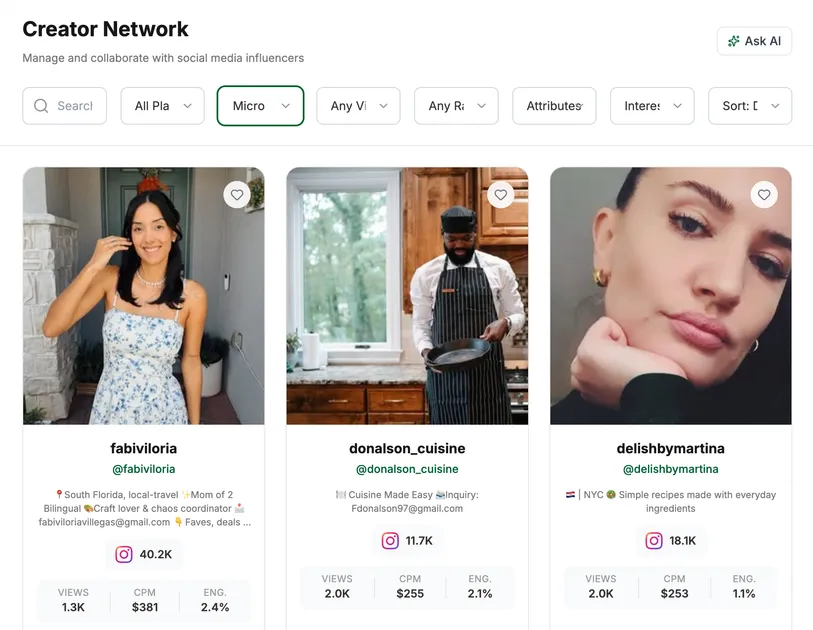
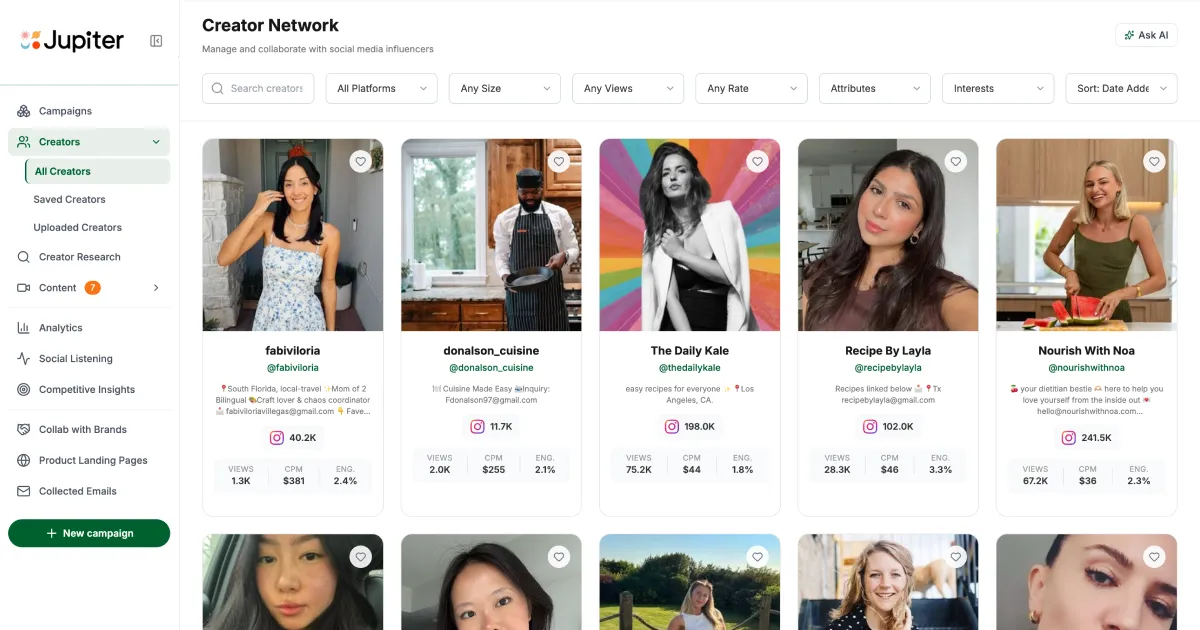
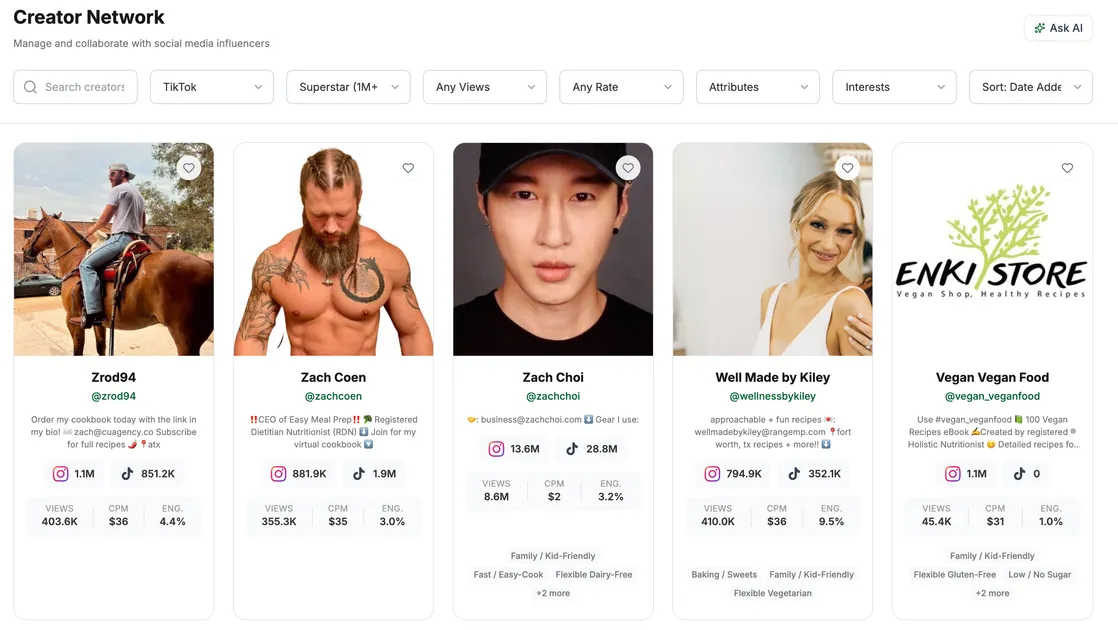
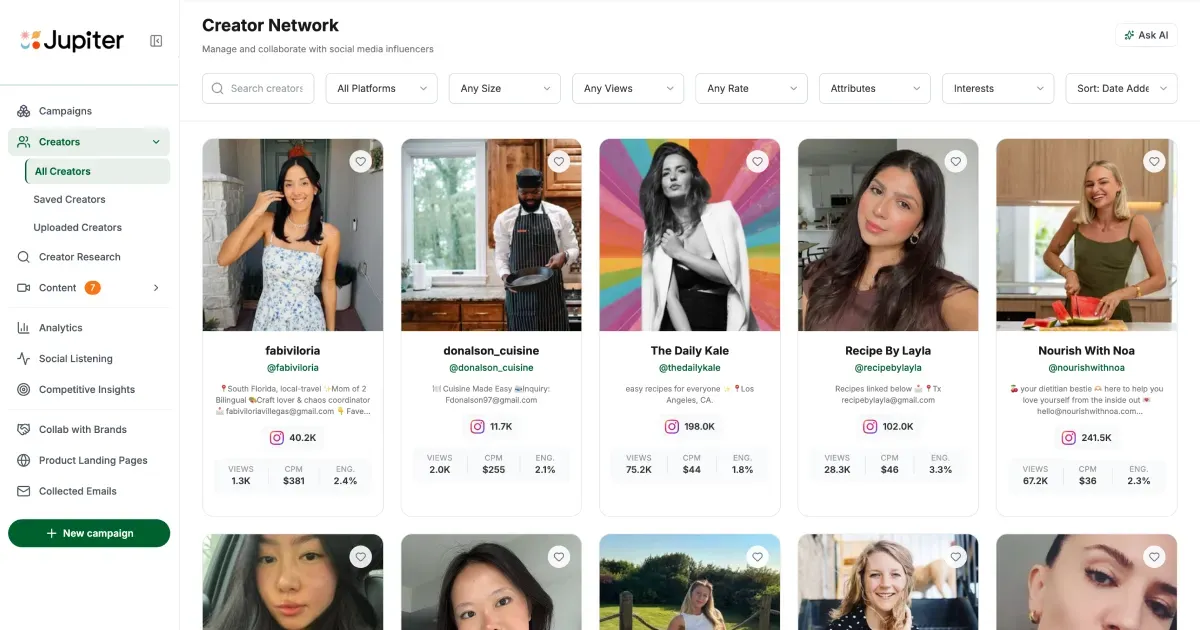
Jupiter is built only for food and beverage CPG brands. Agencies use it to find vetted recipe creators, use Creator Deep Research to build a shortlist, and target creators near the stores where a client's product sells.
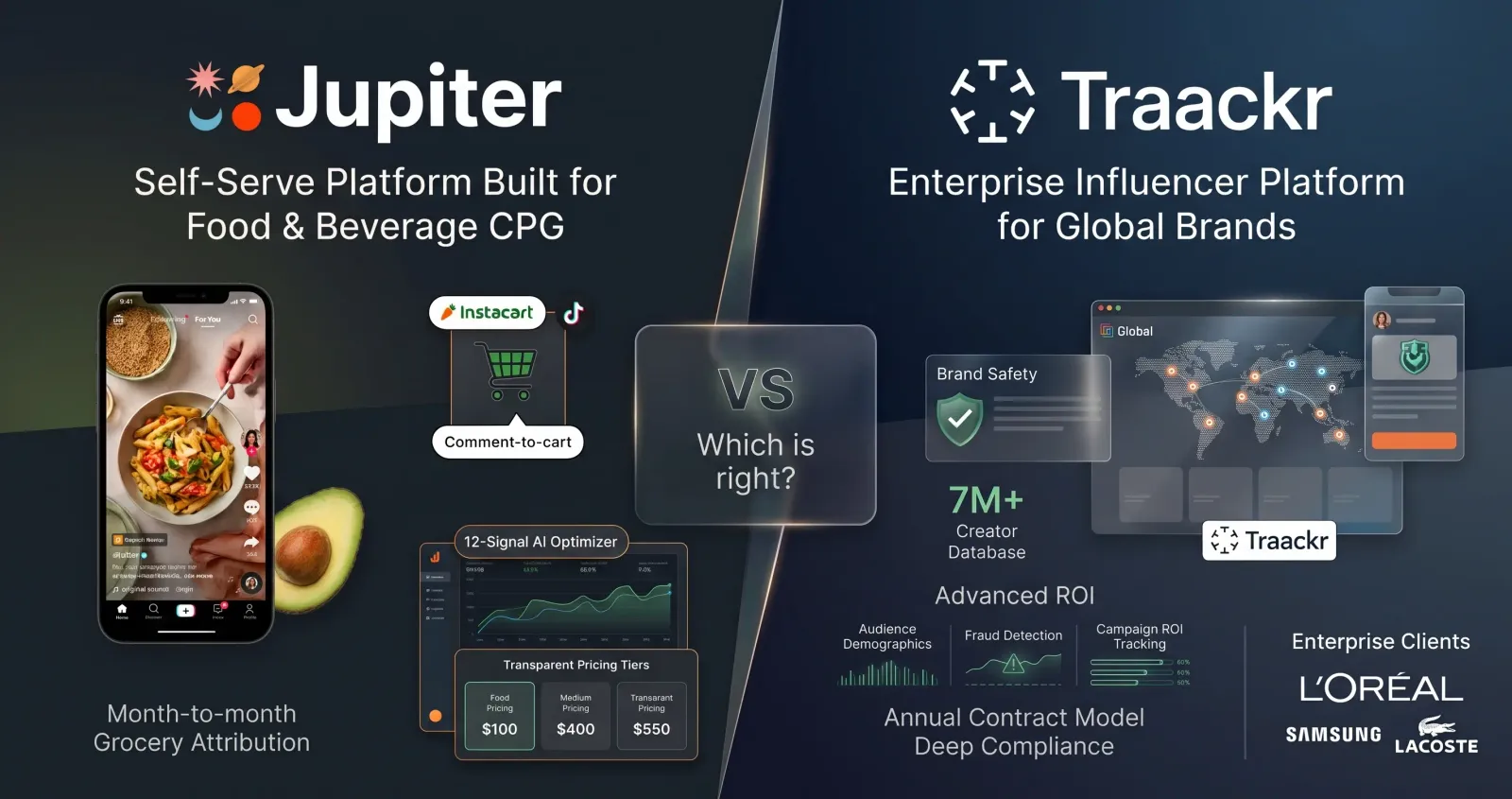
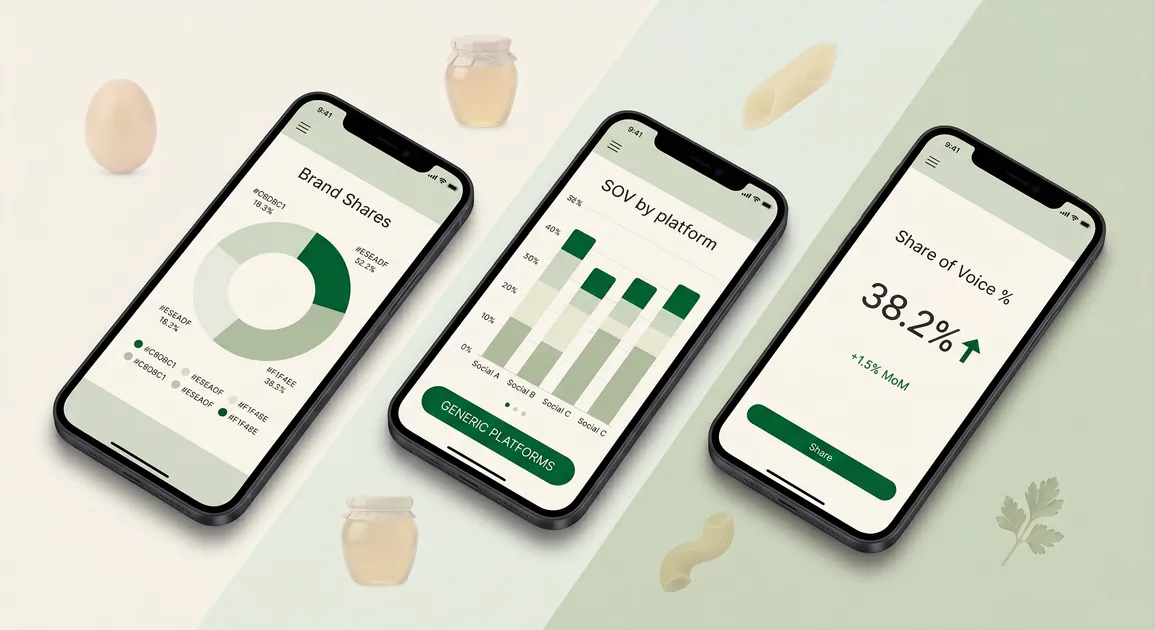
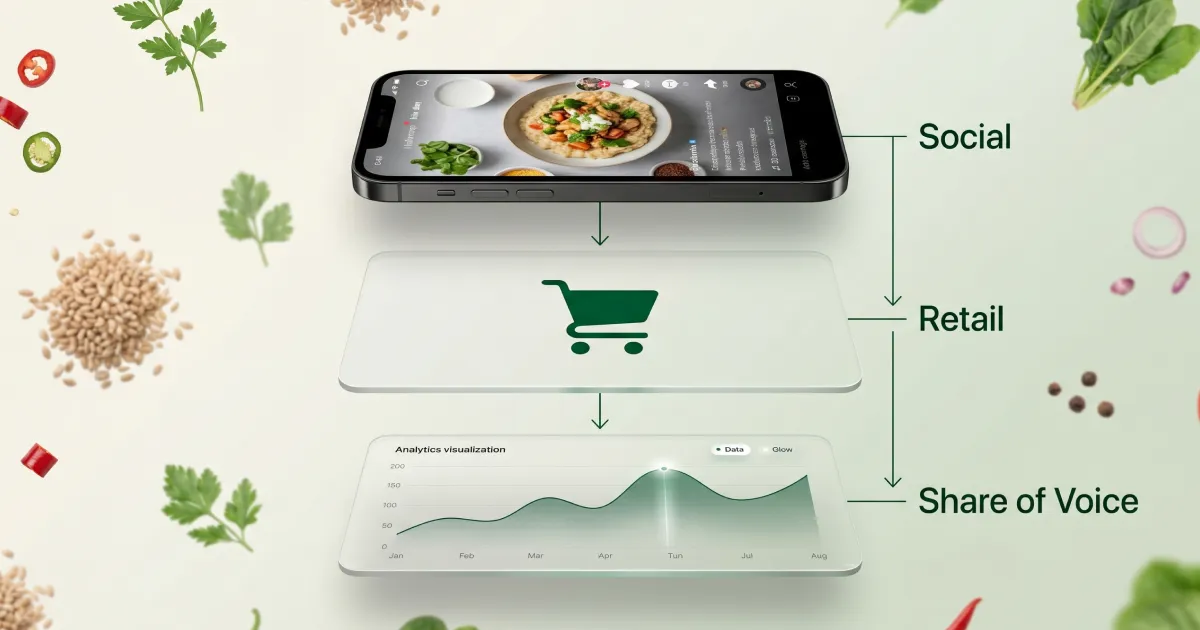
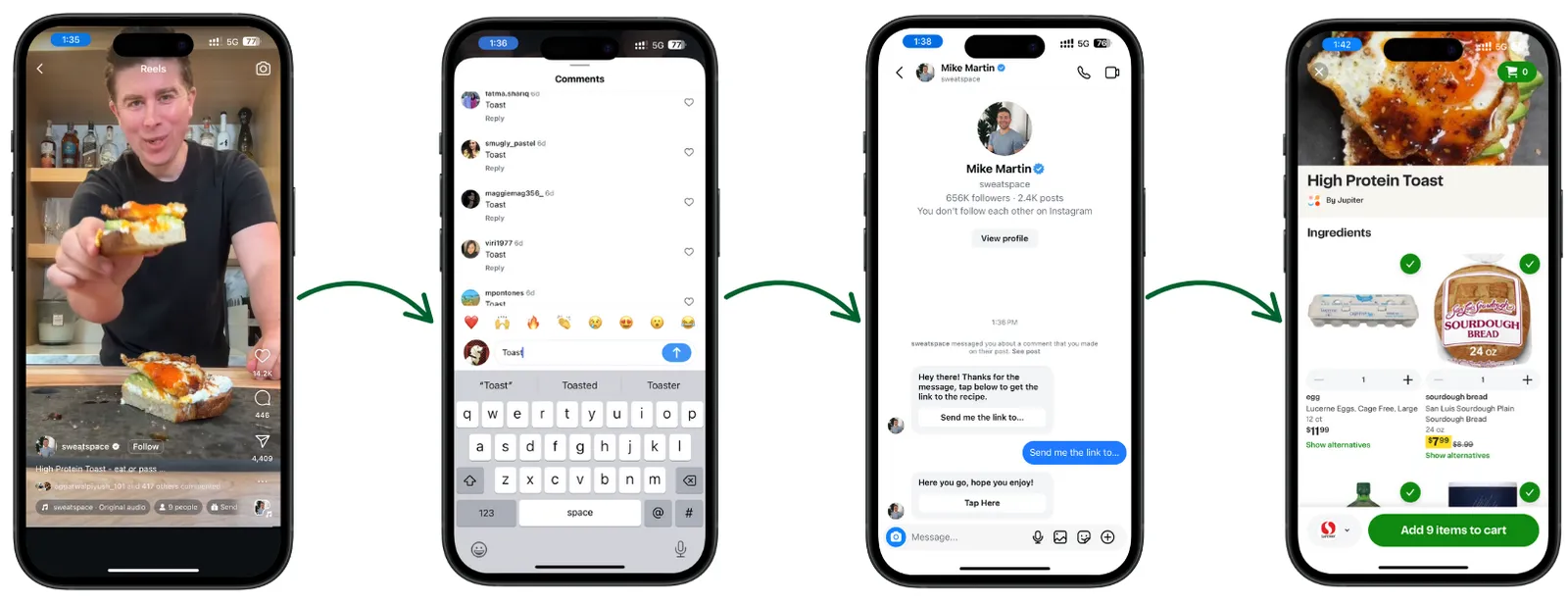
Its retail measurement is the difference. Instacart comment-to-cart attribution tracks cart adds to the creator and post, receipt-verified in-store trial confirms physical-store purchases, and the SPINS Sales Attribution dashboard compares campaign-period sales against a baseline. Share of voice tracking populates within 24 hours of adding a brand.
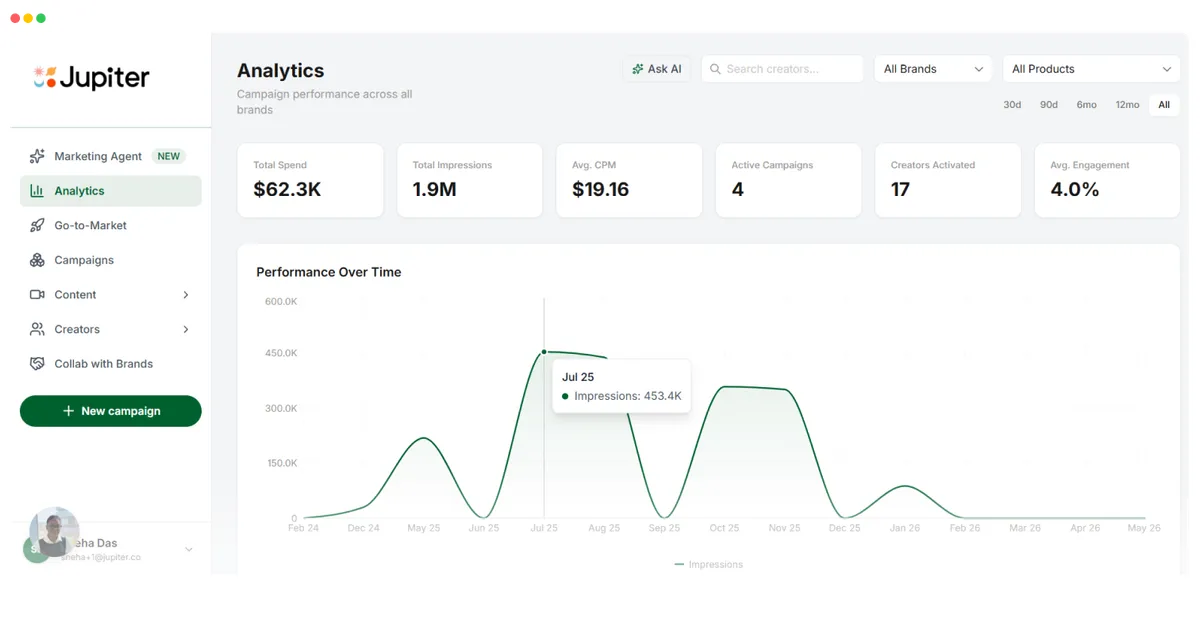
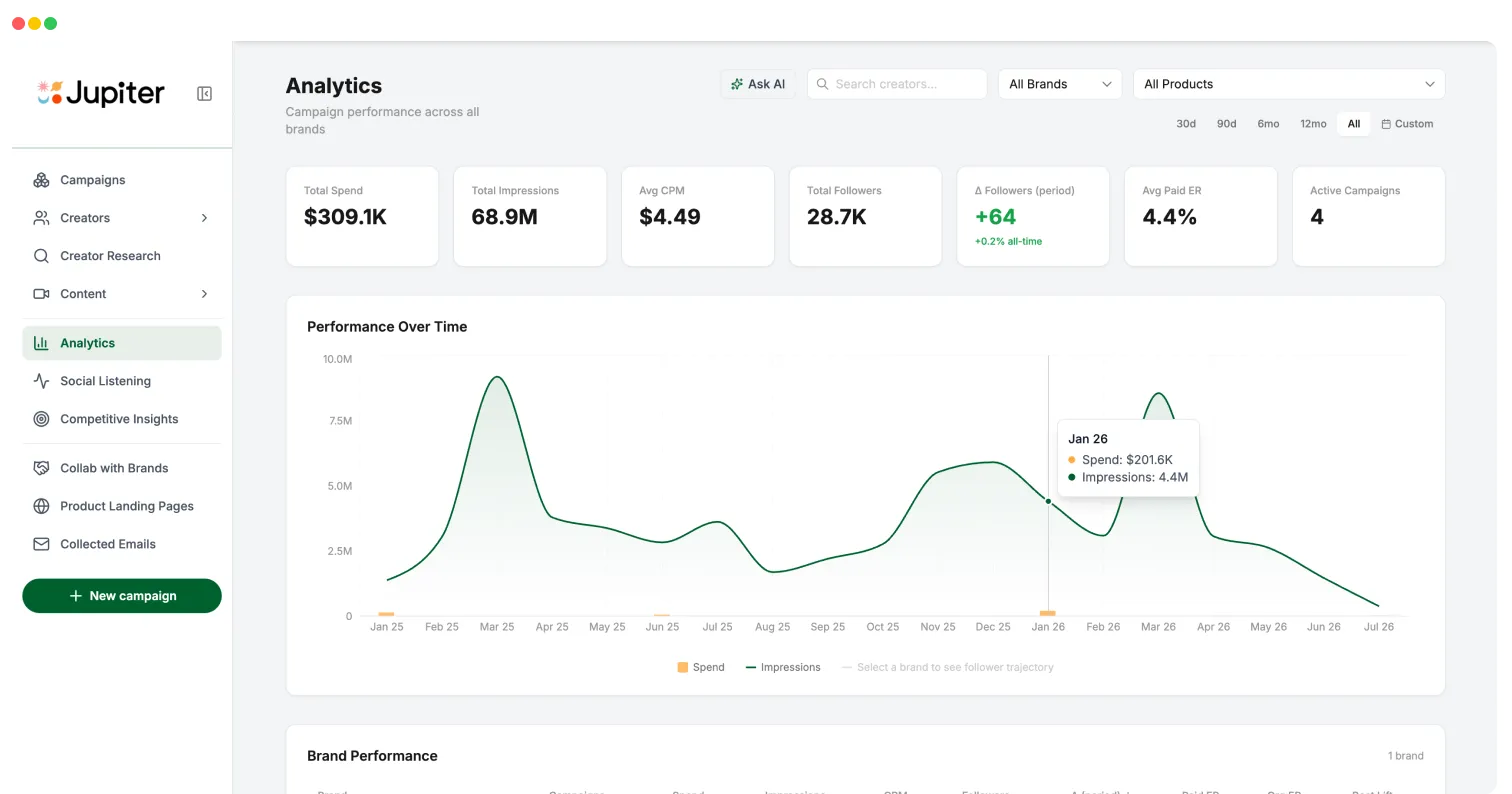
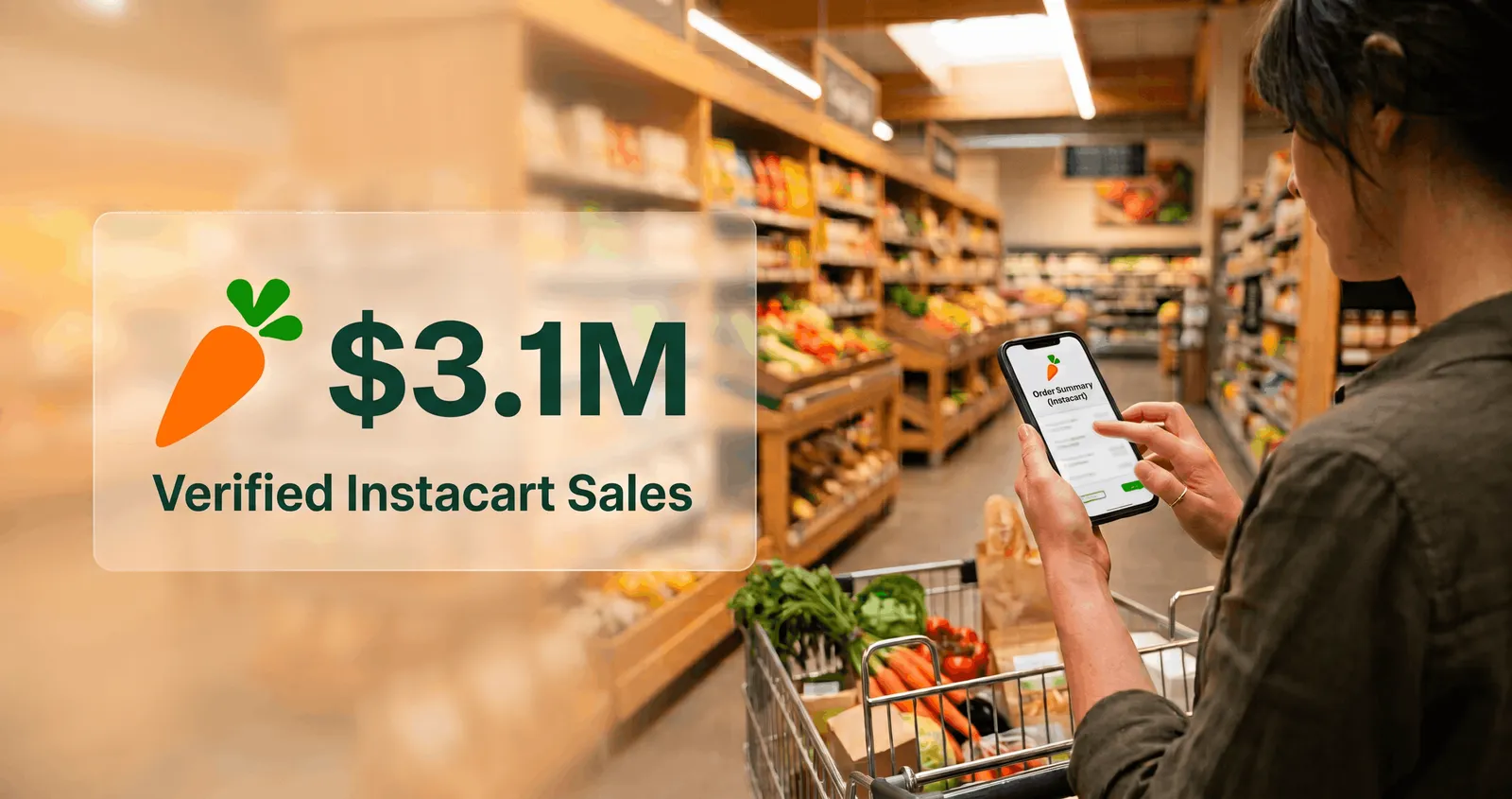
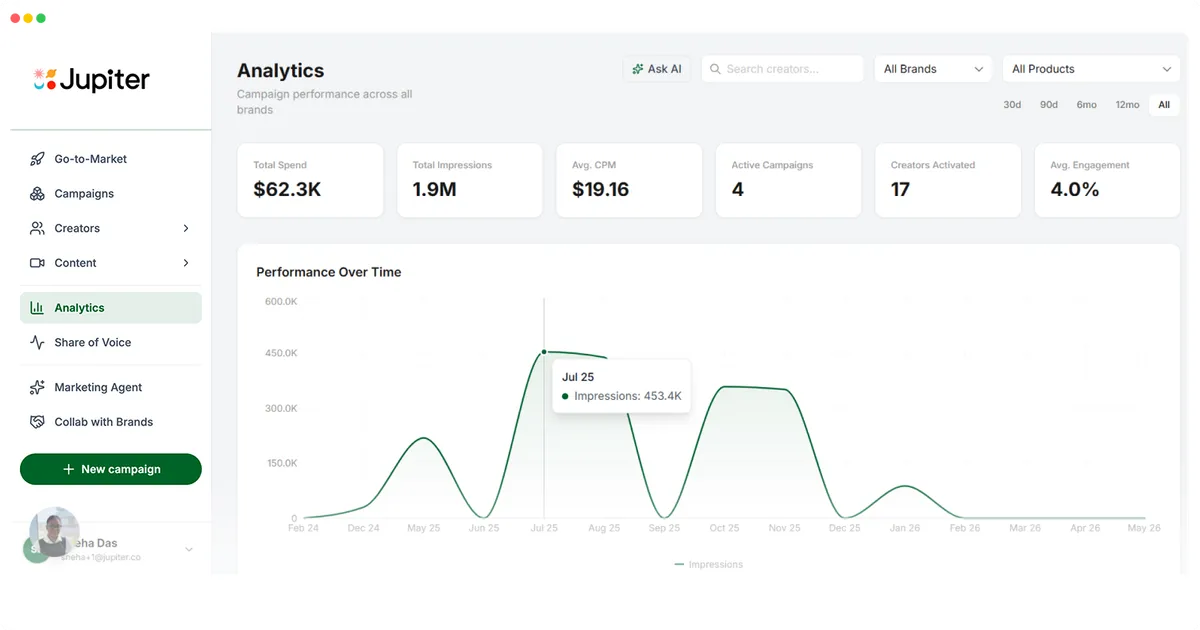
For agencies, the All Brands view and brand filter keep each client's analytics separate, and product seeding and content review sit in the same account. Across its network, Jupiter reports $3.1M in Instacart-verified grocery sales and a 4.4% average engagement rate. It doesn't cover non-food clients.
CreatorIQ
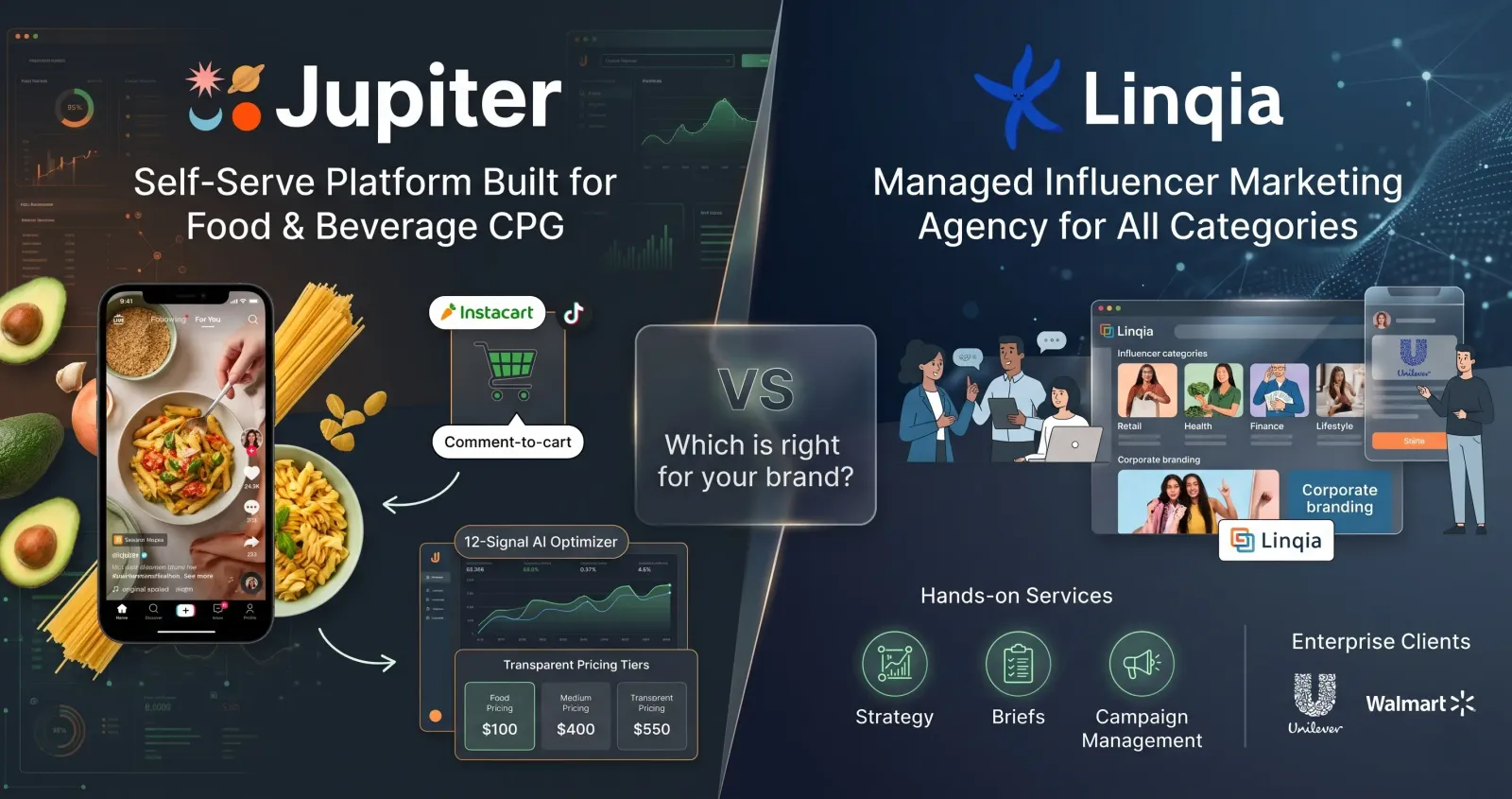
CreatorIQ has a dedicated agency solution. Its agency page lists search across millions of public creator profiles, talent pitch sheets for client approval, collaborative content review, and campaign wrap reports you can publish or export.
It also offers a co-branded, view-only extension of your creator database for clients. That suits full-service agencies with large, multi-category rosters. Our Jupiter vs CreatorIQ comparison covers the food-specific differences.
Later Influence
Later's agency page is built around client sharing. Agencies can share real-time campaign reports and curated creator lists with clients without giving them platform access, and preview and approve content before it goes live.
Later says the platform works across brands and account teams with no limits on seats, and it pairs influencer work with Later's social scheduling product. It fits social-first agencies that run organic social and creator programs for the same clients.
Captiv8
Captiv8's Advanced tier is the most explicit about agency structure. It lists an account hierarchy with sub-organizations and permission levels, white labeling with your brand identity and a custom domain, and an API that connects to Looker, Tableau and Google Analytics.
For sales, the Captiv8 Pixel tracks conversion metrics such as cart activity and checkout abandonment. That suits agencies with DTC or e-commerce clients and in-house analytics teams.
Upfluence
Upfluence pitches agencies one platform for discovery, outreach, contracts, content approval, payments and client reporting, with approval steps set per client. It also automates product seeding and reports revenue per creator.
Its pricing page lists custom quotes by module, a fixed platform fee, a 12-month minimum and a dedicated account manager. The sales tracking connects to e-commerce tools such as Shopify and Klaviyo, so it fits agencies whose clients sell mostly online. See Jupiter vs Upfluence for food brands.
Archive
Archive centers on UGC and social listening. Every plan includes social listening, creator search, campaign reporting and its Archie AI search agent, and the homepage describes detecting untagged creator videos across TikTok, Instagram and YouTube Shorts.
Archive's pricing page lists no agency plan. Its Growth plan covers multiple products or brands, and Enterprise covers multiple brands, regions or business units. It suits agencies whose clients want to find and reuse creator content at volume.
Aspire
Aspire's platform covers discovery, a creator marketplace, relationship management for campaigns, affiliates and product seeding, plus ROI measurement through clicks and promo codes. It integrates with Shopify.
Aspire also sells its own managed agency services, so an agency using the platform is working alongside a vendor that offers similar services to brands. Our Jupiter vs Aspire comparison covers food and beverage use cases.
GRIN
GRIN's pricing page lists Free, Starter, Growth, Scale and Enterprise plans, with no plan labeled for agencies. Multi-brand support starts at Growth, and plans carry a management fee on wallet deposits.
GRIN supports gifting, paid, affiliate and UGC campaigns, escrow payouts, its Gia AI agent and a Shopify integration. It's built around e-commerce checkouts, which suits DTC clients. See Jupiter vs GRIN for food CPG.
Which platform fits which kind of agency?
Match the platform to the client mix, not to the agency's size. These pairings are our recommendations based on the public pages above.
Agency type | What it needs most | Platforms to shortlist | Why |
|---|---|---|---|
Influencer shop with several food and beverage clients | Recipe creators, seeding and fast approvals | Jupiter | Food-only creator network, product seeding and content review in one account |
Retail media agency | Sales proof that sits next to retail media plans | Jupiter | Instacart, receipt-verified and SPINS-based results by brand |
Full-service AOR with a multi-category roster | Client sharing, account structure and integrations | CreatorIQ or Captiv8, plus Jupiter for grocery clients | Agency features across categories, with a food specialist for retail proof |
Social-first agency | Influencer work alongside organic social | Later Influence | Client sharing without platform access and no seat limits |
E-commerce agency with DTC clients | Checkout revenue and affiliate tracking | Upfluence or GRIN | Shopify-connected sales tracking |
Content and UGC studio | Finding and reusing creator content | Archive | Social listening and untagged video detection |
For a wider framework on platform selection, read our creator marketing platform buyer's guide.
Demo checklist: bring a live client brief
Run every demo on the same real brief, with one food or beverage client's brand, retailers, regions and budget. Score each test 0, 1 or 2, and compare totals across vendors.
Test | What a 2 looks like |
|---|---|
Find ten recipe creators near the client's retailer | A relevant shortlist in the demo, with audience and engagement data |
Switch to a second client brand | Data separates cleanly, with no cross-client mixing |
Share a shortlist and a report with the client | The vendor shows exactly what the client sees and how |
Show sales evidence for a grocery brand | Retail or Instacart results tied to creators, beyond clicks |
Approve and reject a draft post | Notes and reasons recorded against the post |
Plan a seeding wave | Shipping, posting status and follow-ups tracked per creator |
Explain cost as you add clients | A clear answer on how seats, brands and fees scale |
Name who supports the account | A named contact and a stated response process |
Ask each vendor to confirm in writing anything you plan to promise a client. Features differ by plan, and public pages change.
How Jupiter works with agencies
Agencies run creator programs for their food and beverage clients on Jupiter. They find vetted recipe creators, seed product, approve content, and report Instacart and in-store results by brand, with a dedicated account manager and ops team behind every campaign.
Campaigns on Jupiter have run at CPMs from $1.25 to $12.67. Jupiter creators have generated more than 800M impressions, and the network drives 10M+ shop clicks a year. See Jupiter's influencer marketing analytics and share of voice tracking.
Bring a client brief and test Jupiter
We'll run your food or beverage client's brief live: creator shortlist, seeding plan and how results are reported by brand.
Book a DemoTags
- best influencer marketing platforms for agencies
- influencer marketing software for agencies
- multi-client influencer platform
- white label influencer marketing platform
- creatoriq vs grin for agencies
- influencer platform agency plan
FAQs
Quick answers to common questions.
What is the best influencer platform for agencies?▼
It depends on the client mix. CreatorIQ and Captiv8 list the most agency structure for multi-category rosters, Later suits social-first agencies, and Upfluence and GRIN suit e-commerce clients. For food and beverage clients sold through grocery retail, Jupiter adds Instacart, receipt-verified in-store and SPINS-based sales reporting by brand.
Which influencer platforms offer white-label reporting?▼
On the pages we checked on 28 October 2026, Captiv8's Advanced tier lists white labeling with your brand identity and a custom domain across talent lists, briefs and reports. CreatorIQ lists a co-branded, view-only client database and exportable campaign wrap reports. Confirm plan requirements with each vendor before promising a client.
Can agencies manage multiple brands in one influencer platform?▼
Yes. Captiv8 lists an account hierarchy with sub-organizations, GRIN offers multi-brand support from its Growth plan, Later works across brands with no seat limits, and Jupiter's analytics include an All Brands view with a brand filter. Test cross-client data separation in the demo with two real client brands.
Does GRIN have an agency plan?▼
GRIN's pricing page, checked on 28 October 2026, lists Free, Starter, Growth, Scale and Enterprise plans and no plan labeled for agencies. Multi-brand support is available from the Growth plan up, and plans carry a management fee on wallet deposits.
Which platform tracks Instacart sales from influencers?▼
Among the platforms compared here, Jupiter is the one whose public pages describe Instacart attribution. Its comment-to-cart mechanic sends viewers who comment on a creator's post a shoppable Instacart link by DM, and tracks each cart add back to that creator and post.
More for brands
Browse more from our blog.