If you have been publishing recipes for a while and your traffic is stuck, the problem is almost never the recipes themselves. The problem is SEO.
Search engine optimization for food blogs is one of the most learnable, high-return skills a creator can develop. Unlike social media, where a post has a lifespan of hours, a well-optimized recipe post can drive traffic every single day for years. The food creators who build sustainable, income-generating blogs are almost always the ones who have figured out how Google works and built their content strategy around it.
This guide covers everything you need to know about food blog SEO in 2026: keyword research, on-page optimization, recipe schema markup, site speed, internal linking, and the technical foundations that separate blogs that rank from blogs that do not. It is written for food bloggers at every level, from people who are just starting out to creators who have been publishing for years and are ready to grow their organic traffic seriously.
Why SEO Matters More Than Ever for Food Bloggers
Social media reach has become increasingly unpredictable. Algorithm changes, platform pivots, and declining organic reach on Instagram and Facebook have made it harder to rely on social alone. TikTok traffic is real, but it is also volatile.
Google search is different. When someone types "easy chicken tikka masala recipe" into Google, they have high intent: they want to cook something tonight. They are not passively scrolling. That intentionality is what makes search traffic so valuable. A reader who finds you through Google is actively looking for exactly what you publish.
In 2026, Google handles billions of food-related searches every month. Recipe searches are among the highest-volume categories on the entire platform. Getting your recipes in front of that audience is not about luck. It is about understanding how Google evaluates and ranks content, and then building your blog to meet those standards consistently.
Part 1: Food Blog Keyword Research
Start with what people actually search for
The foundation of food blog SEO is keyword research: the practice of finding the exact words and phrases people type into Google when looking for recipes.
Many food bloggers write what they want to cook and hope people find them. Keyword-driven food bloggers write what people are already searching for. Both approaches can coexist, but if traffic is your goal, keyword research has to come first.
For food blogs, the most useful keywords fall into a few categories:
Recipe queries: The highest volume category. These are searches like "banana bread recipe," "easy shakshuka," or "chicken thigh sheet pan dinner." They are competitive but critical.
Method or ingredient queries: Searches like "how to make hollandaise sauce" or "what to do with leftover rotisserie chicken." These often have lower competition and very high intent.
Dietary or lifestyle queries: Searches like "gluten-free birthday cake," "high-protein meal prep bowls," or "30-minute vegan dinners." These attract readers with specific, consistent needs and tend to have strong engagement.
Seasonal queries: Searches that spike at predictable times of year, like "Thanksgiving side dishes," "Christmas cookie recipes," or "summer grilling ideas." These are worth targeting several weeks before the relevant season.
Tools for food blog keyword research
Google Keyword Planner is the most reliable source of real search volume data because the numbers come directly from Google. Enter seed terms related to your niche and look at the monthly search volumes and competition levels. Export your results and build a working list.
Other tools worth using: Google Search Console (to see what queries you are already ranking for), Google's autocomplete and "People also ask" features (free, real-time search intent signals), and Ahrefs or SEMrush if you have access.
How to evaluate a keyword
When you find a keyword you want to target, ask three questions before building a post around it:
What is the search volume? For a newer blog, target keywords in the 100 to 1,000 monthly search range. Very high-volume terms (10,000+) are dominated by large recipe sites with years of authority. You will rank faster for lower-competition terms and build authority over time.
What is the competition? Open Google and search the keyword yourself. Look at the first page. Are the results dominated by AllRecipes, Food Network, Serious Eats, and The Kitchn? That is a tough field. If you see independent food blogs ranking, you have a real opportunity.
What is the search intent? Does the content you would create actually match what Google is showing for this query? If every result is a recipe card and you are planning a roundup post, there is an intent mismatch. Match your content type to what Google is already rewarding.
Your recipe website should be built for SEO from day one.
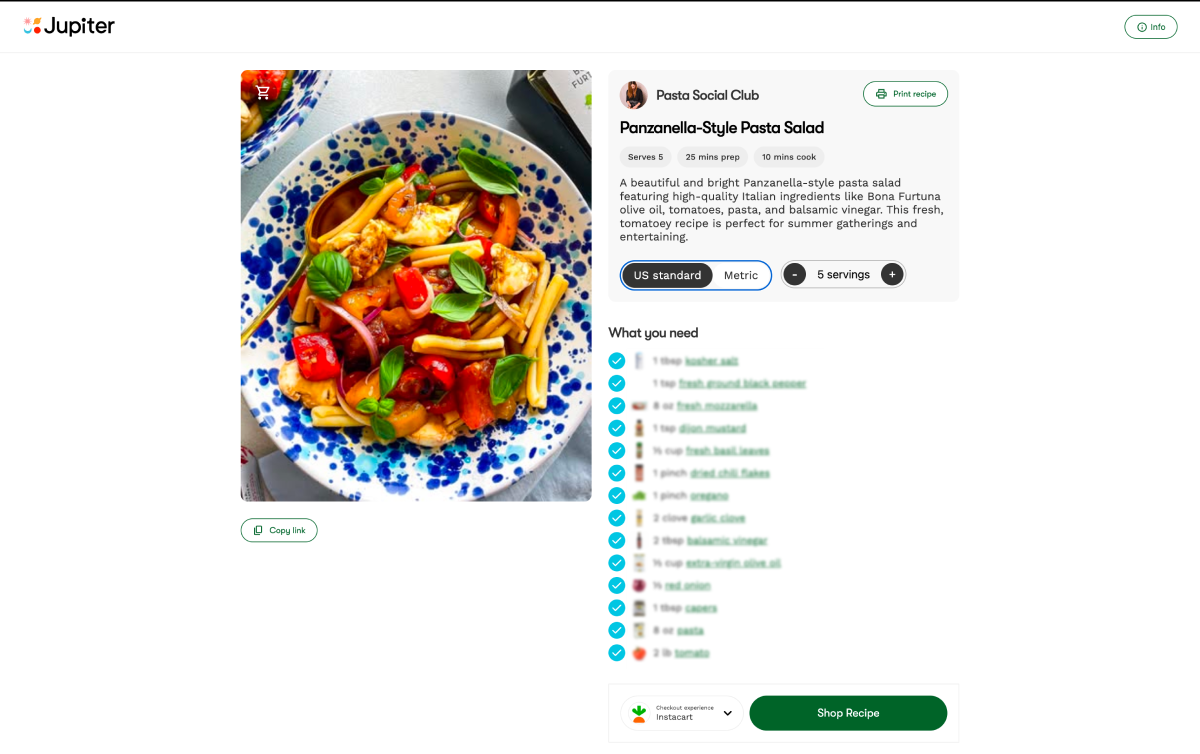
Jupiter gives food creators a free branded recipe website that is structured for search: fast-loading, schema-ready, and optimized for the technical signals Google uses to rank recipes. You focus on the recipes. Jupiter handles the infrastructure.
Part 2: On-Page SEO for Food Bloggers
On-page SEO refers to everything you do within a single post to help Google understand what it is about and serve it to the right searchers.
Use your target keyword in the right places
Once you have chosen a target keyword for a post, it needs to appear in specific, high-weight locations:
Post title (H1): Your recipe name is your H1. It should include the primary keyword as naturally as possible. "Easy Homemade Shakshuka" is better than just "Shakshuka" if "easy shakshuka recipe" has search volume.
SEO title tag: This is the blue link text that appears in Google search results. It can differ slightly from your post title. Include your keyword close to the beginning of the title tag, and keep it under 60 characters so it does not get truncated.
Meta description: The short description that appears under your title in search results. It does not directly affect rankings, but it affects click-through rate. Write something that makes a searcher want to click. Keep it under 155 characters.
First 100 words of the post: Google gives extra weight to content that appears early. Mention your keyword naturally in your opening paragraph.
Subheadings (H2s and H3s): Use keyword variations and related terms in your subheadings. For a banana bread post, subheadings like "Ingredients for moist banana bread" or "How to tell when banana bread is done" reinforce topical relevance.
Image alt text: Every image on your post should have a descriptive alt text that includes the keyword naturally. "Homemade banana bread sliced on a wooden board" is more useful than "IMG_4823."
URL slug: Keep it short and keyword-rich. `/banana-bread-recipe` beats `/my-grandmas-super-moist-delicious-banana-bread-that-everyone-loves`.
Write for humans, optimize for search engines
There is a persistent myth that SEO writing means stuffing keywords into every sentence. It does not. Google's algorithms in 2026 are sophisticated enough to detect unnatural keyword density, and they reward content that is genuinely useful, well-written, and comprehensive.
Write recipes that are actually helpful. Answer the questions people have: why did my banana bread sink, can I use frozen bananas, what can I substitute for buttermilk. These questions are what Google's "People also ask" surfaces, and answering them well keeps readers on your page longer, which is a positive ranking signal.
Recipe post length and content depth
Longer posts tend to rank better for competitive keywords, but only when the length serves the reader. A 2,000-word recipe post should be longer because it covers more ground: ingredient notes, substitutions, storage instructions, serving suggestions, step-by-step process photos, and a FAQ section. Not because it repeats the same information three times.
The goal is to be the most comprehensive, useful resource for that recipe search. If you can genuinely answer every question a reader might have in one post, you are producing the kind of content Google wants to rank first.
Part 3: Recipe Schema Markup
This is one of the most important technical SEO elements for food bloggers, and it is frequently overlooked.
What is recipe schema?
Schema markup is structured data: code added to your post that tells Google exactly what type of content it is looking at and what the key data points are. For recipes, this means marking up the recipe name, ingredients, cook time, prep time, total time, serving size, nutrition information, and author.
When Google can read this data, it can display your recipe in rich results: the visually enhanced search listings that show a photo, star rating, cook time, and calorie count directly in the search results. Rich results get significantly more clicks than plain text results. For food blogs, recipe schema is not optional if you want to compete.
What recipe schema should include
A complete recipe schema markup covers:
Recipe name
Recipe description
Author name
Date published
Prep time and cook time (in ISO 8601 duration format, e.g., PT30M for 30 minutes)
Total time
Recipe yield (servings)
Recipe category (e.g., Dessert, Main Course)
Recipe cuisine
Ingredients (each ingredient as a separate list item)
Instructions (step by step, each as a separate HowToStep)
Nutrition information (calories per serving at minimum)
Recipe image (minimum 1200x675 pixels, 16:9 ratio for best display in rich results)
Aggregate rating (if you have a rating system on your site)
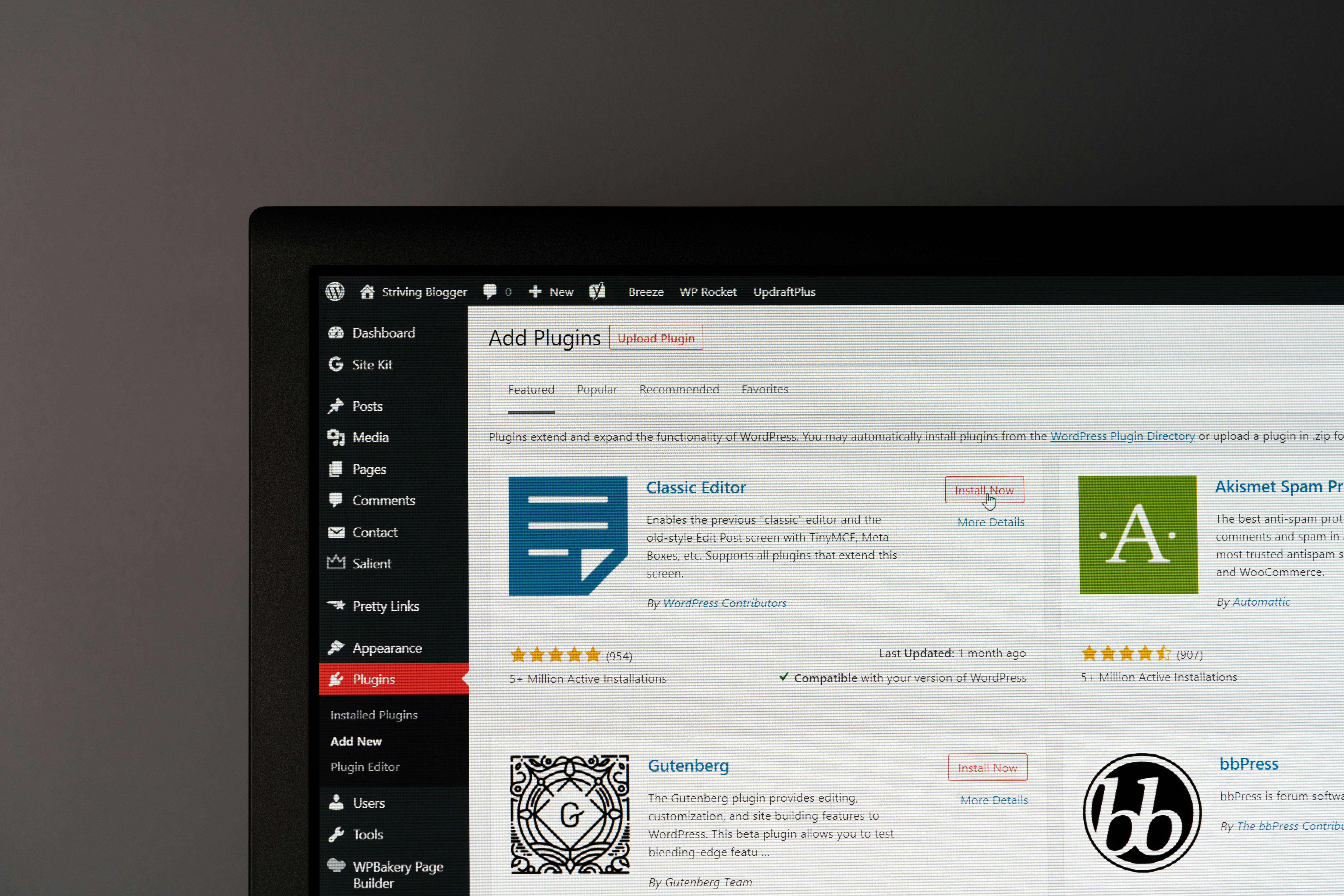
If this sounds like a lot, it is. But the good news is that on a well-structured recipe website, much of this is handled automatically through your CMS or recipe card plugin. The key is making sure you are using a platform that outputs valid, complete schema rather than leaving fields blank.
How to check if your schema is working
Use Google's Rich Results Test (search.google.com/test/rich-results) to paste in your post URL and see whether Google can read your recipe schema. If there are errors or missing fields, the test will flag them. Fix them.
Google Search Console also has a Rich Results report under the Enhancements section that shows which of your pages have valid recipe markup and which have warnings.
Part 4: Site Speed and Core Web Vitals
Google uses site speed as a direct ranking factor, and its Core Web Vitals metrics measure the specific aspects of speed that affect user experience.
Why speed matters for food blogs
Food blogs are notoriously image-heavy. Multiple process photos per recipe, ingredient shots, and hero images add up quickly. Unoptimized images are the single most common cause of slow food blog load times.
A slow blog frustrates readers and signals to Google that the user experience is poor. Both hurt your rankings.
Core Web Vitals for food bloggers
The three Core Web Vitals Google measures are:
Largest Contentful Paint (LCP): How long it takes for the largest visible element on the page (usually your hero image) to load. Target: under 2.5 seconds.
Cumulative Layout Shift (CLS): How much the page layout shifts as it loads, which causes readers to accidentally tap the wrong element. Target: under 0.1. Common cause on food blogs: images without declared dimensions, which cause the page to reflow when they load.
Interaction to Next Paint (INP): How quickly the page responds to user interactions. Target: under 200ms.
How to improve your site speed
The most impactful steps for food bloggers:
Compress and resize images before uploading. A recipe photo does not need to be 6MB. Tools like Squoosh (free, browser-based) can reduce a 5MB image to under 200KB with no visible quality loss. Your maximum useful width for a blog post image is around 1200 pixels.
Use next-gen image formats. WebP and AVIF formats load significantly faster than JPEG and PNG. Many modern website platforms convert images automatically.
Use lazy loading for images. Images below the fold should load only when the reader scrolls to them, not all at once when the page first opens.
Minimize third-party scripts. Ad network scripts, tracking pixels, chat widgets, and social share buttons all add load time. Every third-party script you add is a performance cost. Audit regularly.
Use a CDN. A Content Delivery Network serves your assets from servers close to your readers, reducing latency. Most managed hosting plans and modern website platforms include CDN functionality.
Check your current scores using Google's PageSpeed Insights (pagespeed.web.dev) or by looking at your Core Web Vitals report in Google Search Console.
Part 5: Internal Linking Strategy
Internal links, links from one post on your blog to another, are one of the most underused SEO tools available to food bloggers.
Why internal linking matters
Internal links do two things for SEO. First, they help Google crawl and discover all your content. Second, they pass authority from high-performing posts to newer ones.
When a post ranks well and earns backlinks from external sites, that authority does not stay isolated in that one post. Through internal links, you can direct some of that authority toward related posts that need a rankings boost.
How to build internal links on a food blog
Create content clusters.If you write a pillar post on "30-Minute Weeknight Dinners," link to five or ten individual 30-minute dinner recipes from within that post. Each individual recipe post should also link back to the pillar. This cluster structure tells Google you have deep, comprehensive coverage of a topic.
Link naturally in the post body. When you mention a technique, ingredient, or related recipe in your writing, link to the relevant post. "For the sauce, I use this homemade tahini recipe [link]" is more natural and more useful than a list of related posts at the bottom.
Use descriptive anchor text. Anchor text is the clickable text of a link. "Click here" tells Google nothing. "Easy homemade tahini recipe" tells Google exactly what the linked page is about. Use keywords in your anchor text, but keep them natural.
Audit old posts. When you publish a new recipe, go back to three to five older, related posts and add a link to the new one. This gets the new post indexed faster and starts building its internal authority immediately.
SEO works best when your website is built for it.
Jupiter's free recipe website comes with the technical SEO foundations already in place: fast load times, recipe schema markup, clean URL structure, and mobile optimization. Over 1,000 food creators use Jupiter to grow their blog traffic without managing the technical side themselves.
Part 6: Backlinks and Domain Authority
Backlinks are links from other websites to yours. They are one of Google's most powerful ranking signals because they represent a vote of confidence: another site found your content valuable enough to reference.
How food bloggers earn backlinks
Create genuinely linkable content. Round-up posts ("15 Best Vegetarian Soup Recipes"), definitive guides ("The Complete Guide to Sourdough Starter"), and resource posts are naturally linked to by other bloggers and publishers looking to reference reliable sources.
Get featured in recipe round-ups. When other food bloggers write "the best chocolate chip cookie recipes" posts, they often search for and link to individual recipe posts. Having well-optimized, high-quality recipes increases your chances of being included.
Press and media mentions. Pitching your expertise to food journalists, contributing to food publications, or being quoted in articles all generate high-quality backlinks.
Brand partnerships and collaborations. When you create sponsored content for a brand, it is worth asking whether they will link to your post from their website or social profiles. Even a brand's Instagram bio link temporarily pointing to your post carries weight.
Guest posts. Writing for other food blogs or food publications in your niche earns a backlink and exposes you to a new audience simultaneously.
What to avoid
Do not buy backlinks. Google's spam detection has become extremely good at identifying unnatural link patterns, and a manual penalty for link spam can set your blog back significantly. Earned backlinks from legitimate sources are the only ones worth pursuing.
Part 7: Technical SEO Foundations
Mobile optimization
The majority of Google searches happen on mobile devices. Google uses mobile-first indexing, meaning it primarily uses the mobile version of your site to determine rankings. Your blog must look and perform well on a phone.
Test your site on your own phone regularly. Check that your recipe card is readable without zooming, that images load at the right size, that your font is large enough to read, and that tap targets (buttons, links) are easy to hit with a finger.
HTTPS and site security
Your blog must be served over HTTPS. This is a basic ranking factor and also a trust signal for readers. Most modern hosting providers include SSL certificates automatically, but check your URL bar: it should show a padlock, not "Not Secure."
XML sitemap and robots.txt
Your sitemap tells Google which pages exist on your site and should be indexed. Most CMS platforms generate this automatically and it lives at yoursite.com/sitemap.xml. Submit it in Google Search Console.
Your robots.txt file tells Google which pages not to crawl. Make sure it is not accidentally blocking pages you want indexed. This is a common issue when migrating from one platform to another.
Google Search Console: your most important free tool
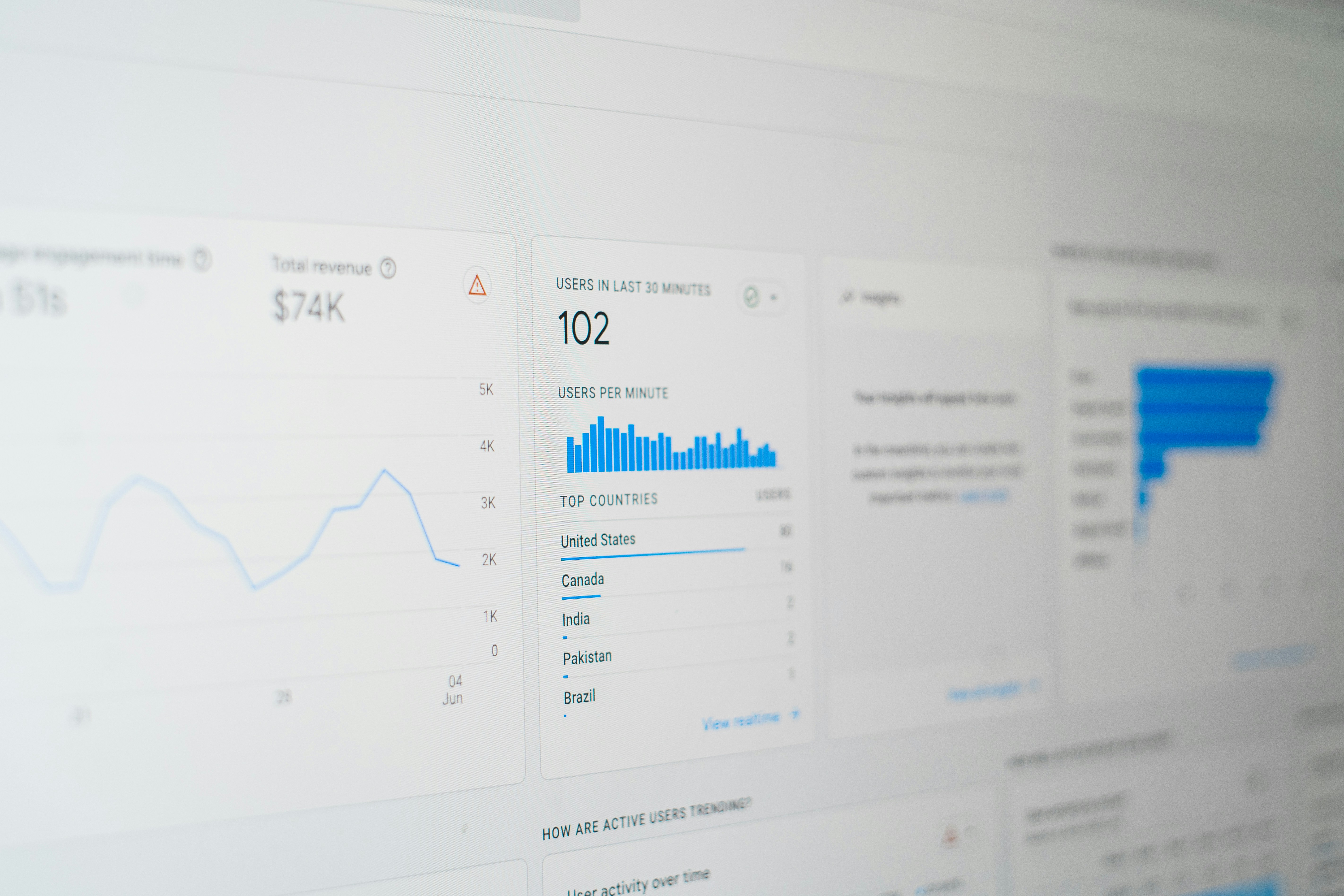
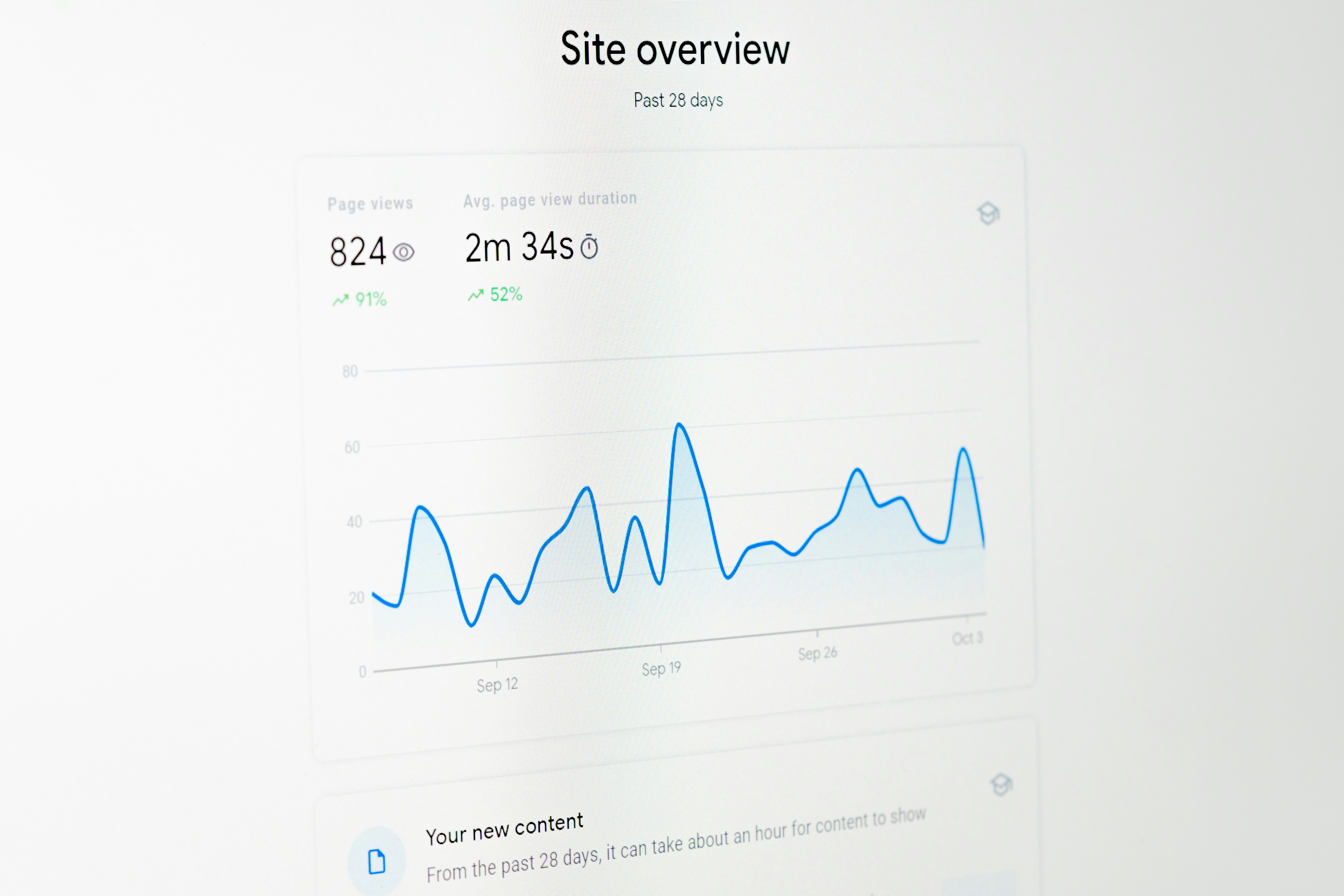
If you have not set up Google Search Console for your blog, do it today. It is free and it gives you:
Which queries you are ranking for and how many clicks you are getting
Your average position in search results for each query
Which pages Google has indexed
Core Web Vitals performance data
Manual action reports (if Google has penalized your site for any reason)
Coverage errors (pages Google tried to index but could not)
Check Search Console at least once a month. It surfaces problems you would otherwise never know about.
Part 8: Content Strategy for Long-Term SEO Growth
Individual posts matter, but long-term SEO growth comes from a content strategy: a deliberate plan for which topics to cover, in what order, and how they relate to each other.
Publish consistently
Google rewards blogs that publish regularly. You do not need to publish every day. Two to four high-quality, well-optimized posts per month is more effective than a burst of ten posts followed by a two-month gap.
Consistency signals to Google that your site is actively maintained, which factors into crawl frequency and indexing speed.
Update and improve old posts
Content freshness is a ranking factor for many query types. A recipe post that was accurate in 2022 may be outranked by a competitor who updated theirs in 2025. Go back to your top-performing posts regularly: update the date, refresh any outdated information, add new photos if your photography has improved, fill in any FAQ sections that are missing, and check that all internal and external links still work.
This practice, often called content refreshing, is one of the highest-ROI activities for an established food blog.
Target a topic cluster, not just individual keywords
Rather than publishing one banana bread post and moving on, think in clusters. The pillar post targets "banana bread recipe." Supporting posts target "why did my banana bread sink," "banana bread without butter," "how to store banana bread," "banana bread muffins recipe." Each post links to the pillar. The pillar links to each supporting post.
This cluster structure tells Google you have authoritative, comprehensive coverage of the topic, not just one post that uses the keyword.
What Makes SEO Harder Than It Needs to Be
The most common barrier food bloggers face with SEO is not knowledge. It is infrastructure.
Trying to implement recipe schema on a platform that does not support it natively means installing plugins that conflict with each other. Getting good Core Web Vitals scores on an overloaded shared hosting plan is a losing battle. Setting up a clean URL structure after hundreds of posts have already been published means managing redirects and potential broken links.
The bloggers who succeed at SEO fastest are usually the ones whose website infrastructure handles the technical requirements automatically, leaving them free to focus on keyword research, content quality, and publishing consistently.
That is the actual value of starting on a purpose-built recipe website: not just the design, but the technical stack underneath it.
Start with an SEO-ready recipe website, for free.
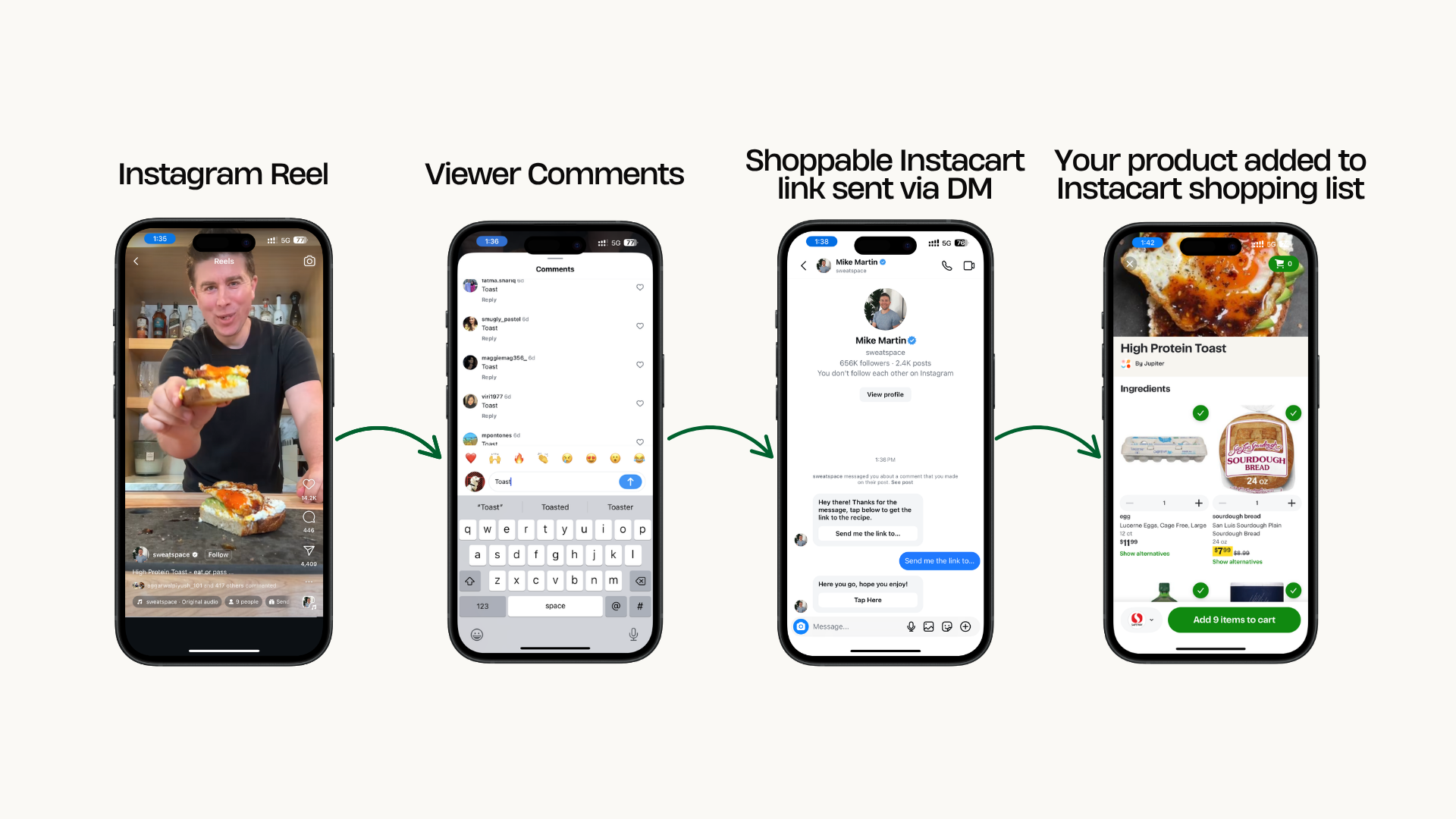
Jupiter gives food creators a free branded recipe website built with recipe schema, fast load times, and clean technical structure out of the box. Add access to 65+ CPG brand partnerships, Instacart affiliate integration, and ad network connections, and you have a complete monetization platform. Join 1,000+ food creators who have collectively earned $3M+ through Jupiter.