Is Food Blogging Profitable? An Honest Answer for New Creators
If you've spent any time researching food blogging income, you've encountered two completely contradictory types of content.
The first: breathless income reports from bloggers claiming $20,000 months, passive income while they sleep, and financial freedom from a recipe website. The second: exhausted warnings that food blogging is oversaturated, that Google has killed organic reach, and that you'd be naive to expect real money from it.
Neither of these tells you the full story.
The honest answer to "is food blogging profitable?" is yes - genuinely, meaningfully yes - but the path looks different from what most new creators expect, and the timeline depends heavily on decisions made in the first six months that most people don't know to think about.
This post gives you the real picture: what food bloggers actually earn, what separates profitable ones from struggling ones, and why the "it takes years" framing is both true and misleading at the same time.
First, What Does "Profitable" Actually Mean?
Before getting into numbers, it's worth being precise about the question, because "profitable" means different things to different creators.
For some, profitable means earning more than hosting and tool costs - crossing zero into net-positive territory. That's achievable within months for many creators.
For others, profitable means replacing a part-time income - $1,000-$2,000/month. That's a realistic 12-24 month target with the right strategy.
For others still, profitable means replacing a full-time salary. That typically takes 2-4 years of consistent effort - but it happens, regularly, for creators who build the right foundations.
The mistake most new bloggers make is measuring their early progress against the full-time income benchmark and concluding they're failing when they're actually on track. Knowing which stage you're in changes everything about how you evaluate your own progress.
What Food Bloggers Actually Earn: Real Numbers
Let's skip the income report extremes and look at what the distribution actually looks like.
The struggling majority (earning under $200/month): This group is large, but it's also the most preventable outcome. Most creators here are either too early in their traffic growth to monetize meaningfully, or they've been publishing for years without a coherent SEO or monetization strategy. Traffic without monetization infrastructure generates almost nothing.
The building middle ($200-$2,000/month): This is where most creators land 12-24 months in, assuming consistent publishing and basic SEO attention. At this stage, display ads are the primary driver, usually on generic networks. It's real money, not life-changing money. This phase is where most creators either quit (mistaking a building phase for a failure) or double down and break through.
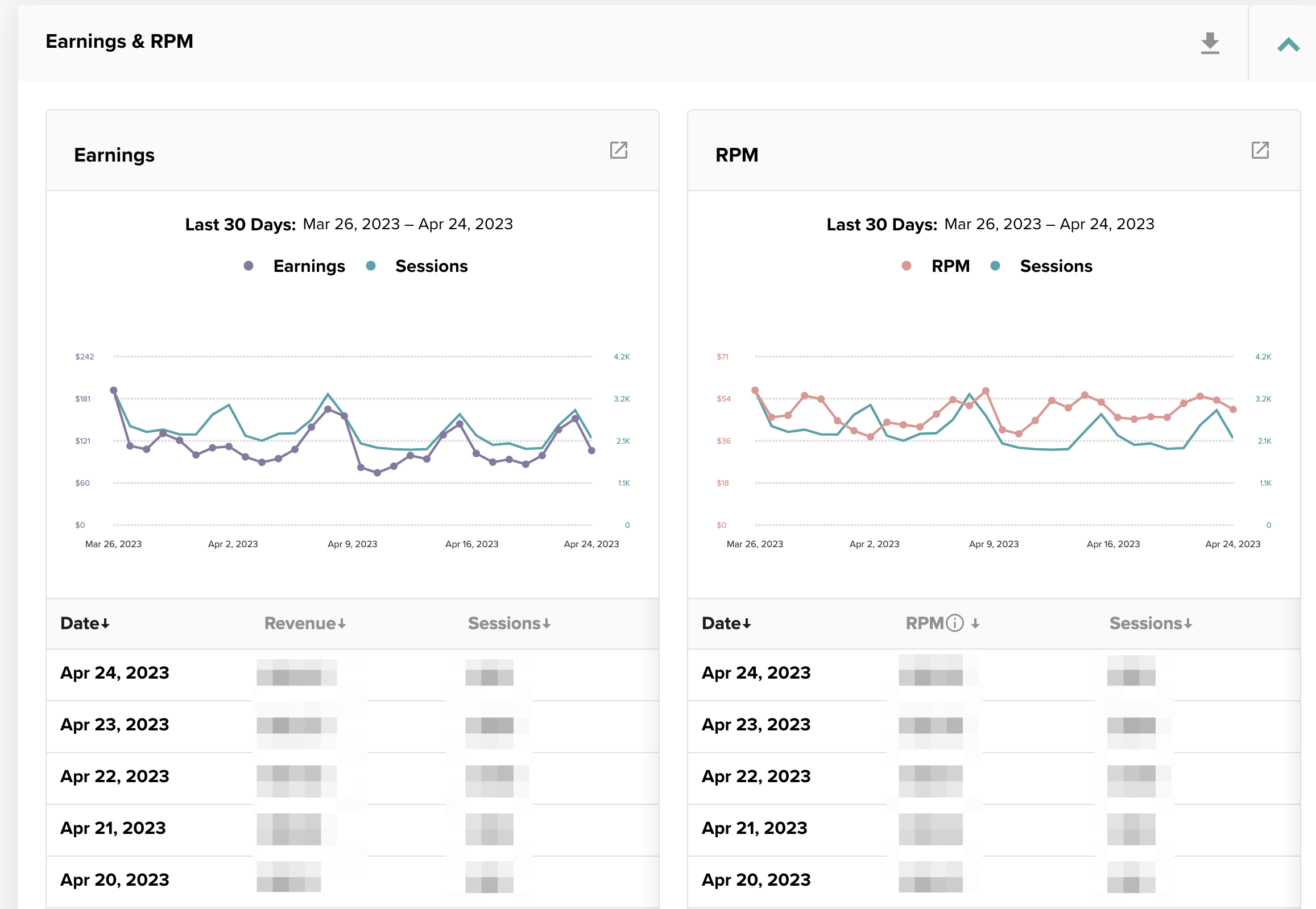
The tipping point ($2,000-$5,000/month): Getting onto a premium ad network like Mediavine or Raptive is often the single biggest income inflection point in a food blogger's trajectory. The RPM difference between a generic network and a premium one can be 5-10x. Creators who hit Mediavine's 50,000 sessions threshold frequently report their monthly income doubling or tripling overnight without publishing a single additional post.
The established tier ($5,000-$15,000+/month): Creators here have stacked multiple income streams - premium ads, consistent brand deals, affiliate commissions, often a digital product or two. They've been publishing long enough to have a library of posts that rank and compound. This isn't passive income in the "do nothing" sense, but it's a legitimate business that funds a full-time life.
The outliers ($20,000+/month): Real, documented, but genuinely exceptional. These creators have usually been at it for 5+ years, have significant traffic (500k+ monthly sessions), multiple revenue streams firing simultaneously, and often a team. Inspiring, but not a useful benchmark for year one.
The Profitability Killers Nobody Talks About
Here's where most "is food blogging profitable" posts stop being honest. The income is real. The path is real. But there are specific, predictable reasons food bloggers don't reach profitability - and most of them aren't about talent or content quality.
Wrong monetization sequencing
Many new food bloggers follow this order: publish content → grow traffic → eventually figure out monetization. This is backwards.
Monetization infrastructure should be set up before you have significant traffic - affiliate links embedded in recipes from day one, an email list started with the first post, a plan for which ad network you're targeting and what traffic threshold triggers the application.
Every month of traffic running without affiliate links is money left on the table. Every month without an email list is an audience that isn't being converted into an owned asset.
Generic ad networks for too long
This one bleeds money quietly. A creator on a generic ad network at $5 RPM with 80,000 monthly pageviews is earning roughly $400/month. The same traffic on Mediavine or Raptive at $30 RPM earns $2,400/month. If you've crossed the traffic threshold for a premium network and you're still on a generic one, applying is the single highest-ROI action available to you right now.
No brand deal infrastructure
Display ads are the most passive income stream. Brand deals are the highest-earning one per unit of effort - but only if you're set up to receive and close them. A media kit, a professional email, a clear sense of your rates, and some form of inbound or network presence are the infrastructure. Without it, brand income is zero regardless of your audience quality.
Treating the blog as the only channel
Food bloggers who also build an email list, a social presence (even modest), and optimize their content for search grow faster and earn more than those who treat the blog as an island. Each channel feeds the others: social drives blog traffic, blog traffic grows email list, email list amplifies brand deals and product launches.
Abandoning before the compounding kicks in
SEO-driven content compounds. A post published today might rank in six months and generate traffic for five years. A creator who publishes consistently for 18 months and then stops, frustrated at the slow early growth, exits right before the compounding starts to show up meaningfully in their analytics. The creators who break through are disproportionately the ones who stayed consistent past the point where most people give up.
Stop Leaving Money on the Table - Jupiter Fixes the Infrastructure Problem
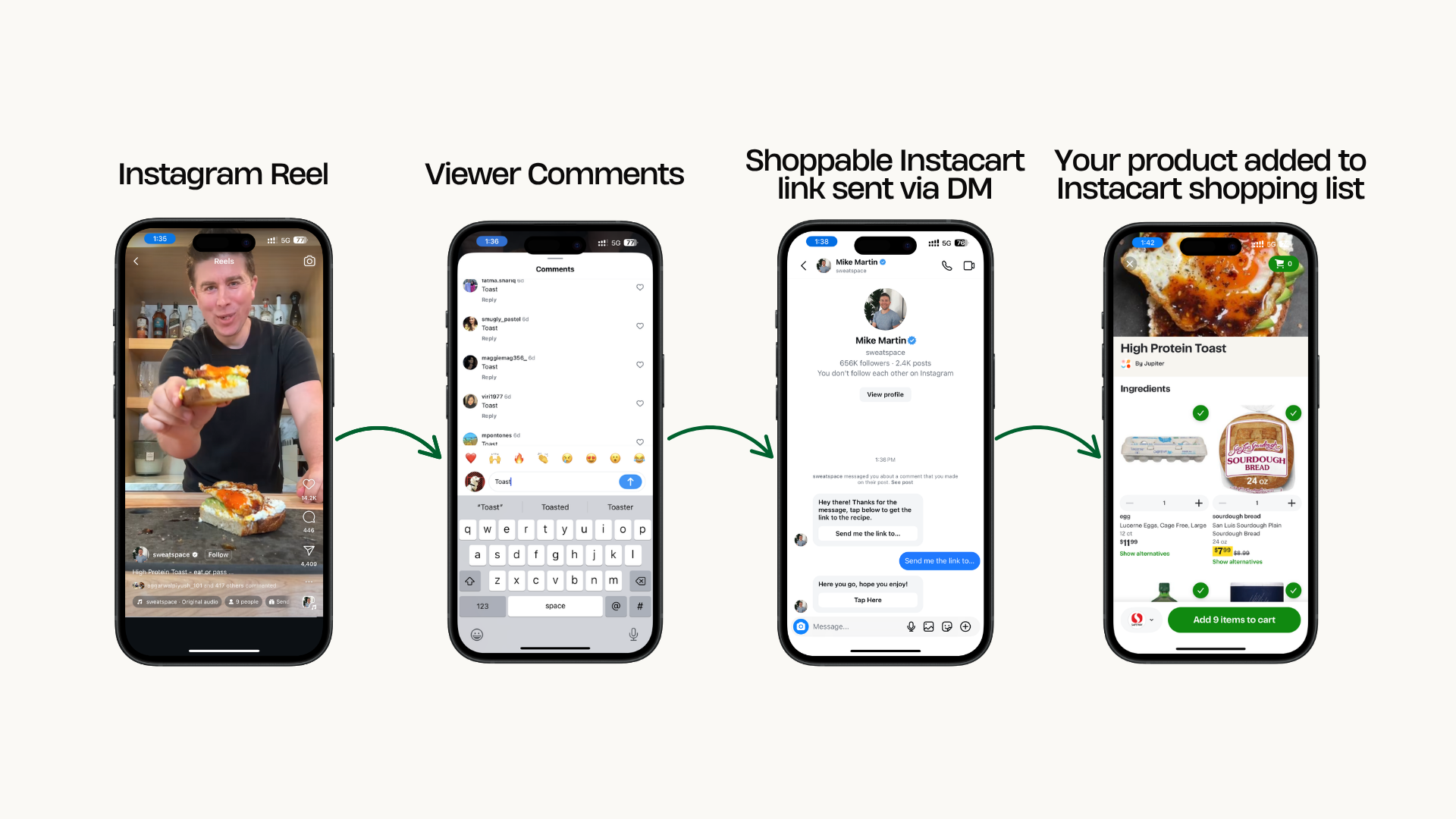
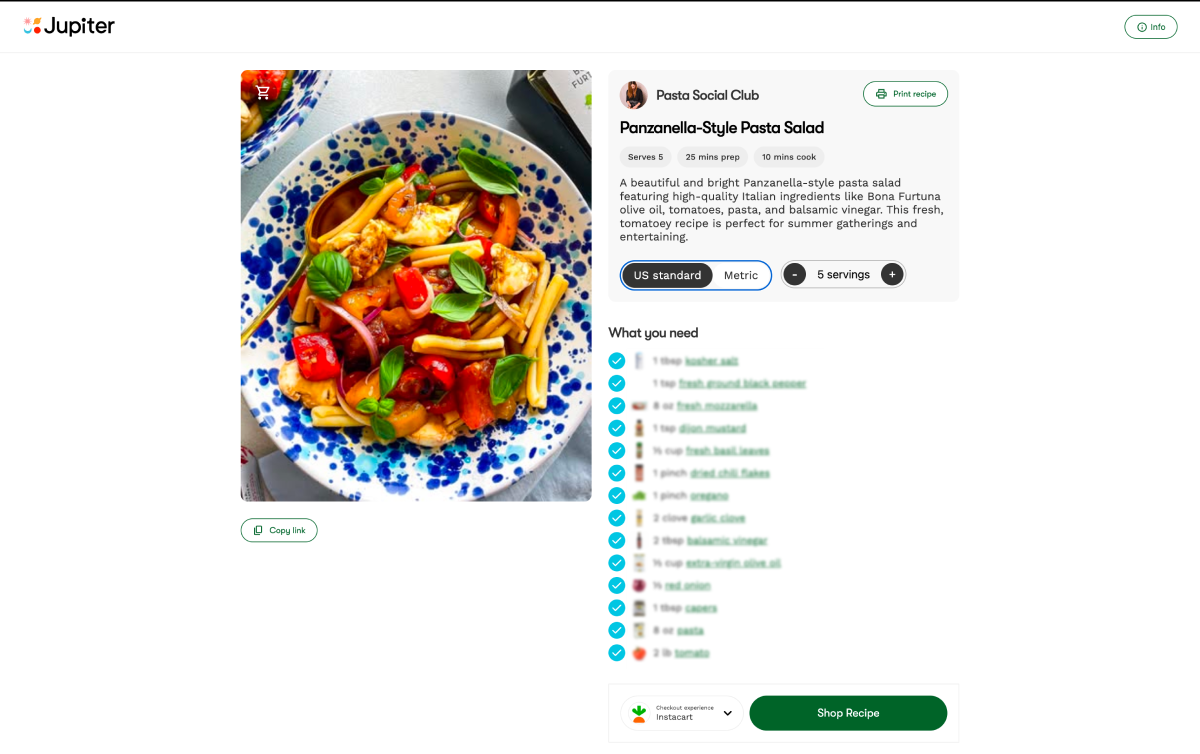
Jupiter gives food creators a free branded recipe website, automatic Instacart affiliate integration, and access to a network of 65+ CPG brands - all set up from day one. No waiting until you "have enough traffic" to start monetizing. The infrastructure is ready when you are.
The "It Takes Years" Myth - Unpacked
The most common piece of advice new food bloggers receive is some version of "don't expect to make real money for 2-3 years." This advice is both true and misleading, and understanding the distinction changes how you approach the whole endeavor.
It's true that SEO-driven traffic takes time to build. Google's trust in a new domain accumulates over months. A content library broad enough to capture significant search volume takes sustained publishing. There's no honest shortcut to that.
But the "years" framing conflates two different things: the time it takes to build organic traffic, and the time it takes to start earning. Those are not the same timeline, and treating them as one is what keeps creators in unnecessary poverty for their first year.
You can start earning on day one through affiliate links. You can start earning with 1,000 followers through micro-influencer brand deals. You can start earning before you hit premium ad network thresholds through sponsored content and digital products.
The "years" refers to the time it takes to build a scalable, compounding income. It does not mean you earn nothing until then - unless you're waiting passively for traffic to arrive before thinking about monetization at all.
The creators who collapse the timeline are the ones who treat monetization as a parallel track, not a future reward for traffic growth.
What Actually Determines How Fast You Reach Profitability
Two food creators can start blogs on the same day, publish the same number of posts with the same quality, and be in completely different financial positions 18 months later. The variables that explain the gap:
Niche specificity. A tightly defined niche ranks faster (less competition, clearer topical authority for Google), attracts more targeted brand deals (brands pay premiums for specific audiences), and converts better for affiliate and digital products (readers with a clear shared interest buy more).
SEO intentionality. Publishing recipes without any keyword research is the content equivalent of opening a restaurant in a building with no windows and no signage. The content might be excellent; no one will find it. Creators who do even basic keyword research - understanding what their audience is searching for and writing content that matches that intent - grow their traffic significantly faster than those who publish based on personal preference alone.
Monetization from day one. As covered above: affiliate links, email list, awareness of brand deal infrastructure from the first post. Not from month 12.
Platform selection and network access. A creator inside a network that connects them with brand deals is closing partnerships that a creator doing solo cold outreach hasn't even identified yet. Access to the right infrastructure and relationships compresses the timeline materially.
Consistency over spikes. Google rewards consistent publishing. A creator who publishes two quality posts per week for a year outperforms one who publishes ten posts in January and then burns out. The algorithm reads consistency as a signal of site health and authority.
An Honest Profitability Timeline
With the right foundations in place - SEO-aware content, monetization infrastructure from the start, a premium ad network application queued up for the right traffic threshold - here's what a realistic timeline looks like:
Months 1-3: Near-zero direct income, but building the content library and affiliate link infrastructure. Email list started. Possible micro-sponsorship or gifted collaboration if niche is tight and pitch is made.
Months 4-6: Trickle of affiliate income as early posts begin getting some search traffic. Possibly $50-$200/month. First paid brand deal potential if profile is pitch-ready and network access exists.
Months 7-12: Affiliate income growing, ad revenue starting to register (even on generic networks), brand deal income possible at $200-$800/month for active networkers. First email list sponsorship potential if list has grown to a few thousand.
Months 12-18: Many creators hit Mediavine's threshold in this window with consistent publishing. The moment this happens, monthly income can jump substantially. Combined streams (ads + brand deals + affiliate) can reach $1,500-$4,000/month for well-positioned creators.
Months 18-36: The compounding phase. Older posts continue ranking and driving passive traffic. Brand deal inbound increases as profile grows. Digital product potential becomes real. This is where $5,000-$10,000+ months become achievable for creators who've built the foundations correctly.
This timeline assumes consistency. It assumes the right monetization structure. It assumes network access for brand deals rather than solo cold pitching. Remove any of those assumptions and the timeline extends significantly.
Is It Worth Starting in 2026?
The fair question for any new creator isn't just "is it profitable?" - it's "is it worth starting now, given everything that's out there?"
The honest answer is yes, with clear eyes.
The realistic concerns: food blogging is more competitive than it was in 2015. Google's algorithm has become more demanding about content quality and expertise signals. Building organic traffic takes real effort and time.
The underreported reality: the monetization infrastructure available to food creators in 2026 is dramatically better than it was five years ago. Premium ad networks have expanded access. CPG brand budgets for creator marketing keep growing. Instacart affiliate commerce has created a revenue stream that didn't exist for food bloggers previously. Creator platforms have emerged that eliminate much of the friction in connecting creators with brand deals.
The ceiling is higher. The floor is higher. The tools are better. The brands are spending more.
The creators who start in 2026 and do this with intention - niche clarity, SEO awareness, monetization from day one, network access for brand deals - have a genuinely strong path to profitability. The ones who treat it as a passive hobby and wait for the money to find them will confirm the pessimistic narrative.
Start Earning Faster - Jupiter Is Free to Join
Jupiter collapses the monetization timeline for food creators. A free branded recipe website, Instacart affiliate links built in from day one, and direct access to 65+ CPG brands actively running campaigns. Over 1,000 food creators are already on the platform. You could be earning from brand deals while your blog traffic is still building.
The Questions Worth Asking Before You Start
If you're still on the fence, these are the questions that matter more than "is it profitable in general":
Are you willing to publish consistently for 18+ months without dramatic income results? The compounding nature of SEO content means most of the visible payoff comes late. If you need financial results in month three, food blogging is the wrong vehicle.
Do you have a specific niche, or just "food"? "Food" is not a niche. "Quick high-protein meals for people who hate cooking" is a niche. "Authentic regional Indian recipes made accessible for diaspora home cooks" is a niche. The specificity of your focus determines how fast you can build topical authority and attract the right audience and brand partners.
Are you willing to learn basic SEO? You don't need to become an expert, but you need to understand keyword intent, how to structure a recipe post for search, and what Google is rewarding in your category. This is learnable in a few weeks and pays dividends for years.
Can you set up monetization infrastructure from day one, not month twelve? Affiliate links, email list, awareness of which brand networks and ad networks you're targeting. The setup takes a weekend. The compounding starts immediately.
If the answers to those questions are yes - or even "yes, I'm willing to learn" - then the more accurate answer to "is food blogging profitable?" is: for you, specifically, it can be.
The Myth the Income Reports Created
One more thing worth naming: the income report genre has done real damage to new food bloggers' expectations, but not in the way you might think.
The problem isn't that the numbers are fake. Most published income reports are from real creators who genuinely earn what they claim. The problem is survivorship bias - you're reading about the creators who succeeded, not the ones who published for a year with no strategy and gave up.
The income report says: "I make $18,000/month from my food blog." What it doesn't say: "I've been doing this for four years, I have 400 published posts, I'm on Raptive with 600,000 monthly pageviews, I have three brand deals running simultaneously, and I have an email list of 22,000 people I've been building since month one."
The income number is real. The overnight implication is false.
The good news: you now know what's actually behind those numbers. The variables are known, the inputs are learnable, and the path - while not instant - is genuinely navigable for creators who approach it with clear eyes and the right infrastructure in place from the start.
See How Jupiter Gets Food Creators Earning Faster
Jupiter is a free monetization platform built specifically for food creators - giving you a branded recipe site, Instacart affiliate integration, premium ad network connections, and access to 65+ CPG brands, all in one place. Join free. Earn from day one. Over 1,000 creators are already on the platform - see what the faster path to profitability actually looks like.