How to Grow Your Food Instagram Page: A Creator's Playbook

A practical playbook for growing a food Instagram page in 2026, from Reels strategy to Stories and collabs, plus how to turn followers into blog traffic that actually pays.

How to Grow Your Food Instagram Page: A Creator's Playbook hero image

On this page

โ–ผ

You're posting recipes consistently. The food looks good. The captions are thought through. And yet the follower count barely moves, week after week.

This is the part nobody tells new food creators: growth on Instagram in 2026 has very little to do with how good your food photography is. It has everything to do with whether the platform's ranking systems decide your content is worth showing to people who don't follow you yet. Get that part right, and a recipe page with decent phone photos can outgrow a page with a $3,000 camera setup and no strategy.

This playbook walks through what's actually working for food creators right now, and just as importantly, what to do with the audience once you've built it. Followers alone don't pay rent. Followers who click through to your blog, your link in bio, or a brand deal do.

Why Most Food Instagram Pages Plateau

Most food pages stall for one of three reasons, and none of them are "the food isn't good enough."

  • They're optimizing for the wrong signal. For years, the advice was to chase likes and use as many hashtags as possible. Neither moves the needle the way it used to. Hashtags now function more like filing labels that help Instagram categorize your content correctly, not a discovery lever. Likes have become one of the weakest signals Instagram still reports. What actually drives distribution to new people: how long someone watches, whether they rewatch, and whether they send your post to a friend in DM. A recipe Reel that gets shared quietly in five DM threads will often outperform one that racks up triple the likes.

  • They're inconsistent in quality, not just frequency. Instagram tracks a rolling trust signal per account, essentially a running average of how your recent posts perform with people who don't follow you. A string of weak posts drags down how your next few posts get distributed, even if the next one is genuinely good. This is why one viral Reel followed by silence doesn't compound, but three solid Reels a week, every week, does.

  • They're building reach without a place to send it. This is the one that costs creators the most money. Even a fast-growing food Instagram page is a rented room. The algorithm decides who sees your next post, brand deals depend on engagement rates that fluctuate, and none of it is yours if Instagram changes the rules tomorrow. A blog, a recipe site, an email list, these are the assets that are actually yours. The creators who turn Instagram growth into real income are the ones treating the page as a feeder system for something they own, not as the destination.

That third point is the one this playbook keeps coming back to.

Build the audience and the asset at the same time.

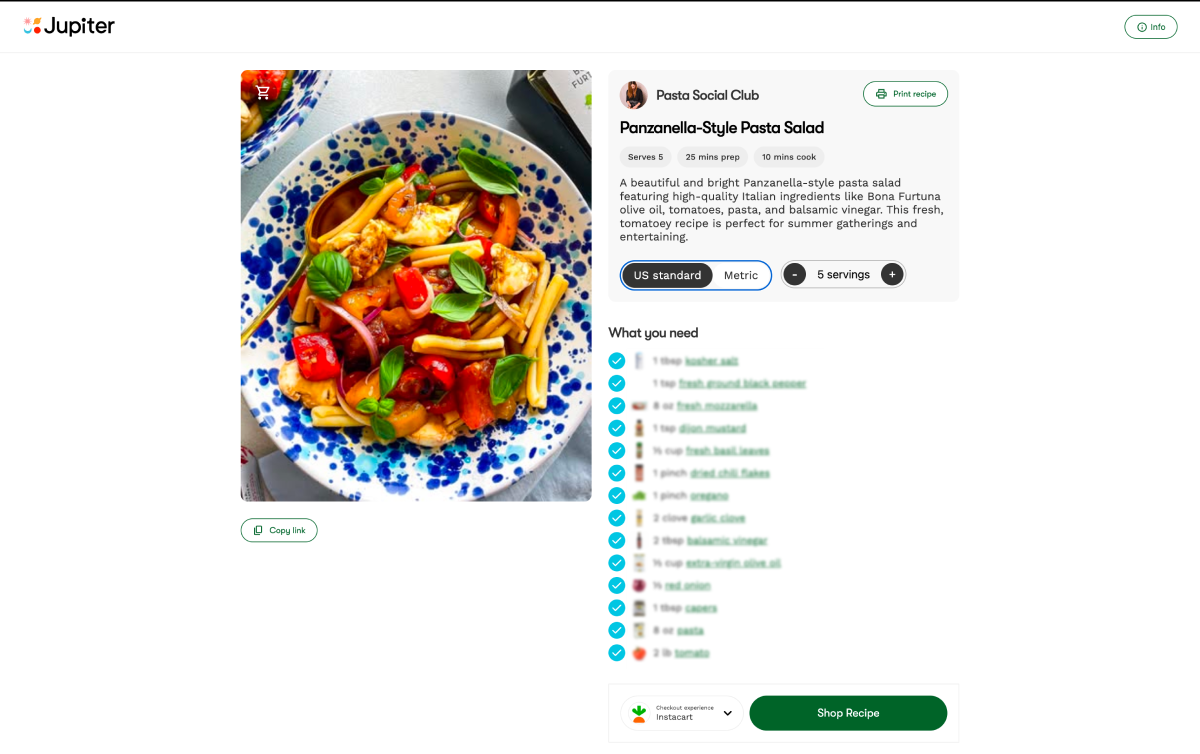
You don't have to choose between growing on Instagram and building something you own. Jupiter gives food creators a free, fully branded recipe website from day one, so every "link in bio" click lands somewhere that's actually yours, not a rented landing page.

Build Your Content Engine Around Reels, the Right Way

Reels are still the primary discovery surface for food content in 2026, and they now account for a large share of total time spent on the platform. But "post more Reels" is incomplete advice. Here's what actually matters.

  • The first two to three seconds decide everything. Instagram's system predicts whether someone will watch to completion before it decides whether to push a Reel past your existing followers. If the value isn't obvious immediately, a sizzling pan in the background or a vague "watch till the end," most viewers are gone before your hook lands. Open with the result, the surprising step, or the ingredient swap, not a slow intro.

  • Length should match the content, not a formula. Instagram now recommends longer Reels, up to several minutes, when the content genuinely holds attention, like a full recipe walkthrough or a longer technique breakdown. But a 90-second Reel with high completion beats a four-minute Reel that loses half its audience by the one-minute mark. If a recipe doesn't need three minutes, don't stretch it to fill three minutes.

  • Original content outranks recycled content. Instagram actively screens for reposted clips and content carried over from other platforms with visible watermarks, and it suppresses reach on anything flagged as recycled. If a Reel started life on TikTok, re-edit and re-export it cleanly for Instagram rather than reposting the same file.

  • Consistency in quality beats volume. Three strong recipe Reels a week, posted reliably, will outperform seven rushed ones. Pick a cadence you can sustain at a high bar and stick to it, rather than burning out trying to post daily.

  • Pair Reels with carousels for retention. Reels bring in new viewers; carousels (step-by-step recipe breakdowns, ingredient swaps, "save this for later" formats) earn the saves and shares that keep your existing audience engaged between bigger posts.

Instagram's in-app search behaves more like a search engine every year, and captions are now part of how content gets indexed and surfaced for relevant queries.

  • Write captions like you'd write a recipe title for Google. "High-protein chickpea pasta in 20 minutes" will surface in search far more reliably than "Obsessed with this one ๐Ÿ˜."

  • Use your bio to state your niche in plain language. "Easy 30-minute dinners for busy weeknights" tells both humans and Instagram's systems exactly what to recommend you for.

  • Keep 3 to 5 specific, relevant hashtags for categorization, but don't expect them to drive reach on their own. Their job now is filing, not discovery.

  • Speak clearly in your audio. Instagram's systems listen to voiceover and on-screen speech to categorize Reels for recommendations, so naming the dish and key ingredients out loud helps your content get matched to the right searches and, increasingly, the right translated audiences abroad.

Use Stories, Collabs, and Trial Reels to Multiply Reach

Once your core content engine is running, these three levers compound it.

  • Stories keep your warmest audience close. Stories only surface content from accounts a person already follows, so they don't bring in new viewers, but they keep your existing audience engaged daily. Polls, "this or that," and behind-the-scenes shots of ingredients or prep work cost almost nothing to make and meaningfully reduce unfollows over time.

  • Collab posts are the highest-leverage growth tactic available right now. Inviting another creator to co-author a Reel or post means it appears on both profiles and gets shown to both audiences simultaneously. A baking creator collaborating with a meal-prep creator, for instance, reaches two adjacent audiences instead of one. This works best with creators in an adjacent niche rather than a direct competitor.

  • Trial Reels let you test before you risk your average. This feature shows a Reel only to non-followers first, so you can test a hook, format, or topic without it affecting your engagement rate if it flops. If a Trial Reel performs well with a cold audience, that's the signal to share it more broadly to your existing followers too.

Turn collab reach into something measurable.

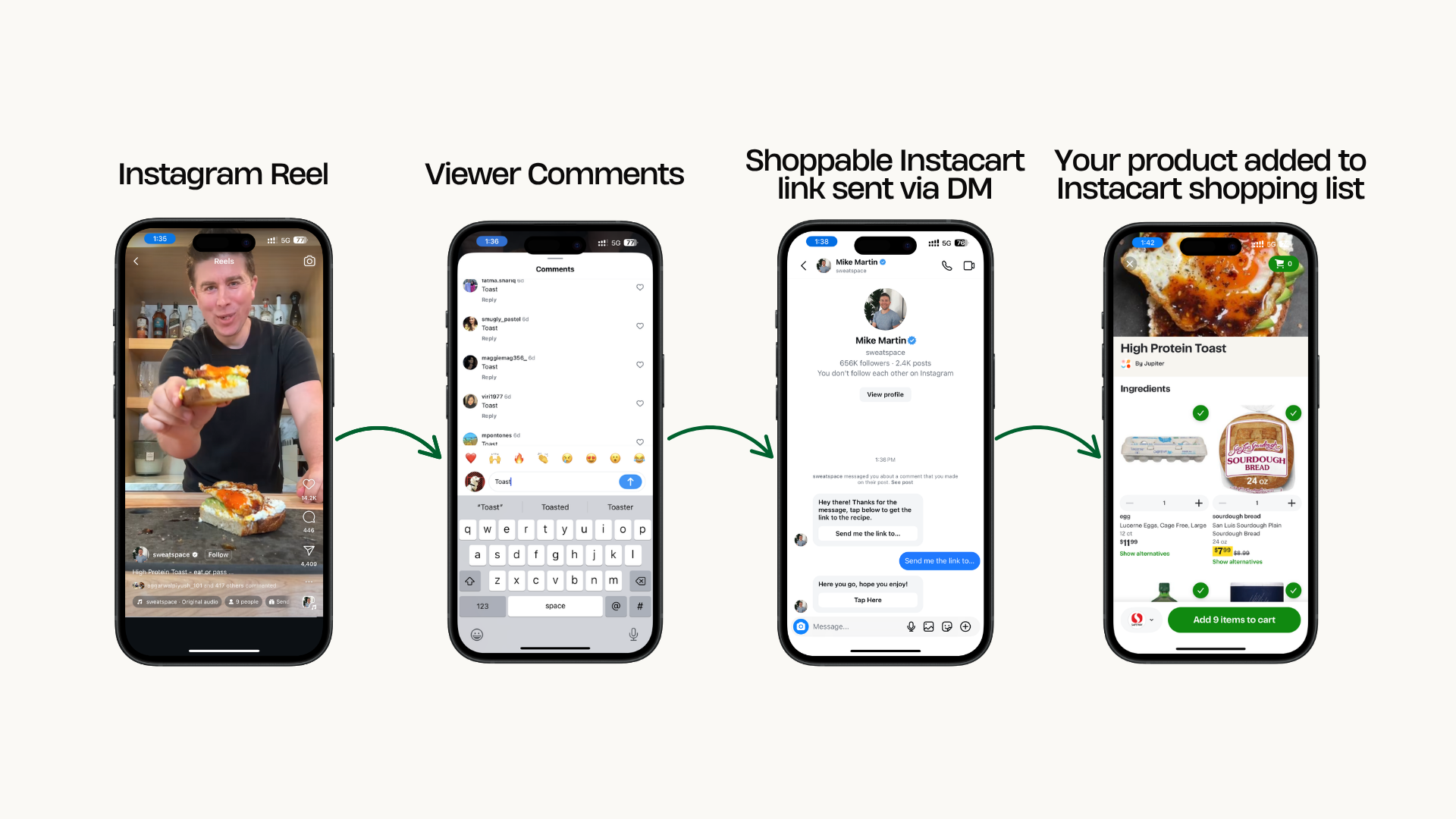
Growth from a collab or a Trial Reel is only useful if you can convert the spike into something lasting. Jupiter creators get built-in Instagram DM automation, so a comment-to-DM moment during a high-traffic post turns directly into blog traffic, an email subscriber, or a recipe save, not a follower who scrolls past tomorrow.

The Real Goal: Turning Followers Into Traffic and Revenue

Here's the uncomfortable truth in most "how to grow on Instagram" advice: follower count, by itself, doesn't pay anyone. What pays is what happens after someone discovers you, specifically, whether they end up on a page you own, on an email list, or in front of a brand deal.

This is where the Instagram growth conversation has to connect to the rest of your business.

The comment-to-DM moment is your highest-intent traffic. When someone comments "recipe please" or "link?" under a Reel, that's not passive interest, that's a person actively asking to be sent somewhere. Manually replying to dozens of comments one by one means most of those people never get a response before they've scrolled on. Automated comment-to-DM tools solve this by instantly sending the recipe link the moment someone comments a trigger word, turning a viral moment into actual traffic while it's still hot. (For a full breakdown of how comment-to-DM automation works and what Meta allows, see our guide onInstagram DM automation for food creators.)

Where that traffic lands matters as much as the traffic itself. A "link in bio" tool is fine for a single click-through, but it's not built to hold recipes, build search traffic over time, or carry your brand. A real recipe website, one with proper recipe schema, search visibility, and room for display ads and affiliate links, turns one-time Instagram traffic into a compounding asset. Every Reel becomes a deposit into something that keeps earning long after the post stops trending.

The tools to do this don't have to cost anything. Most creators piece this together with a paid DM automation tool, a separate website builder, and a separate ad network application, often before they've earned a dollar from any of it. Jupiter's creators get all three connected from the start: built-in DM automation (no ManyChat subscription required), a free branded recipe website, and access to Mediavine and Raptive ad network connections plus 65+ vetted CPG brand partners, including Banza, Pete and Gerry's, Bonafide Provisions, and General Mills.

Growing the Instagram page was never really the finish line. It's the top of a funnel that only pays off once there's somewhere for that audience to go.

Stop growing an audience with nowhere to send it.

Jupiter has helped 1,000+ food creators turn their following into more than $3M in collective earnings, by giving them the free website, the brand connections, and the DM automation to actually convert that audience.

FAQs

Quick answers to common questions.

How long does it take to grow a food Instagram page from scratch?+

Most creators who post consistently with a clear niche start seeing meaningful traction within 60 to 90 days, though this varies widely based on posting frequency, niche competitiveness, and whether early posts perform well enough with non-followers to earn wider distribution. Smaller accounts, especially under 50,000 followers, are often in the best position for fast organic growth right now.

Do hashtags still matter for food Instagram growth in 2026?+

They matter for categorization and in-app search, but they no longer drive significant discovery on their own the way they once did. Use 3 to 5 specific, relevant hashtags rather than a long generic list, and focus your real effort on hooks, watch time, and shareability.

Should I repost my TikTok videos to Instagram Reels?+

Repost the concept, not the file. Instagram's systems detect recycled content, including clips with another platform's watermark, and suppress reach on anything flagged as unoriginal. Re-edit and re-export natively for Instagram instead.

What's the fastest way to convert Instagram followers into blog traffic?+

Comment-to-DM automation tied to a clear call to action ("comment RECIPE for the link") is currently one of the most effective converters, because it catches people at the exact moment they're asking for more. Pairing that with a recipe website built for search, rather than only a link-in-bio page, is what makes that traffic compound over time instead of disappearing after 24 hours.

Is it better to focus on Reels or carousels for a food page?+

Reels are generally the stronger discovery tool for reaching new people, while carousels tend to earn more saves and shares among people who already know your page. Most growing food accounts use a mix, leading with Reels for reach and carousels for retention and engagement depth.

Related Posts

Browse more from our blog.

How to Get Brand Deals as a Food Creator (Even with a Small Audience) thumbnail

How to Get Brand Deals as a Food Creator (Even with a Small Audience)

You don't need 100k followers to land paid brand partnerships. Here's the step-by-step playbook food creators are using in 2026 to get sponsored - from building a pitch-ready profile to closing deals with CPG brands that actually pay well.

6/12/2026

How Food Bloggers Make Money in 2026: Every Revenue Stream Explained thumbnail

How Food Bloggers Make Money in 2026: Every Revenue Stream Explained

From display ads to brand deals to Instacart commissions - here's an honest breakdown of every income stream available to food creators in 2026, and how the smartest ones are stacking all of them at once.

6/12/2026

The Creator Growth Playbook: How to Turn Your Audience Into a Sustainable Business thumbnail

The Creator Growth Playbook: How to Turn Your Audience Into a Sustainable Business

A practical, no-fluff guide for creators who want to grow beyond views and turn their audience into recurring revenue โ€” using brand deals, ad networks, commerce, and owned channels.

4/27/2026

The Most Profitable Food Blog Niches in 2026 (Ranked by Earning Potential) thumbnail

The Most Profitable Food Blog Niches in 2026 (Ranked by Earning Potential)

A ranked look at the most profitable food blog niches in 2026, from keto to meal prep to budget cooking, based on ad RPM, brand deal availability, and affiliate potential.

7/8/2026

ManyChat for Food Bloggers: Is It Worth It in 2026? thumbnail

ManyChat for Food Bloggers: Is It Worth It in 2026?

A feature-for-feature look at ManyChat's 2026 pricing for food creators, what it actually costs once your Reels go viral, and how Jupiter's built-in DM automation compares for free.

7/8/2026

Pinterest SEO for Recipes: How to Rank Your Pins in 2026 thumbnail

Pinterest SEO for Recipes: How to Rank Your Pins in 2026

A technical guide to Pinterest SEO for food bloggers in 2026: keyword placement, Rich Pins setup, board structure, and the ranking signals that actually move recipe pins.

7/2/2026

How to Get Paid on TikTok as a Food Creator (Beyond the Creator Fund) thumbnail

How to Get Paid on TikTok as a Food Creator (Beyond the Creator Fund)

A reality check on TikTok's Creator Rewards Program, plus every other way food creators actually earn on TikTok: brand deals, TikTok Shop, LIVE gifts, and proper disclosure.

6/29/2026

Pinterest for Food Bloggers: How to Drive Massive Traffic to Your Blog thumbnail

Pinterest for Food Bloggers: How to Drive Massive Traffic to Your Blog

Learn how food bloggers use Pinterest to drive consistent, compounding traffic in 2026: board strategy, pin design, posting cadence, and turning pins into income.

6/29/2026

How to Start a Food TikTok Account and Get Your First 10K Followers thumbnail

How to Start a Food TikTok Account and Get Your First 10K Followers

A step-by-step beginner's guide to starting a food TikTok account in 2026, from setting up your profile to the content formats and posting habits that actually get new creators discovered.

6/24/2026

Instagram DM Automation for Food Creators: More Traffic, More Sales thumbnail

Instagram DM Automation for Food Creators: More Traffic, More Sales

How comment-to-DM automation works on Instagram, what Meta actually allows, and how food creators use it to turn recipe comments into blog traffic and sales.

6/22/2026

What is RPM and How Do Food Bloggers Maximize It? thumbnail

What is RPM and How Do Food Bloggers Maximize It?

RPM explained for food bloggers: what's a good Mediavine RPM, why it swings seasonally, and the real ways to increase it, plus the income that has no RPM ceiling.

6/22/2026

Mediavine Requirements in 2026: How to Qualify (and What to Do First) thumbnail

Mediavine Requirements in 2026: How to Qualify (and What to Do First)

Mediavine's 2026 requirements explained: the $5,000 revenue threshold, the Journey on-ramp at 1,000 sessions, the application steps, and what to do while you wait.

6/22/2026

Best Recipe Card Plugins for Food Bloggers: Ranked for 2026 thumbnail

Best Recipe Card Plugins for Food Bloggers: Ranked for 2026

Comparing the best recipe card plugins for WordPress in 2026: Tasty Recipes, WP Recipe Maker, Feast, and a free alternative. Find out which is right for your food blog.

6/18/2026

Recipe Schema Markup Explained: Get Rich Results for Your Food Blog thumbnail

Recipe Schema Markup Explained: Get Rich Results for Your Food Blog

Learn what recipe schema markup is, why it matters for food blog SEO, and how to implement it correctly to get rich results on Google without touching code.

6/18/2026

Food Blog SEO: How to Get Your Recipes to Rank on Google in 2026 thumbnail

Food Blog SEO: How to Get Your Recipes to Rank on Google in 2026

A complete guide to food blog SEO in 2026: keyword research, recipe schema, site speed, internal linking, and the technical foundations that get your recipes ranking on Google.

6/18/2026

How to Create a Food Blogger Media Kit (Free Template Inside) thumbnail

How to Create a Food Blogger Media Kit (Free Template Inside)

Learn exactly what to put in a food blogger media kit, grab a free template, and find out how to keep your numbers current so brands take you seriously from the first pitch.

6/17/2026

The Best Free Platforms to Start a Recipe Blog in 2026 thumbnail

The Best Free Platforms to Start a Recipe Blog in 2026

WordPress, Substack, Squarespace, Wix - there's no shortage of places to start a recipe blog. But free to start and free to grow are very different things. Here's how the major platforms actually stack up for food creators who want to make money from their content.

6/16/2026

How to Start a Food Blog in 2026 (That Actually Makes Money) thumbnail

How to Start a Food Blog in 2026 (That Actually Makes Money)

Most food blog guides tell you how to set up a website. This one tells you how to build a business. Here's exactly how to start a food blog in 2026 - from your first post to your first dollar - without wasting months on things that don't move the needle.

6/16/2026

How to Land CPG Brand Deals as a Food Creator thumbnail

How to Land CPG Brand Deals as a Food Creator

CPG brand partnerships are the most lucrative sponsorship category for food creators - but most brands aren't on Instagram DMs waiting for your pitch. Here's exactly how the deals actually happen, with real brand examples.

6/16/2026

Is Food Blogging Profitable? An Honest Answer for New Creators thumbnail

Is Food Blogging Profitable? An Honest Answer for New Creators

The honest answer is yes - but with important caveats most "success story" posts leave out. Here's what the profitability timeline actually looks like, what separates bloggers who earn from those who don't, and why the "it takes years" myth is only half true.

6/12/2026

How to Get Brand Deals as a Food Creator (Even with a Small Audience) thumbnail

How to Get Brand Deals as a Food Creator (Even with a Small Audience)

You don't need 100k followers to land paid brand partnerships. Here's the step-by-step playbook food creators are using in 2026 to get sponsored - from building a pitch-ready profile to closing deals with CPG brands that actually pay well.

6/12/2026

How Food Bloggers Make Money in 2026: Every Revenue Stream Explained thumbnail

How Food Bloggers Make Money in 2026: Every Revenue Stream Explained

From display ads to brand deals to Instacart commissions - here's an honest breakdown of every income stream available to food creators in 2026, and how the smartest ones are stacking all of them at once.

6/12/2026

The Creator Growth Playbook: How to Turn Your Audience Into a Sustainable Business thumbnail

The Creator Growth Playbook: How to Turn Your Audience Into a Sustainable Business

A practical, no-fluff guide for creators who want to grow beyond views and turn their audience into recurring revenue โ€” using brand deals, ad networks, commerce, and owned channels.

4/27/2026

The Most Profitable Food Blog Niches in 2026 (Ranked by Earning Potential) thumbnail

The Most Profitable Food Blog Niches in 2026 (Ranked by Earning Potential)

A ranked look at the most profitable food blog niches in 2026, from keto to meal prep to budget cooking, based on ad RPM, brand deal availability, and affiliate potential.

7/8/2026

ManyChat for Food Bloggers: Is It Worth It in 2026? thumbnail

ManyChat for Food Bloggers: Is It Worth It in 2026?

A feature-for-feature look at ManyChat's 2026 pricing for food creators, what it actually costs once your Reels go viral, and how Jupiter's built-in DM automation compares for free.

7/8/2026

Pinterest SEO for Recipes: How to Rank Your Pins in 2026 thumbnail

Pinterest SEO for Recipes: How to Rank Your Pins in 2026

A technical guide to Pinterest SEO for food bloggers in 2026: keyword placement, Rich Pins setup, board structure, and the ranking signals that actually move recipe pins.

7/2/2026