ManyChat for Food Bloggers: Is It Worth It in 2026?

A feature-for-feature look at ManyChat's 2026 pricing for food creators, what it actually costs once your Reels go viral, and how Jupiter's built-in DM automation compares for free.

ManyChat for Food Bloggers: Is It Worth It in 2026? hero image

On this page

If you've searched "ManyChat for food bloggers," you're probably staring at a comment section full of "recipe please!" and wondering whether it's finally time to pay for automation. Good instinct, bad timing. ManyChat just went through the biggest pricing overhaul in its history, and a lot of what worked for food creators a year ago doesn't work the same way anymore.

This post breaks down what ManyChat actually costs a food creator in 2026, where the free plan quietly stopped being free, and how Jupiter's built-in DM automation compares feature for feature, at no cost at all.

What ManyChat Changed in March 2026

On March 2, 2026, ManyChat rolled out a complete restructuring of its pricing, and the headline number is the one that matters most to food creators: the free plan dropped from 1,000 active contacts to just 25. ManyChat also moved from a simple Free/Pro structure to a four-tier system (Free, Essential, Pro, Business), with pricing that now scales directly with how many people interact with your automations each month.

For context, an "active contact" is anyone who has messaged your automation, replied to a comment trigger, or interacted with your Inbox in the past 30 days. That definition matters enormously for food creators, because the entire point of a recipe Reel is to get as many people as possible commenting "link please" so your automation fires. The better your content performs, the faster you outgrow whatever tier you're paying for.

Here's where the plans land as of mid-2026:

  • Free: 25 active contacts, 2 channels. Fine for testing, not for running an actual DM funnel.

  • Essential: From $14/month for 250 contacts, still limited to 2 channels, no A/B testing or advanced analytics.

  • Pro: From $29/month for 2,500 contacts, adds a third channel and basic AI features.

  • Business: From $69/month for 7,500 contacts, unlimited channels, more Inbox seats.

Go over your tier's contact limit and you don't get shut off. You get billed per extra contact, and those overage rates run anywhere from roughly $0.018 to $0.10 per contact depending on your plan and billing cycle. That sounds small until you do the math on an actual viral moment.

The Real Cost of a Viral Recipe Reel

This is the part most "ManyChat pricing" roundups skip, and it's the part that actually matters if you're a food creator: your bill is tied to your best content, not your average content.

Say you're on the Pro plan with 2,500 contacts included. You post a Reel that does well, a few hundred thousand plays, and a wave of "recipe please" comments hits your automation. Your active contact count can jump from a few hundred to several thousand in a single weekend. If you land 2,000 contacts over your limit, that's roughly $100 in overage charges on top of your $29 base, for the privilege of your content performing exactly the way you wanted it to.

Scale that up and creators running consistent viral content are landing on the Business tier at $69/month, sometimes more once overages are factored in. And that's before ManyChat's AI features, which are a separate add-on around $29/month on top of whatever plan you're on.

The uncomfortable pattern: the better a food creator's content does, the more they pay. A tool that's supposed to reward good content ends up taxing it instead.

Tired of Paying More Every Time You Go Viral?

Jupiter's DM automation is built into your creator account at no cost, with no contact tiers, no overage fees, and no per-message math to do after a big week.

Feature-for-Feature: ManyChat vs. Jupiter

Here's how the two stack up on the features food creators actually use day to day.

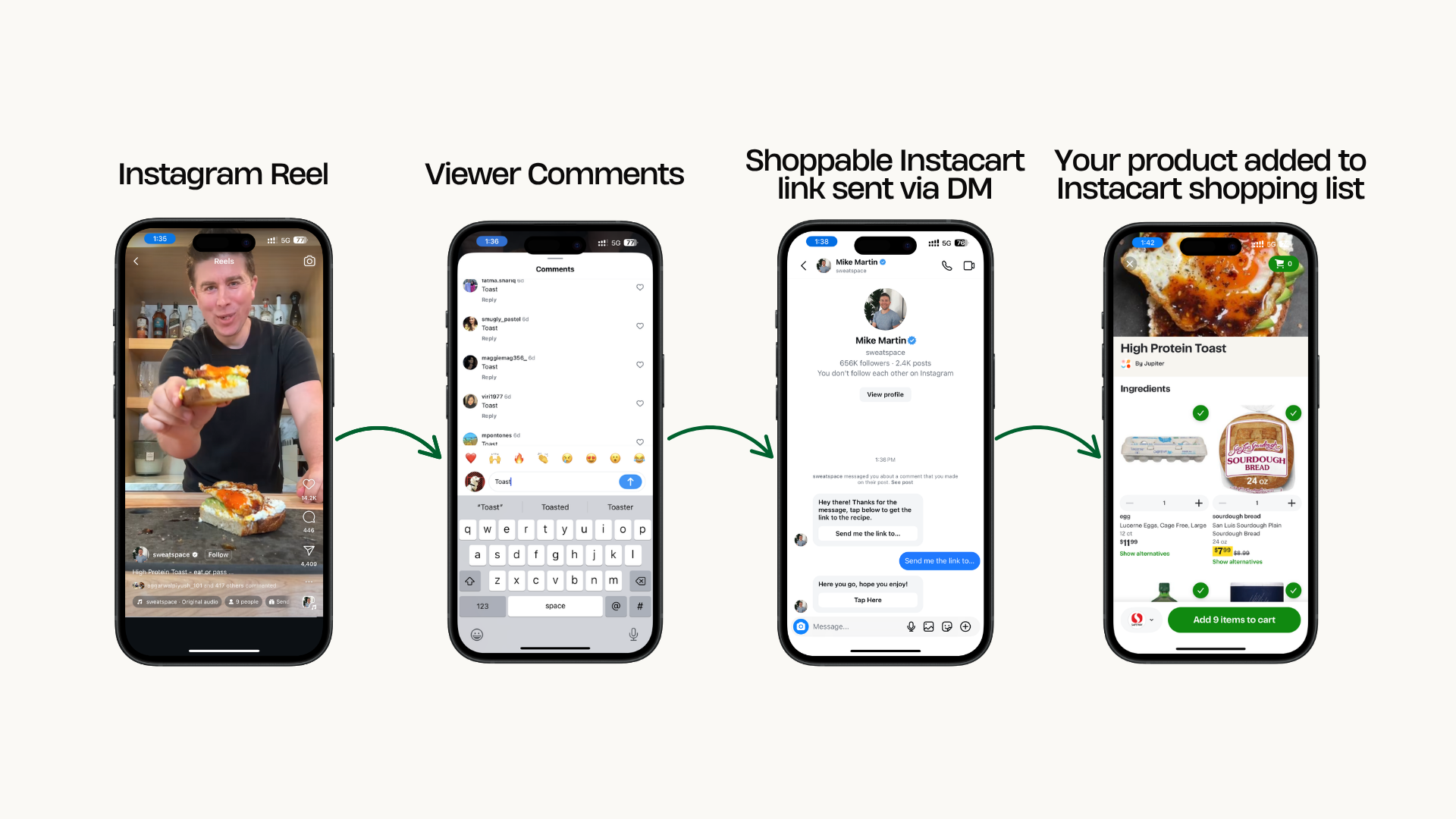
Comment-to-DM automation. ManyChat's core feature, and the reason most food creators tried it in the first place: someone comments a keyword, they get an auto-DM with your link. Jupiter's built-in DM automation covers this same core mechanic as part of your free creator account, so you're not paying a subscription just to keep the "comment recipe, get a DM" flow running.

Keyword triggers. ManyChat's Free and Essential tiers limit how many keyword triggers you can run at once, which forces creators managing multiple recipe series or seasonal promotions to upgrade earlier than they'd like. Jupiter's automation is built specifically around the food creator use case: sending recipe links, blog posts, and product pages, without gating that behind a paid tier.

Contact limits and overages. This is the biggest structural difference. ManyChat prices by active contact, so growth is a cost center. Jupiter doesn't meter your DM automation by contact count, so a viral Reel is just a viral Reel. It doesn't trigger a bill.

Multi-channel reach. ManyChat's higher tiers unlock WhatsApp, SMS, and additional channels, which matters more for e-commerce brands running paid ad funnels than for a food creator whose funnel starts and ends on Instagram. Jupiter focuses on where food creators actually get engagement: Instagram comments and DMs feeding directly into your recipe website.

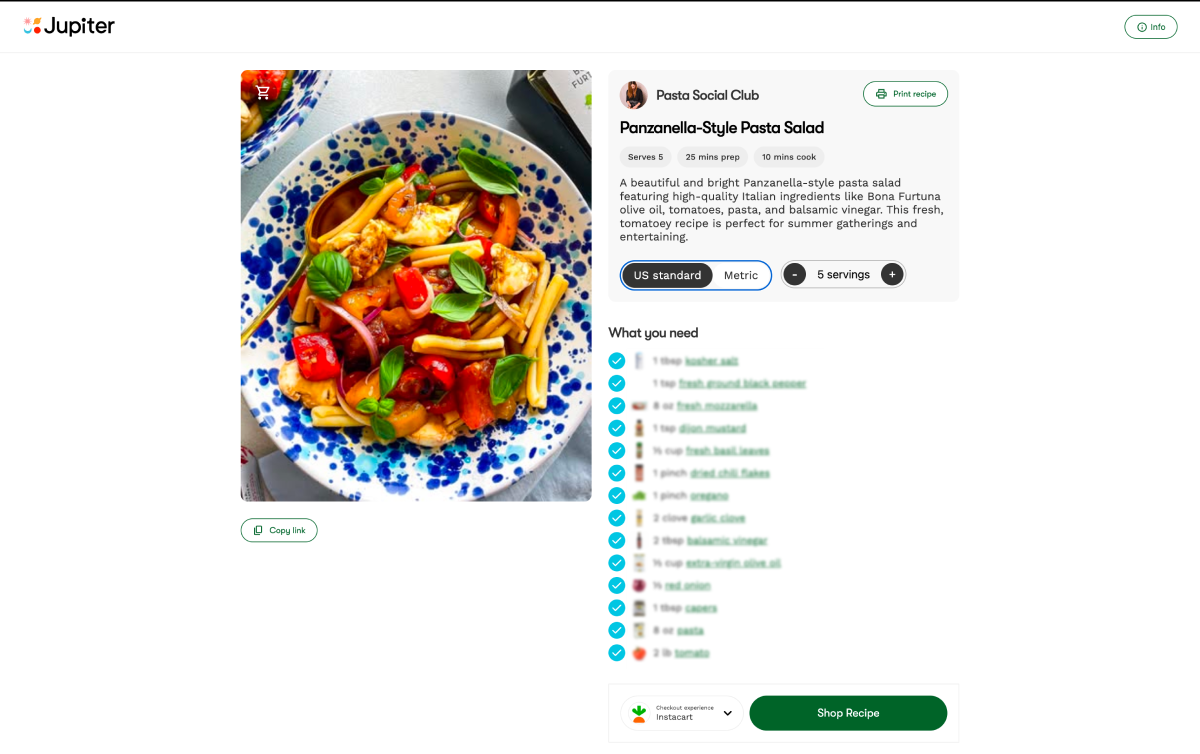
Where it sends people. This is the part that matters most long-term. ManyChat is built to get someone from a comment to a DM. What happens after that DM is on you to build, usually a link in bio, a landing page, or a manual message. Jupiter's DM automation routes directly into your free branded recipe website, so the traffic you're automating actually lands somewhere built to convert, whether that's ad revenue through Mediavine or Raptive, an Instacart-linked recipe, or a CPG brand partnership from Jupiter's 65+ vetted brands including Banza, Pete and Gerry's, Bonafide Provisions, and General Mills.

Setup and maintenance. ManyChat's flow builder is powerful but manual. Building a solid qualification or comment-trigger flow typically takes a few hours of setup and testing, and it's on you to maintain it as Instagram's rules shift. Jupiter's automation is built into the platform your recipe website already runs on, so there's no separate tool to configure, connect, or keep updated.

One Free Platform, Not a Stack of Subscriptions

Jupiter creators get DM automation, a free branded recipe website, and access to 65+ CPG brand partners in one place, all free, with Jupiter only earning when you do.

So, Is ManyChat Worth It for Food Bloggers in 2026?

If you're a brand or agency running multi-channel campaigns across WhatsApp, SMS, and Instagram with a dedicated budget for marketing tools, ManyChat's depth on those channels is genuinely hard to beat, and it remains one of the most established automation platforms on the market.

But for most individual food creators, the calculus changed in March 2026. The free plan that used to make ManyChat an easy first step is no longer generous enough to run a real comment-to-DM funnel, and the paid tiers charge you more precisely when your content is working best. If your business model is "post recipes, convert comments to DMs, send people somewhere that makes money," you're paying for multi-channel capacity you don't need in order to get a feature that Jupiter already includes for free.

The practical move for most food creators: use Jupiter's built-in automation to handle the comment-to-DM flow, and route that traffic straight into a recipe website designed to monetize it, without a monthly bill that grows every time a Reel takes off.

Join 1,000+ Creators Who've Earned $3M+ Through Jupiter

Free DM automation, a free recipe website, and access to Mediavine, Raptive, Instacart, and 65+ CPG brands, all in one application.

FAQs

Quick answers to common questions.

Is ManyChat still free in 2026?+

ManyChat has a free plan, but as of the March 2026 pricing change it's capped at just 25 active contacts across 2 channels. That's enough to test the platform, but not enough to run an active comment-to-DM funnel for most food creators.

How much does ManyChat cost for a food creator with a growing audience?+

It depends on your contact volume, but most active creators land between $29 and $69 a month once they account for overage fees, and that's before ManyChat's AI add-on, which runs about $29/month extra.

Does Jupiter's DM automation work the same way as ManyChat's comment-to-DM feature?+

Yes. Jupiter's built-in DM automation covers the core comment-trigger-to-DM flow that most food creators use ManyChat for, and it's included free as part of your Jupiter creator account.

Will my ManyChat bill go up if a Reel goes viral?+

Yes. ManyChat bills by active contact count, so a spike in comments and DM interactions from a viral post can push you over your plan's limit and trigger overage charges, or force an upgrade to a higher tier.

Can I use Jupiter's DM automation without paying anything?+

Yes. Jupiter is free to join, and DM automation is one of the built-in features available to creators, alongside a free branded recipe website and access to Jupiter's CPG brand partner network.

Related Posts

Browse more from our blog.

How to Get Brand Deals as a Food Creator (Even with a Small Audience) thumbnail

How to Get Brand Deals as a Food Creator (Even with a Small Audience)

You don't need 100k followers to land paid brand partnerships. Here's the step-by-step playbook food creators are using in 2026 to get sponsored - from building a pitch-ready profile to closing deals with CPG brands that actually pay well.

6/12/2026

How Food Bloggers Make Money in 2026: Every Revenue Stream Explained thumbnail

How Food Bloggers Make Money in 2026: Every Revenue Stream Explained

From display ads to brand deals to Instacart commissions - here's an honest breakdown of every income stream available to food creators in 2026, and how the smartest ones are stacking all of them at once.

6/12/2026

The Creator Growth Playbook: How to Turn Your Audience Into a Sustainable Business thumbnail

The Creator Growth Playbook: How to Turn Your Audience Into a Sustainable Business

A practical, no-fluff guide for creators who want to grow beyond views and turn their audience into recurring revenue — using brand deals, ad networks, commerce, and owned channels.

4/27/2026

The Most Profitable Food Blog Niches in 2026 (Ranked by Earning Potential) thumbnail

The Most Profitable Food Blog Niches in 2026 (Ranked by Earning Potential)

A ranked look at the most profitable food blog niches in 2026, from keto to meal prep to budget cooking, based on ad RPM, brand deal availability, and affiliate potential.

7/8/2026

Pinterest SEO for Recipes: How to Rank Your Pins in 2026 thumbnail

Pinterest SEO for Recipes: How to Rank Your Pins in 2026

A technical guide to Pinterest SEO for food bloggers in 2026: keyword placement, Rich Pins setup, board structure, and the ranking signals that actually move recipe pins.

7/2/2026

How to Get Paid on TikTok as a Food Creator (Beyond the Creator Fund) thumbnail

How to Get Paid on TikTok as a Food Creator (Beyond the Creator Fund)

A reality check on TikTok's Creator Rewards Program, plus every other way food creators actually earn on TikTok: brand deals, TikTok Shop, LIVE gifts, and proper disclosure.

6/29/2026

Pinterest for Food Bloggers: How to Drive Massive Traffic to Your Blog thumbnail

Pinterest for Food Bloggers: How to Drive Massive Traffic to Your Blog

Learn how food bloggers use Pinterest to drive consistent, compounding traffic in 2026: board strategy, pin design, posting cadence, and turning pins into income.

6/29/2026

How to Start a Food TikTok Account and Get Your First 10K Followers thumbnail

How to Start a Food TikTok Account and Get Your First 10K Followers

A step-by-step beginner's guide to starting a food TikTok account in 2026, from setting up your profile to the content formats and posting habits that actually get new creators discovered.

6/24/2026

How to Grow Your Food Instagram Page: A Creator's Playbook thumbnail

How to Grow Your Food Instagram Page: A Creator's Playbook

A practical playbook for growing a food Instagram page in 2026, from Reels strategy to Stories and collabs, plus how to turn followers into blog traffic that actually pays.

6/23/2026

Instagram DM Automation for Food Creators: More Traffic, More Sales thumbnail

Instagram DM Automation for Food Creators: More Traffic, More Sales

How comment-to-DM automation works on Instagram, what Meta actually allows, and how food creators use it to turn recipe comments into blog traffic and sales.

6/22/2026

What is RPM and How Do Food Bloggers Maximize It? thumbnail

What is RPM and How Do Food Bloggers Maximize It?

RPM explained for food bloggers: what's a good Mediavine RPM, why it swings seasonally, and the real ways to increase it, plus the income that has no RPM ceiling.

6/22/2026

Mediavine Requirements in 2026: How to Qualify (and What to Do First) thumbnail

Mediavine Requirements in 2026: How to Qualify (and What to Do First)

Mediavine's 2026 requirements explained: the $5,000 revenue threshold, the Journey on-ramp at 1,000 sessions, the application steps, and what to do while you wait.

6/22/2026

Best Recipe Card Plugins for Food Bloggers: Ranked for 2026 thumbnail

Best Recipe Card Plugins for Food Bloggers: Ranked for 2026

Comparing the best recipe card plugins for WordPress in 2026: Tasty Recipes, WP Recipe Maker, Feast, and a free alternative. Find out which is right for your food blog.

6/18/2026

Recipe Schema Markup Explained: Get Rich Results for Your Food Blog thumbnail

Recipe Schema Markup Explained: Get Rich Results for Your Food Blog

Learn what recipe schema markup is, why it matters for food blog SEO, and how to implement it correctly to get rich results on Google without touching code.

6/18/2026

Food Blog SEO: How to Get Your Recipes to Rank on Google in 2026 thumbnail

Food Blog SEO: How to Get Your Recipes to Rank on Google in 2026

A complete guide to food blog SEO in 2026: keyword research, recipe schema, site speed, internal linking, and the technical foundations that get your recipes ranking on Google.

6/18/2026

How to Create a Food Blogger Media Kit (Free Template Inside) thumbnail

How to Create a Food Blogger Media Kit (Free Template Inside)

Learn exactly what to put in a food blogger media kit, grab a free template, and find out how to keep your numbers current so brands take you seriously from the first pitch.

6/17/2026

The Best Free Platforms to Start a Recipe Blog in 2026 thumbnail

The Best Free Platforms to Start a Recipe Blog in 2026

WordPress, Substack, Squarespace, Wix - there's no shortage of places to start a recipe blog. But free to start and free to grow are very different things. Here's how the major platforms actually stack up for food creators who want to make money from their content.

6/16/2026

How to Start a Food Blog in 2026 (That Actually Makes Money) thumbnail

How to Start a Food Blog in 2026 (That Actually Makes Money)

Most food blog guides tell you how to set up a website. This one tells you how to build a business. Here's exactly how to start a food blog in 2026 - from your first post to your first dollar - without wasting months on things that don't move the needle.

6/16/2026

How to Land CPG Brand Deals as a Food Creator thumbnail

How to Land CPG Brand Deals as a Food Creator

CPG brand partnerships are the most lucrative sponsorship category for food creators - but most brands aren't on Instagram DMs waiting for your pitch. Here's exactly how the deals actually happen, with real brand examples.

6/16/2026

Is Food Blogging Profitable? An Honest Answer for New Creators thumbnail

Is Food Blogging Profitable? An Honest Answer for New Creators

The honest answer is yes - but with important caveats most "success story" posts leave out. Here's what the profitability timeline actually looks like, what separates bloggers who earn from those who don't, and why the "it takes years" myth is only half true.

6/12/2026

How to Get Brand Deals as a Food Creator (Even with a Small Audience) thumbnail

How to Get Brand Deals as a Food Creator (Even with a Small Audience)

You don't need 100k followers to land paid brand partnerships. Here's the step-by-step playbook food creators are using in 2026 to get sponsored - from building a pitch-ready profile to closing deals with CPG brands that actually pay well.

6/12/2026

How Food Bloggers Make Money in 2026: Every Revenue Stream Explained thumbnail

How Food Bloggers Make Money in 2026: Every Revenue Stream Explained

From display ads to brand deals to Instacart commissions - here's an honest breakdown of every income stream available to food creators in 2026, and how the smartest ones are stacking all of them at once.

6/12/2026

The Creator Growth Playbook: How to Turn Your Audience Into a Sustainable Business thumbnail

The Creator Growth Playbook: How to Turn Your Audience Into a Sustainable Business

A practical, no-fluff guide for creators who want to grow beyond views and turn their audience into recurring revenue — using brand deals, ad networks, commerce, and owned channels.

4/27/2026

The Most Profitable Food Blog Niches in 2026 (Ranked by Earning Potential) thumbnail

The Most Profitable Food Blog Niches in 2026 (Ranked by Earning Potential)

A ranked look at the most profitable food blog niches in 2026, from keto to meal prep to budget cooking, based on ad RPM, brand deal availability, and affiliate potential.

7/8/2026

Pinterest SEO for Recipes: How to Rank Your Pins in 2026 thumbnail

Pinterest SEO for Recipes: How to Rank Your Pins in 2026

A technical guide to Pinterest SEO for food bloggers in 2026: keyword placement, Rich Pins setup, board structure, and the ranking signals that actually move recipe pins.

7/2/2026

How to Get Paid on TikTok as a Food Creator (Beyond the Creator Fund) thumbnail

How to Get Paid on TikTok as a Food Creator (Beyond the Creator Fund)

A reality check on TikTok's Creator Rewards Program, plus every other way food creators actually earn on TikTok: brand deals, TikTok Shop, LIVE gifts, and proper disclosure.

6/29/2026