How to Get Brand Deals as a Food Creator (Even with a Small Audience)
Let's get one misconception out of the way early: brand deals are not reserved for creators with hundreds of thousands of followers.
In 2026, food brands - especially CPG companies - actively seek out micro and mid-tier creators because their audiences are more engaged, their content feels more authentic, and their rates are more efficient. A food creator with 12,000 highly engaged followers and a strong recipe blog can land better brand deals than a lifestyle influencer with 150,000 passive ones.
The gap between creators who consistently land partnerships and those who don't usually isn't follower count. It's positioning, preparation, and process.
This guide covers all three - in the order they matter.
Why Food Creators Are in a Strong Position Right Now
Before the playbook, the context: CPG (consumer packaged goods) brands are among the most active spenders in creator marketing. Think packaged foods, specialty ingredients, kitchen tools, beverages, condiments, health-focused products. These companies have large, recurring marketing budgets and a genuine need for food-specific content.
They need creators who can make their pasta look irresistible. Who can film a 30-second Reel that makes someone actually add an ingredient to their cart. Who understand food styling, recipe development, and how to make a brand feel like a natural part of a meal - not a forced product placement.
That's you. The food niche is unusually well-positioned for brand partnerships because the product-content fit is tight. A beauty brand needs a beauty creator. A food brand needs a food creator. You're not competing with fitness influencers or travel bloggers for these budgets. You own the category.
Now, how to capture it.
Step 1: Get Your Profile Partnership-Ready
Before you send a single pitch, your digital presence needs to answer one question for any brand that looks you up: Is this creator someone we'd trust to represent us?
That's not about having a perfect feed. It's about clarity, consistency, and proof.
Define your niche within food
"Food creator" is too broad to attract targeted brands. "30-minute weeknight dinners for busy families" or "high-protein recipes for athletes" or "authentic South Indian vegetarian cooking" - those are niches. Brands with relevant products immediately see themselves in your content.
The tighter your niche, the faster the right brands find you - and the stronger your pitch becomes, because you can make a specific case for why your audience is their audience.
Optimize your bio and pinned content
Your Instagram bio is your 2-second pitch. It should communicate:
Who you create for (your audience)
What kind of content you make
A signal that you're open to partnerships (a professional email or "collabs: [email]")
Pinned posts should showcase your best work: a visually strong recipe video, a piece of content that performed well, and ideally one example of a brand integration done naturally.
Build a consistent posting rhythm
Brands look at consistency as a proxy for reliability. A creator who posts 3x per week every week is a lower-risk partner than someone with sporadic activity and a few viral spikes. You don't need to post daily - you need to post predictably.
Step 2: Build Your Media Kit
Your media kit is your brand-facing resume. It's a 1-2 page document (usually a PDF or Canva deck) that you send to brands when you pitch - or when they reach out to you.
A strong food creator media kit includes:
Cover page: Your name/handle, a hero image from your content, and a one-line description of what you create.
About section: 3-5 sentences about your content focus, your audience, and your origin story as a food creator. Keep it specific - avoid vague language like "I'm passionate about food."
Audience demographics: Platform breakdown (Instagram, TikTok, YouTube, blog), follower counts, average engagement rate, and audience location/age/gender split. You can pull most of this from your native analytics.
Performance highlights: Your best-performing posts (with metrics), any notable brands you've worked with, and standout engagement moments (viral videos, high-save posts, reader comments that demonstrate trust).
Partnership offerings: What you actually sell. Spell it out: Instagram Reel, carousel, static post, blog recipe integration, email newsletter mention, YouTube video, story series. Include approximate pricing or indicate rates are available on request.
Contact information: Your professional email. If you have a website or blog, include that too.
Keep the design clean and on-brand with your aesthetic. A food creator's media kit should look like it belongs in the same world as their content.
Skip the Kit, Skip the Pitch - Get Matched Directly with Brands
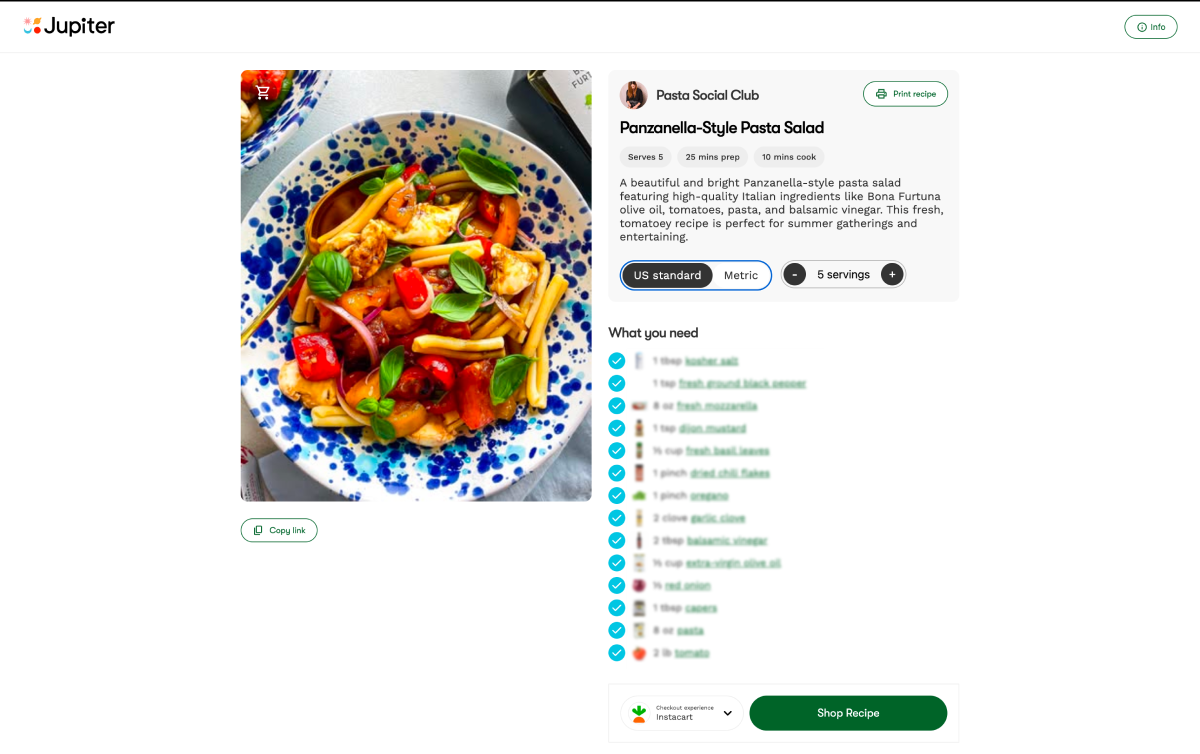
Jupiter connects food creators with 65+ pre-vetted CPG brands actively looking for partnerships - no cold outreach, no chasing inboxes. Your profile does the work. Brands come to you through Jupiter's matching system, and you decide which campaigns fit your content.
Step 3: Know What You're Worth (and Set Rates Confidently)
Undercharging is the most common mistake food creators make when they start landing partnership interest. Brands have budgets. They expect to pay. Coming in too low doesn't make you more attractive - it signals inexperience and often leaves money on the table in every deal that follows.
The industry rate benchmarks for food creators in 2026
These are approximate ranges, but they give you a working starting point:
Content Type | Nano (1k-10k) | Micro (10k-50k) | Mid-Tier (50k-200k) |
|---|---|---|---|
Instagram Reel | $150-$500 | $500-$2,500 | $2,500-$8,000 |
Instagram Carousel | $100-$400 | $400-$2,000 | $2,000-$6,000 |
Static Post | $75-$300 | $300-$1,500 | $1,500-$5,000 |
Blog Recipe Integration | $200-$600 | $600-$3,000 | $3,000-$10,000+ |
TikTok Video | $100-$400 | $400-$2,000 | $2,000-$7,000 |
Blog integrations often command a premium because the content lives permanently and ranks on Google - it's not a 24-hour story or a feed post that gets buried. A brand sponsoring a blog recipe gets evergreen visibility, and you should price accordingly.
What moves your rate up
Beyond follower count, these factors justify higher rates:
Engagement rate above 4-5% (industry average is 1-3%)
Niche audience alignment with the brand's target customer
Usage rights - if the brand wants to repurpose your content in paid ads, charge an additional 50-100% of the creation fee
Exclusivity - agreeing not to work with competitors for a period; add 25-50% for this
Deliverable complexity - a 60-second recipe video with voice-over and text overlays is not the same as a static flat lay
Always start your negotiation from your rate, not from "what's your budget?" Knowing your number and stating it clearly communicates professionalism.
Step 4: Find the Right Brands to Pitch
Pitching any brand that sells food products is a waste of time. Strategic pitching means finding brands where the product-content fit is obvious and the partnership would feel natural to your audience.
Start with what you already use
Look at the brands that appear in your content organically - the olive oil you always cook with, the pasta brand in your pantry, the kitchen tool you reach for every day. These are your warmest pitches because you can say, with complete honesty, "I'm already using your product and featuring it naturally."
Brands receive hundreds of pitches. The ones that cut through start with genuine familiarity with the product.
Research the brand's creator marketing activity
Before pitching, check:
Are they already working with food creators? (Search their hashtag on Instagram)
Do they have a "creator program" or "ambassador program" listed on their website?
Have they run sponsored posts recently? (Look for #ad or #sponsored on their brand hashtag)
A brand actively running creator campaigns is far easier to close than one you'd have to convince to start a program entirely.
Target CPG brands specifically
CPG food brands - packaged goods, specialty ingredients, beverages, condiments, health foods - are the most active buyers of food creator content. They have recurring marketing calendars, product launches that need content, and agency relationships that facilitate ongoing campaigns. Unlike a local restaurant (one-off, low budget) or a kitchen equipment brand (lower frequency), CPG brands can become repeat clients.
Tier your outreach
Divide potential brand partners into three tiers:
Tier 1: Dream brands - ideal fit, aspirational rate, longer to close
Tier 2: Strong fits - realistic now, aligned audience, move quickly
Tier 3: Smaller/emerging brands - lower rates but easier to close, good for your portfolio
Start with Tier 2 to build portfolio and momentum, work Tier 1 over time, and use Tier 3 selectively if you need case studies.
Step 5: Write a Pitch That Actually Gets a Response
Most creator pitches fail because they're about the creator, not the brand. A brand's marketing manager asks one question when reading your pitch: what's in this for us?
The structure of a pitch that works
Subject line: Keep it specific. "Recipe partnership opportunity - [Your Handle] × [Brand Name]" beats "Collaboration inquiry" every time.
Opening (2-3 sentences): Lead with something specific about the brand. Mention a product you actually use, a recent campaign that caught your attention, or something about their values that aligns with your content. Do not open with your follower count.
The fit (2-3 sentences): Explain why your audience is their audience. Be specific: "My followers are primarily home cooks aged 25-40 who are actively shopping for better pantry staples - exactly the customer your [product name] is built for."
What you're proposing (2-3 sentences): Be concrete. Don't just say "I'd love to collaborate." Say "I'd love to create a recipe Reel featuring [product] for my Instagram, paired with a full recipe integration on my blog - the kind of content that lives permanently and continues driving traffic."
Social proof (1-2 lines): One or two credibility signals - your engagement rate, a notable brand you've worked with, a post that performed exceptionally.
The ask: A clear next step. "I've attached my media kit. Would you be open to a quick call next week?" or "Happy to send over a formal proposal if this sounds like a fit."
Total length: 150-250 words. Shorter than you think. Marketers are busy.
Step 6: Handle Negotiations Professionally
You sent a pitch. A brand replied. Now what?
Don't accept the first offer immediately
Brands almost always open with their preferred rate, which leaves room to negotiate. It's not aggressive to counter - it's expected. A professional response to a low offer:
"Thanks so much - really excited about this. Based on my engagement rate and the deliverables involved, I'm typically at [your rate] for this package. Would [slightly lower but still fair rate] work for your campaign?"
If they're genuinely at budget ceiling, you can negotiate on scope (fewer deliverables) rather than just dropping your rate.
Get the brief in writing before starting
Before you create anything, get a written brief that covers: deliverables, timeline, key messages, product claims you can and can't make, approval process, and payment terms. This protects you and sets expectations clearly.
Net-30 is standard; ask for a deposit
Most brand deals pay net-30 (30 days after content goes live). For first-time brand relationships, it's reasonable to ask for 50% upfront. Legitimate brands expect this. Anyone resistant to a standard deposit is a yellow flag.
Let Jupiter Handle the Brand Relationship Work
Sourcing brands, negotiating rates, and managing campaign logistics is a part-time job on its own. Jupiter's network connects you with 65+ CPG brands that are already budgeted and vetted - so you spend your time creating, not chasing. Over 1,000 food creators are already earning through Jupiter partnerships.
Step 7: Deliver Work That Gets You Re-Booked
The best brand deal is the one that turns into a second one. Re-bookings mean no pitching, no negotiation from scratch, and a brand that already trusts your work. Getting re-booked consistently is how brand income becomes reliable rather than sporadic.
What separates forgettable from re-bookable deliverables
Read the brief carefully and follow it exactly. Late deliveries, missed key messages, or content that needs multiple revision rounds are the fastest way to close the door on future campaigns. Brands remember creators who made their job easy.
Over-communicate during the process. A quick message when you've started creating, when you're ready for review, and when content goes live costs you nothing and signals professionalism. Most creators go silent until submission - standing out here is easy.
Show them the performance. One week after the content goes live, send a brief email with the numbers: views, engagement rate, saves, link clicks if trackable. Brands love data, and very few creators proactively send performance reports. This one habit alone can materially increase your re-booking rate.
Be honest if something doesn't work. If a post underperformed, acknowledge it briefly and explain what you'd do differently. Brands work with humans, not bots - honesty builds more trust than pretending a weak post was a win.
Step 8: Build Toward an Ongoing Retainer
One-off sponsored posts are fine. Retainer deals - where a brand pays you a monthly or quarterly fee for regular content - are what make brand income truly sustainable.
Retainers happen when a brand has seen enough of your work to trust you as an ongoing partner. The path to a retainer is: deliver excellent work on the first deal → send the performance report → proactively propose what an ongoing relationship could look like.
A retainer pitch is simple: "We've had a really strong campaign together. I'd love to explore a longer-term partnership - here's what I could deliver quarterly and what that would look like investment-wise."
Even one retainer client at $1,500-$3,000/month changes the financial foundation of your creator business.
What to Do When You're Just Starting Out
The biggest obstacle early-stage creators face is the chicken-and-egg problem: you need brand work to build a portfolio, but brands want to see a portfolio. Here's how to break the cycle:
Create spec content. Treat the products you already use as "unofficial" brand content. Style it, shoot it, publish it on your feed. This becomes your portfolio. Brands can see exactly what sponsored content from you would look like.
Approach smaller/emerging brands. New brands, local food companies, and emerging CPG products are easier to close on a first deal. They're building their creator programs and more willing to work with creators who don't yet have a long brand history.
Accept gifted collabs strategically - and briefly. Gifted (unpaid) collaborations are often criticized - and overreliance on them is a mistake. But one or two strategic gifted deals, with brands whose products genuinely align with your content, can build early portfolio credibility that accelerates paid deal flow.
Join a creator network. The single fastest way to bypass the cold-pitch problem entirely is to get into a network that has pre-existing brand relationships. When a CPG brand comes to a network with a campaign brief, the network matches them with appropriate creators - which means you're being considered for deals you never had to find or pitch yourself.
The Cold Pitch Problem - and the Alternative
Let's be direct about something: cold pitching is hard, slow, and often demoralizing. A good pitch takes time to write. A personalized pitch takes research. And even an excellent pitch sent to the right contact at the right time might get no response, because that marketing manager is fielding 200 similar emails.
The most successful food creators in 2026 are not primarily cold pitching. They're inside networks and platforms that have already built the brand relationships - and they're being matched with campaigns rather than hunting for them.
This is the model that makes brand partnerships feel less like sales and more like a natural part of the creator business.
Get Matched with 65+ Food Brands - Apply Free
Jupiter is the monetization platform built for food creators. Join free, get access to a roster of 65+ CPG brands actively running creator campaigns, and start earning from partnerships that actually fit your content. No cold pitching. No chasing inboxes. Just great brand matches and fair deals - with 1,000+ food creators already earning through the network.