Instacart Affiliate for Food Creators: How to Earn from Every Recipe

How the Instacart affiliate program works for food creators, what it actually pays, and how to turn every recipe into a shoppable, commission-earning post.

Instacart Affiliate for Food Creators: How to Earn from Every Recipe hero image

On this page

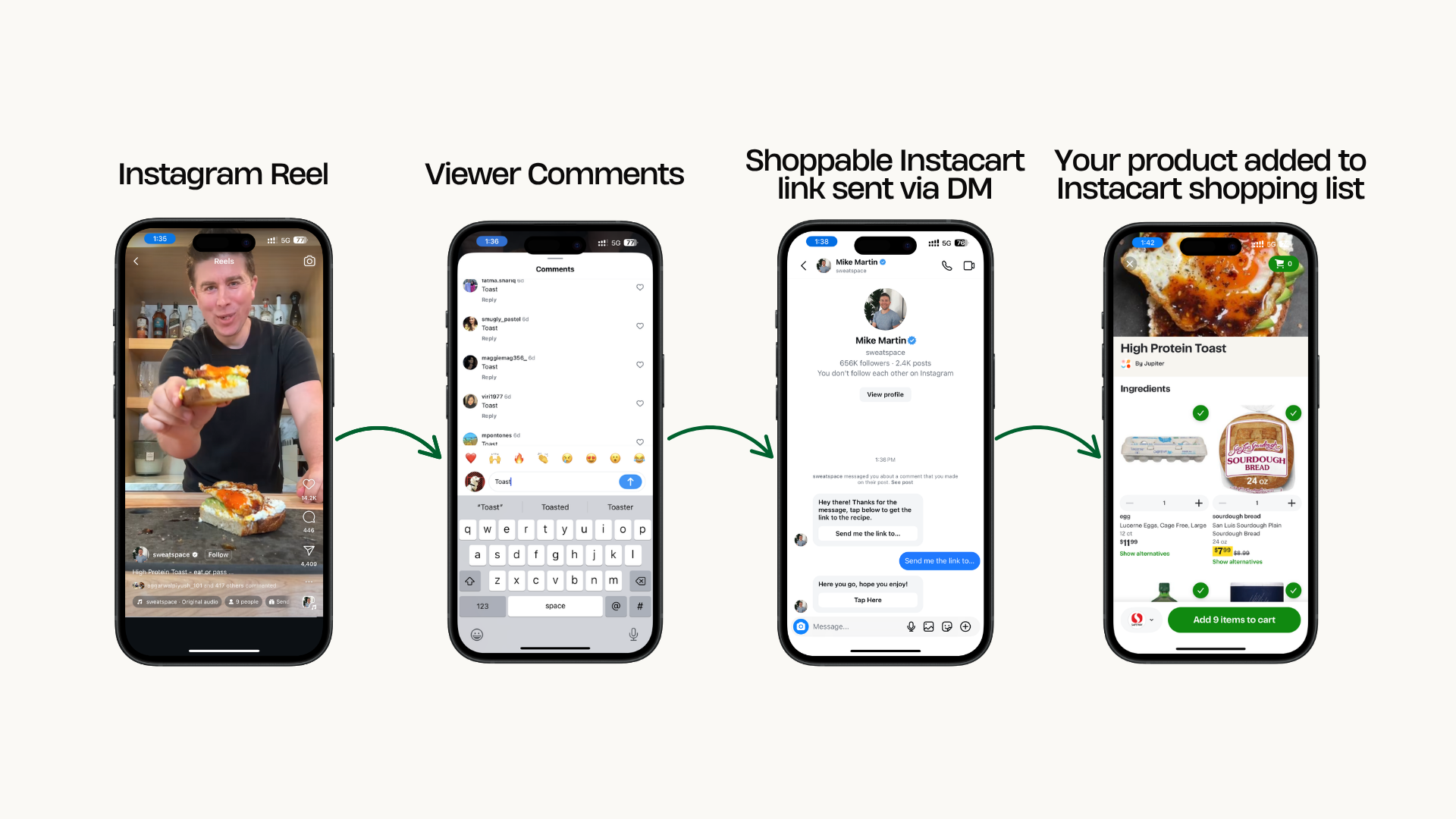
Every recipe you publish already has a built-in shopping list. The ingredients are right there in the post. The Instacart affiliate program is the piece that turns that list into income: a reader who wants to make your recipe can add every ingredient to their cart in one click, and you earn a commission when they do.

It's one of the most naturally fitting affiliate programs available to food creators, because it monetizes something readers were already going to do anyway: shop for what's in the recipe. Here's how the program actually works, what it pays, and how to set it up without needing a developer.

How the Instacart Affiliate Program Actually Works

Instacart's affiliate program is open to bloggers, publishers, and content creators with US or Canada-based traffic, and it's a genuinely low-barrier program to join. There's no strict follower minimum, and approval is largely about having real, family-friendly content rather than hitting a specific traffic threshold.

Once approved, you get a unique tracking link or ID that attributes purchases back to you. When a reader clicks through your recipe, shops for the ingredients (or anything else in their cart), and completes an order, that purchase is tracked and a commission is generated. Commissions are paid out through Impact, the affiliate network Instacart uses to manage the program, and payouts typically land roughly 55 days after the month in which the purchase occurred, once your balance clears a small minimum threshold.

A few mechanics worth understanding before you set anything up:

Commission is earned on the full cart, not just your recipe's ingredients. If a reader adds your recipe's ingredients and then tosses in a few other grocery items while they're there, your commission is typically based on the qualifying value of that broader order, not only the items from your recipe. This is a meaningful detail, since it means your actual earnings per referral are often higher than "ingredients for one recipe" would suggest.

Some categories don't count. Alcohol, restaurant orders, prescriptions, and gift cards are typically excluded from commissionable purchases, and Instacart reserves the right to adjust which categories qualify.

Commission structures vary. You'll see different numbers depending on the source and the specific partnership tier, some describe a flat per-new-customer payout in the single digits to low double digits, others describe a small percentage-based commission on qualifying orders. The exact structure that applies to you depends on your specific affiliate agreement, so it's worth checking your actual terms once approved rather than assuming a single fixed rate applies universally.

Setting Up Shoppable Recipes: The Manual Way

If you're setting this up yourself outside of a platform, the basic path looks like this:

  1. Apply to the Instacart affiliate program through Impact. It's free and typically takes just a few minutes to submit, though you'll need to meet basic eligibility (generally 18+ and US-based).

  2. Once approved, you'll receive your unique affiliate ID and tracking parameters.

  3. Add an "Add to Instacart" or shoppable recipe button to your recipe posts, either by adding the tracking code manually to your site, or through a WordPress recipe plugin built to integrate with Instacart.

  4. Make sure your tracking parameters are appended correctly to every link. This part matters: if the parameters aren't populating properly, purchases won't be attributed to you, and you'll simply lose the commission on those orders.

This manual route works, but it does require some technical setup and ongoing maintenance. It's also worth noting that Instacart's Developer Platform partnerships (the deeper, API-level integrations that platforms like recipe apps and meal planners use) are a separate, more involved path than the standard affiliate program most individual bloggers use.

Skip the Plugin Setup and Tracking Code

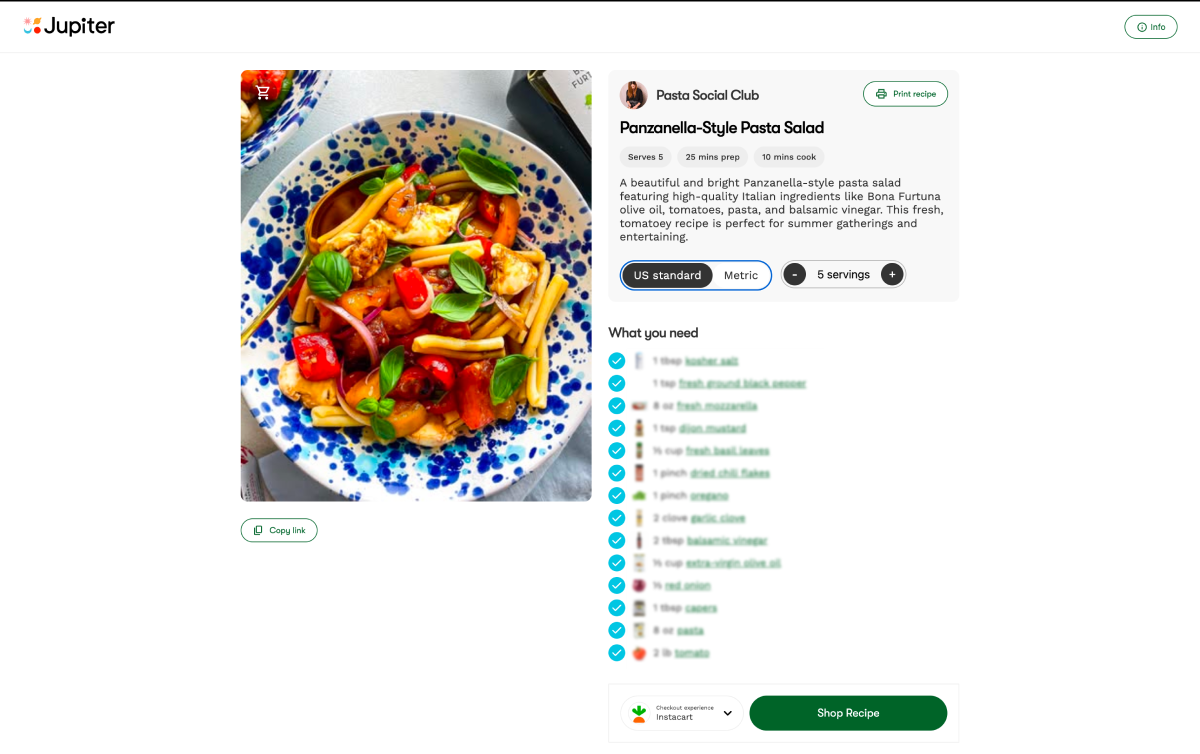
Jupiter sets up Instacart affiliate commerce automatically on your recipe website, no developer, no plugin configuration, no tracking parameters to get right yourself.

Why Instacart Converts Better Than Most Affiliate Programs

Most affiliate programs ask a reader to want something they weren't already planning to buy. A cookware recommendation, a supplement, a course. Instacart asks readers to do something they were already about to do: buy groceries for the recipe they're looking at right now.

That difference in intent matters enormously for conversion. Someone reading a recipe for weeknight chicken thighs has already decided they want to cook it. A shoppable "Add to Instacart" button removes the only remaining friction, manually looking up and adding each ingredient themselves, at the exact moment their intent is highest. Compare that to a generic affiliate link for a kitchen gadget dropped into the same post: the reader has to want the product independently of the recipe itself.

This is also why Instacart affiliate income tends to scale cleanly with recipe traffic rather than requiring separate promotional effort. Every new recipe post is automatically a new shoppable opportunity, without needing a dedicated sales pitch the way a course or ebook launch does.

Getting the Most Out of Every Recipe Post

A few practical habits make a real difference in how much a shoppable recipe actually earns:

Put the shoppable button where intent peaks. Right at the top of the recipe card and again near the ingredient list tends to outperform a single link buried at the bottom of a long post. The reader should be able to act the moment they've decided to make the recipe.

Don't just link the whole recipe, consider ingredient-level links too. Beyond the full "add all ingredients" button, individual affiliate links on specific specialty ingredients (a particular brand of pasta, a specific spice blend) can capture readers who already have most of what they need but want that one specific item.

Keep your content exactly the same. Instacart's own guidance to creators is direct on this point: keep making the content you already make, in the style your audience already likes. The shoppable layer sits on top of what you're already publishing rather than requiring you to change your content to fit the program.

Disclose the affiliate relationship. As with any affiliate income, readers should be able to tell that a purchase through your link earns you a commission. A brief, clear disclosure near the shoppable button keeps this transparent without disrupting the recipe itself.

Every Recipe Becomes a Revenue Opportunity

Jupiter creators get Instacart commerce built into their free branded recipe website from day one, alongside access to 65+ CPG brand partners and premium ad networks like Mediavine and Raptive.

How Jupiter Handles This Differently

Setting up Instacart affiliate commerce manually, tracking codes, plugin configuration, making sure parameters populate correctly, is exactly the kind of infrastructure work that eats into time better spent writing and shooting recipes. Jupiter builds Instacart commerce directly into every creator's free branded recipe website, so shoppable recipes are live automatically rather than something you configure and maintain yourself.

This matters beyond convenience. Because Jupiter is a direct Instacart affiliate partner at the platform level, the attribution infrastructure behind every shoppable link is already built, tested, and maintained centrally, rather than depending on an individual creator's plugin setup staying correctly configured over time. For a creator, that means fewer points of failure between a reader clicking "Add to Instacart" and that commission actually landing in your account.

Paired with Jupiter's other built-in tools, brand deal access, Instagram DM automation, and connections to Mediavine and Raptive, Instacart affiliate income becomes one more revenue stream stacked on the same free platform rather than a separate integration to manage on its own.

FAQs

Quick answers to common questions.

Do I need a certain amount of traffic to join the Instacart affiliate program?+

No strict minimum traffic requirement exists. The program is open to content creators regardless of follower count or niche, though approval is subject to Instacart's review and generally requires family-friendly content and US or Canada-based traffic.

How much does the Instacart affiliate program actually pay?+

Commission structures vary by partnership and have been described differently across sources, some as a flat payout per new customer order, others as a small percentage of the qualifying cart value. Check your specific affiliate agreement once approved, since the applicable structure depends on your account.

Does the commission only apply to the ingredients in my recipe?+

No. Commission is typically calculated on the full qualifying order value, which often includes items beyond your recipe's specific ingredients if the shopper adds more to their cart during the same trip.

What purchases don't count toward Instacart affiliate commissions?+

Categories like alcohol, restaurant orders, prescriptions, and gift cards are commonly excluded from commissionable purchases, and Instacart can adjust excluded categories at its discretion.

How does Jupiter make Instacart affiliate setup easier?+

Jupiter builds Instacart commerce directly into every creator's free branded recipe website automatically, without requiring a developer, a plugin, or manual tracking code setup. As a direct Instacart affiliate partner, Jupiter maintains the underlying attribution infrastructure so creators don't have to.

Related Posts

Browse more from our blog.

How to Get Brand Deals as a Food Creator (Even with a Small Audience) thumbnail

How to Get Brand Deals as a Food Creator (Even with a Small Audience)

You don't need 100k followers to land paid brand partnerships. Here's the step-by-step playbook food creators are using in 2026 to get sponsored - from building a pitch-ready profile to closing deals with CPG brands that actually pay well.

6/12/2026

How Food Bloggers Make Money in 2026: Every Revenue Stream Explained thumbnail

How Food Bloggers Make Money in 2026: Every Revenue Stream Explained

From display ads to brand deals to Instacart commissions - here's an honest breakdown of every income stream available to food creators in 2026, and how the smartest ones are stacking all of them at once.

6/12/2026

The Creator Growth Playbook: How to Turn Your Audience Into a Sustainable Business thumbnail

The Creator Growth Playbook: How to Turn Your Audience Into a Sustainable Business

A practical, no-fluff guide for creators who want to grow beyond views and turn their audience into recurring revenue — using brand deals, ad networks, commerce, and owned channels.

4/27/2026

The Best Tools for Food Bloggers in 2026 (Free and Paid) thumbnail

The Best Tools for Food Bloggers in 2026 (Free and Paid)

The tools food bloggers actually use in 2026 for photography, email marketing, recipe cards, and monetization, plus where one free platform replaces several paid ones.

7/21/2026

Real Food Blog Income Reports: What Creators Actually Earn in 2026 thumbnail

Real Food Blog Income Reports: What Creators Actually Earn in 2026

A data-driven look at real food blog income reports in 2026, from beginner earnings to six-figure creators, broken down by revenue source and traffic level.

7/21/2026

How to Build a Niche Food Blog That Actually Earns (Step by Step) thumbnail

How to Build a Niche Food Blog That Actually Earns (Step by Step)

A step-by-step guide to building a profitable niche food blog, whether you're vegan, gluten-free, plant-based, or focused on meal prep, from positioning to monetization.

7/15/2026

The Most Profitable Food Blog Niches in 2026 (Ranked by Earning Potential) thumbnail

The Most Profitable Food Blog Niches in 2026 (Ranked by Earning Potential)

A ranked look at the most profitable food blog niches in 2026, from keto to meal prep to budget cooking, based on ad RPM, brand deal availability, and affiliate potential.

7/8/2026

ManyChat for Food Bloggers: Is It Worth It in 2026? thumbnail

ManyChat for Food Bloggers: Is It Worth It in 2026?

A feature-for-feature look at ManyChat's 2026 pricing for food creators, what it actually costs once your Reels go viral, and how Jupiter's built-in DM automation compares for free.

7/8/2026

Pinterest SEO for Recipes: How to Rank Your Pins in 2026 thumbnail

Pinterest SEO for Recipes: How to Rank Your Pins in 2026

A technical guide to Pinterest SEO for food bloggers in 2026: keyword placement, Rich Pins setup, board structure, and the ranking signals that actually move recipe pins.

7/2/2026

How to Get Paid on TikTok as a Food Creator (Beyond the Creator Fund) thumbnail

How to Get Paid on TikTok as a Food Creator (Beyond the Creator Fund)

A reality check on TikTok's Creator Rewards Program, plus every other way food creators actually earn on TikTok: brand deals, TikTok Shop, LIVE gifts, and proper disclosure.

6/29/2026

Pinterest for Food Bloggers: How to Drive Massive Traffic to Your Blog thumbnail

Pinterest for Food Bloggers: How to Drive Massive Traffic to Your Blog

Learn how food bloggers use Pinterest to drive consistent, compounding traffic in 2026: board strategy, pin design, posting cadence, and turning pins into income.

6/29/2026

How to Start a Food TikTok Account and Get Your First 10K Followers thumbnail

How to Start a Food TikTok Account and Get Your First 10K Followers

A step-by-step beginner's guide to starting a food TikTok account in 2026, from setting up your profile to the content formats and posting habits that actually get new creators discovered.

6/24/2026

How to Grow Your Food Instagram Page: A Creator's Playbook thumbnail

How to Grow Your Food Instagram Page: A Creator's Playbook

A practical playbook for growing a food Instagram page in 2026, from Reels strategy to Stories and collabs, plus how to turn followers into blog traffic that actually pays.

6/23/2026

Instagram DM Automation for Food Creators: More Traffic, More Sales thumbnail

Instagram DM Automation for Food Creators: More Traffic, More Sales

How comment-to-DM automation works on Instagram, what Meta actually allows, and how food creators use it to turn recipe comments into blog traffic and sales.

6/22/2026

What is RPM and How Do Food Bloggers Maximize It? thumbnail

What is RPM and How Do Food Bloggers Maximize It?

RPM explained for food bloggers: what's a good Mediavine RPM, why it swings seasonally, and the real ways to increase it, plus the income that has no RPM ceiling.

6/22/2026

Mediavine Requirements in 2026: How to Qualify (and What to Do First) thumbnail

Mediavine Requirements in 2026: How to Qualify (and What to Do First)

Mediavine's 2026 requirements explained: the $5,000 revenue threshold, the Journey on-ramp at 1,000 sessions, the application steps, and what to do while you wait.

6/22/2026

Best Recipe Card Plugins for Food Bloggers: Ranked for 2026 thumbnail

Best Recipe Card Plugins for Food Bloggers: Ranked for 2026

Comparing the best recipe card plugins for WordPress in 2026: Tasty Recipes, WP Recipe Maker, Feast, and a free alternative. Find out which is right for your food blog.

6/18/2026

Recipe Schema Markup Explained: Get Rich Results for Your Food Blog thumbnail

Recipe Schema Markup Explained: Get Rich Results for Your Food Blog

Learn what recipe schema markup is, why it matters for food blog SEO, and how to implement it correctly to get rich results on Google without touching code.

6/18/2026

Food Blog SEO: How to Get Your Recipes to Rank on Google in 2026 thumbnail

Food Blog SEO: How to Get Your Recipes to Rank on Google in 2026

A complete guide to food blog SEO in 2026: keyword research, recipe schema, site speed, internal linking, and the technical foundations that get your recipes ranking on Google.

6/18/2026

How to Create a Food Blogger Media Kit (Free Template Inside) thumbnail

How to Create a Food Blogger Media Kit (Free Template Inside)

Learn exactly what to put in a food blogger media kit, grab a free template, and find out how to keep your numbers current so brands take you seriously from the first pitch.

6/17/2026

The Best Free Platforms to Start a Recipe Blog in 2026 thumbnail

The Best Free Platforms to Start a Recipe Blog in 2026

WordPress, Substack, Squarespace, Wix - there's no shortage of places to start a recipe blog. But free to start and free to grow are very different things. Here's how the major platforms actually stack up for food creators who want to make money from their content.

6/16/2026

How to Start a Food Blog in 2026 (That Actually Makes Money) thumbnail

How to Start a Food Blog in 2026 (That Actually Makes Money)

Most food blog guides tell you how to set up a website. This one tells you how to build a business. Here's exactly how to start a food blog in 2026 - from your first post to your first dollar - without wasting months on things that don't move the needle.

6/16/2026

How to Land CPG Brand Deals as a Food Creator thumbnail

How to Land CPG Brand Deals as a Food Creator

CPG brand partnerships are the most lucrative sponsorship category for food creators - but most brands aren't on Instagram DMs waiting for your pitch. Here's exactly how the deals actually happen, with real brand examples.

6/16/2026

Is Food Blogging Profitable? An Honest Answer for New Creators thumbnail

Is Food Blogging Profitable? An Honest Answer for New Creators

The honest answer is yes - but with important caveats most "success story" posts leave out. Here's what the profitability timeline actually looks like, what separates bloggers who earn from those who don't, and why the "it takes years" myth is only half true.

6/12/2026

How to Get Brand Deals as a Food Creator (Even with a Small Audience) thumbnail

How to Get Brand Deals as a Food Creator (Even with a Small Audience)

You don't need 100k followers to land paid brand partnerships. Here's the step-by-step playbook food creators are using in 2026 to get sponsored - from building a pitch-ready profile to closing deals with CPG brands that actually pay well.

6/12/2026

How Food Bloggers Make Money in 2026: Every Revenue Stream Explained thumbnail

How Food Bloggers Make Money in 2026: Every Revenue Stream Explained

From display ads to brand deals to Instacart commissions - here's an honest breakdown of every income stream available to food creators in 2026, and how the smartest ones are stacking all of them at once.

6/12/2026

The Creator Growth Playbook: How to Turn Your Audience Into a Sustainable Business thumbnail

The Creator Growth Playbook: How to Turn Your Audience Into a Sustainable Business

A practical, no-fluff guide for creators who want to grow beyond views and turn their audience into recurring revenue — using brand deals, ad networks, commerce, and owned channels.

4/27/2026

The Best Tools for Food Bloggers in 2026 (Free and Paid) thumbnail

The Best Tools for Food Bloggers in 2026 (Free and Paid)

The tools food bloggers actually use in 2026 for photography, email marketing, recipe cards, and monetization, plus where one free platform replaces several paid ones.

7/21/2026

Real Food Blog Income Reports: What Creators Actually Earn in 2026 thumbnail

Real Food Blog Income Reports: What Creators Actually Earn in 2026

A data-driven look at real food blog income reports in 2026, from beginner earnings to six-figure creators, broken down by revenue source and traffic level.

7/21/2026

How to Build a Niche Food Blog That Actually Earns (Step by Step) thumbnail

How to Build a Niche Food Blog That Actually Earns (Step by Step)

A step-by-step guide to building a profitable niche food blog, whether you're vegan, gluten-free, plant-based, or focused on meal prep, from positioning to monetization.

7/15/2026