Real Food Blog Income Reports: What Creators Actually Earn in 2026

A data-driven look at real food blog income reports in 2026, from beginner earnings to six-figure creators, broken down by revenue source and traffic level.

Real Food Blog Income Reports: What Creators Actually Earn in 2026 hero image

On this page

Income reports are one of the most searched, most misunderstood corners of food blogging. Some are inspiring and honest. Some are outliers dressed up as typical outcomes. Most readers land somewhere in between, wondering which numbers actually apply to them.

This is a grounded look at what real food bloggers are reporting in 2026: what the data says at each stage, what a few publicly documented creators have actually earned, and where that income tends to come from. No survivorship bias, no cherry-picked best month.

What the Broader Data Shows

Before individual stories, it's worth anchoring on the aggregate numbers. A RankIQ survey of over 800 bloggers found that food bloggers report the highest median income of any blogging niche, at roughly $9,169 per month, ahead of travel, personal finance, and lifestyle blogs. The same survey found that 72% of bloggers earning at least $2,000 a month were monetizing through Mediavine or Raptive rather than Google AdSense, which tells you a lot about where real income actually comes from once a blog matures.

Separately, ZipRecruiter's food blogger salary data (February 2026) puts average annual pay at roughly $62,275, or about $5,189 a month, with real spread underneath that average: the 25th percentile sits around $40,000 a year, while the 90th percentile reaches roughly $124,500. That spread matters more than the average. It tells you food blogging income isn't a single number, it's a range shaped heavily by traffic, time invested, and how many revenue streams a creator has actually built.

Income by Stage: What's Actually Realistic

Rather than one aggregate number, here's how food blog income typically breaks down by stage, based on documented patterns across multiple 2026 income surveys and blogger reports.

Beginner (0 to 6 months): roughly $0 to $100/month. This stage is almost entirely setup: content, SEO groundwork, and affiliate account setup. Income here is minimal by design, not because something is wrong.

Growing (6 to 18 months, under 50,000 sessions): roughly $100 to $1,000/month. Affiliate commissions start trickling in, and a starter ad network becomes viable. Brand deal income can begin here too, since sponsorships don't carry the traffic minimums that premium ad networks do.

Established (18+ months, 50,000+ sessions): roughly $1,000 to $10,000/month. This is the range where premium ad network qualification (Mediavine's 50,000-session threshold, Raptive's 100,000-pageview threshold) becomes realistic, and where the RPM jump from a generic network to a premium one, often five to ten times higher, tends to change the income picture substantially.

Full-time (100,000+ sessions, diversified income): $10,000 to $50,000+/month. At this stage, display ads are usually the largest single revenue source, but they're rarely the only one. Affiliate income, sponsored posts, and digital products are typically all running simultaneously.

Outliers: $50,000+/month, sometimes far beyond. These exist and are documented, but they represent a small fraction of food blogs and typically follow years of consistent publishing, large content libraries, and often a small team.

Most Creators Start Earning Long Before "Established"

Brand deals and affiliate income don't require 50,000 monthly sessions to start. Jupiter connects creators with 65+ CPG brand partners from day one, so income can start well before you hit a traffic threshold.

Real, Documented Food Blog Income Reports

Numbers are more useful with names attached. Here are a few publicly documented food blog income reports and trajectories that illustrate the range above.

Midwest Foodie reported over $530,000 in ad revenue alone in 2025, a figure the blogger has been transparent is ad income only and doesn't include other revenue streams. That income came from a blog with hundreds of thousands of monthly page views on Raptive, illustrating what the top end of pure display-ad income can look like at scale, and how much of that is simply the compounding effect of years of published content.

Pinch of Yum, one of the most widely cited food blog income reports historically, started at under $22 a month in 2011 and had grown to roughly $95,000 a month by 2017, with total annual revenue later reported around $10.5 million. It's an extreme outlier, but it's also one of the most transparent long-running case studies of what a food blog can become over more than a decade of consistent publishing.

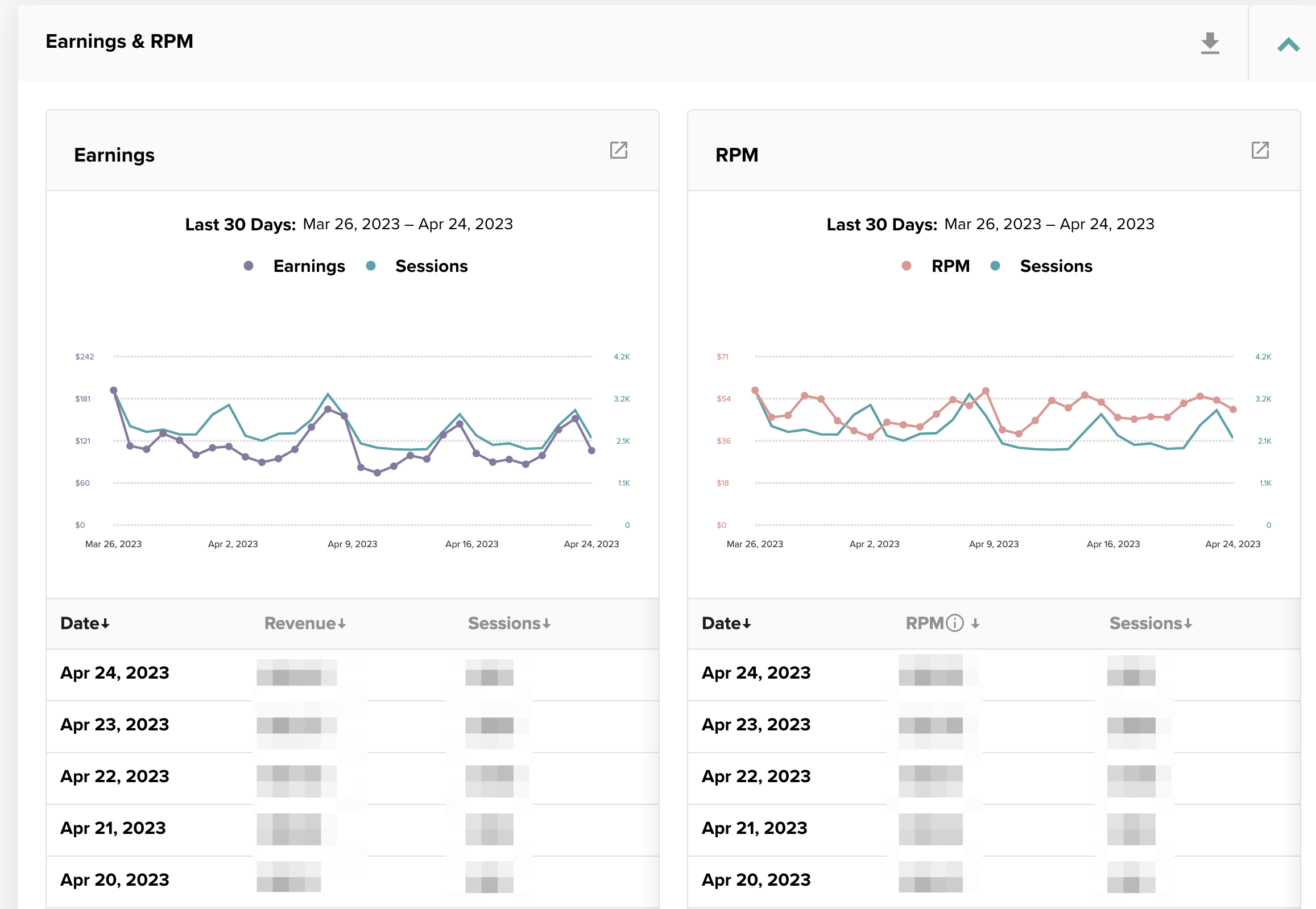
Piping Pot Curry offers a more relatable growth story: income was stuck at a few hundred dollars a month on Google AdSense, then jumped to over $4,700 a month almost immediately after moving to a premium ad network. That single network switch, not a traffic explosion, was the inflection point.

Get On My Plate reported just over $2,000 in her first month on Mediavine, with most of that early income coming from sponsored posts rather than ads. One year later, she was earning over $15,000 a month, primarily from ad revenue at that point. Her trajectory is a useful reminder that the mix of income sources often shifts significantly as a blog matures, sponsorships often carry the early months, ads often take over later.

Tiffy Cooks reported earning $45,000 to $55,000 a month in 2021, with the blog itself, rather than social platforms, being the most stable part of that income, despite growing an audience initially through TikTok and Instagram. It's a useful data point on how social growth and blog income relate: the blog is frequently where income actually lands, even when social platforms drive the initial audience.

What these stories share isn't luck. It's consistent publishing over a long runway, a premium ad network once traffic allowed it, and more than one revenue stream running at the same time.

Stack Income Streams From the Start, Not Just at Scale

The blogs above didn't earn from one source. Jupiter creators combine brand deal income, Instacart affiliate commerce, and access to Mediavine and Raptive, all in one free platform.

Where the Income Actually Comes From

Public income reports consistently break down revenue by source, and the mix tends to shift as a blog grows. At smaller traffic levels, affiliate income and sponsored content typically make up the majority of earnings, since neither requires a traffic minimum. As blogs scale into six figures of monthly page views, display advertising usually becomes the largest single category, though rarely the only one. Established, larger blogs frequently report a mix that includes digital products (ebooks, meal plans, courses) alongside ads, affiliates, and sponsorships, since a mature, trusting audience converts well to owned products.

The through-line across nearly every documented income report: bloggers who diversify beyond a single source consistently report more stable, and often larger, total income than those relying on ads or sponsorships alone.

What Jupiter Creators Are Earning

Jupiter's own creator community reflects the same pattern seen across the wider food blogging data: income that compounds when multiple streams run together. Jupiter's 1,000+ creators have earned $3M+ collectively, sourced across the same categories that show up in public income reports, brand deal income from Jupiter's 65+ CPG partners including Banza, Pete and Gerry's, Bonafide Provisions, and General Mills, ad network access through Mediavine and Raptive, and Instacart affiliate commissions built directly into recipe content.

The practical takeaway from Jupiter's own data mirrors what the broader income reports above show: creators who combine a free branded recipe website with brand deal access and affiliate integration from the start tend to reach meaningful income faster than those waiting on a single revenue stream to mature.

Join 1,000+ Creators Already Earning Through Jupiter

Free to join, with access to 65+ CPG brand partners, Mediavine and Raptive ad networks, and Instacart affiliate commerce, all in one platform built specifically for food creators.

FAQs

Quick answers to common questions.

What's a realistic food blog income for a beginner?+

Most food bloggers earn very little in the first six months, often under $100 a month, while building content and SEO foundations. Meaningful income, often $100 to $1,000 a month, tends to show up between six and eighteen months of consistent publishing.

How much do established food bloggers make?+

A RankIQ survey found food bloggers report a median income of about $9,169 a month, the highest of any blogging niche surveyed. Established blogs with 50,000+ monthly sessions commonly report $1,000 to $10,000 a month, with full-time bloggers at higher traffic levels reporting $10,000 to $50,000 or more.

Do these income reports include brand deals and affiliate income, or just ads?+

It varies by report. Some, like Midwest Foodie's widely cited figures, are explicitly ad revenue only. Others combine ads, affiliates, and sponsorships into a single total. It's worth checking what an income report actually includes before comparing it to your own numbers.

Why do premium ad networks make such a big difference in food blog income?+

Premium networks like Mediavine and Raptive typically pay significantly higher RPMs than generic ad networks, often five to ten times more at the same traffic level. Several documented income reports show income jumping substantially within the same month a blogger switched networks, without any change in traffic.

How does Jupiter fit into a food blogger's income mix?+

Jupiter provides brand deal access to 65+ CPG partners, Instacart affiliate integration, and connections to Mediavine and Raptive, letting creators stack multiple income streams, the same pattern seen across nearly every real food blog income report, from the earliest stages rather than waiting until traffic scales.

Related Posts

Browse more from our blog.

How to Get Brand Deals as a Food Creator (Even with a Small Audience) thumbnail

How to Get Brand Deals as a Food Creator (Even with a Small Audience)

You don't need 100k followers to land paid brand partnerships. Here's the step-by-step playbook food creators are using in 2026 to get sponsored - from building a pitch-ready profile to closing deals with CPG brands that actually pay well.

6/12/2026

How Food Bloggers Make Money in 2026: Every Revenue Stream Explained thumbnail

How Food Bloggers Make Money in 2026: Every Revenue Stream Explained

From display ads to brand deals to Instacart commissions - here's an honest breakdown of every income stream available to food creators in 2026, and how the smartest ones are stacking all of them at once.

6/12/2026

The Creator Growth Playbook: How to Turn Your Audience Into a Sustainable Business thumbnail

The Creator Growth Playbook: How to Turn Your Audience Into a Sustainable Business

A practical, no-fluff guide for creators who want to grow beyond views and turn their audience into recurring revenue — using brand deals, ad networks, commerce, and owned channels.

4/27/2026

The Best Tools for Food Bloggers in 2026 (Free and Paid) thumbnail

The Best Tools for Food Bloggers in 2026 (Free and Paid)

The tools food bloggers actually use in 2026 for photography, email marketing, recipe cards, and monetization, plus where one free platform replaces several paid ones.

7/21/2026

Instacart Affiliate for Food Creators: How to Earn from Every Recipe thumbnail

Instacart Affiliate for Food Creators: How to Earn from Every Recipe

How the Instacart affiliate program works for food creators, what it actually pays, and how to turn every recipe into a shoppable, commission-earning post.

7/21/2026

How to Build a Niche Food Blog That Actually Earns (Step by Step) thumbnail

How to Build a Niche Food Blog That Actually Earns (Step by Step)

A step-by-step guide to building a profitable niche food blog, whether you're vegan, gluten-free, plant-based, or focused on meal prep, from positioning to monetization.

7/15/2026

The Most Profitable Food Blog Niches in 2026 (Ranked by Earning Potential) thumbnail

The Most Profitable Food Blog Niches in 2026 (Ranked by Earning Potential)

A ranked look at the most profitable food blog niches in 2026, from keto to meal prep to budget cooking, based on ad RPM, brand deal availability, and affiliate potential.

7/8/2026

ManyChat for Food Bloggers: Is It Worth It in 2026? thumbnail

ManyChat for Food Bloggers: Is It Worth It in 2026?

A feature-for-feature look at ManyChat's 2026 pricing for food creators, what it actually costs once your Reels go viral, and how Jupiter's built-in DM automation compares for free.

7/8/2026

Pinterest SEO for Recipes: How to Rank Your Pins in 2026 thumbnail

Pinterest SEO for Recipes: How to Rank Your Pins in 2026

A technical guide to Pinterest SEO for food bloggers in 2026: keyword placement, Rich Pins setup, board structure, and the ranking signals that actually move recipe pins.

7/2/2026

How to Get Paid on TikTok as a Food Creator (Beyond the Creator Fund) thumbnail

How to Get Paid on TikTok as a Food Creator (Beyond the Creator Fund)

A reality check on TikTok's Creator Rewards Program, plus every other way food creators actually earn on TikTok: brand deals, TikTok Shop, LIVE gifts, and proper disclosure.

6/29/2026

Pinterest for Food Bloggers: How to Drive Massive Traffic to Your Blog thumbnail

Pinterest for Food Bloggers: How to Drive Massive Traffic to Your Blog

Learn how food bloggers use Pinterest to drive consistent, compounding traffic in 2026: board strategy, pin design, posting cadence, and turning pins into income.

6/29/2026

How to Start a Food TikTok Account and Get Your First 10K Followers thumbnail

How to Start a Food TikTok Account and Get Your First 10K Followers

A step-by-step beginner's guide to starting a food TikTok account in 2026, from setting up your profile to the content formats and posting habits that actually get new creators discovered.

6/24/2026

How to Grow Your Food Instagram Page: A Creator's Playbook thumbnail

How to Grow Your Food Instagram Page: A Creator's Playbook

A practical playbook for growing a food Instagram page in 2026, from Reels strategy to Stories and collabs, plus how to turn followers into blog traffic that actually pays.

6/23/2026

Instagram DM Automation for Food Creators: More Traffic, More Sales thumbnail

Instagram DM Automation for Food Creators: More Traffic, More Sales

How comment-to-DM automation works on Instagram, what Meta actually allows, and how food creators use it to turn recipe comments into blog traffic and sales.

6/22/2026

What is RPM and How Do Food Bloggers Maximize It? thumbnail

What is RPM and How Do Food Bloggers Maximize It?

RPM explained for food bloggers: what's a good Mediavine RPM, why it swings seasonally, and the real ways to increase it, plus the income that has no RPM ceiling.

6/22/2026

Mediavine Requirements in 2026: How to Qualify (and What to Do First) thumbnail

Mediavine Requirements in 2026: How to Qualify (and What to Do First)

Mediavine's 2026 requirements explained: the $5,000 revenue threshold, the Journey on-ramp at 1,000 sessions, the application steps, and what to do while you wait.

6/22/2026

Best Recipe Card Plugins for Food Bloggers: Ranked for 2026 thumbnail

Best Recipe Card Plugins for Food Bloggers: Ranked for 2026

Comparing the best recipe card plugins for WordPress in 2026: Tasty Recipes, WP Recipe Maker, Feast, and a free alternative. Find out which is right for your food blog.

6/18/2026

Recipe Schema Markup Explained: Get Rich Results for Your Food Blog thumbnail

Recipe Schema Markup Explained: Get Rich Results for Your Food Blog

Learn what recipe schema markup is, why it matters for food blog SEO, and how to implement it correctly to get rich results on Google without touching code.

6/18/2026

Food Blog SEO: How to Get Your Recipes to Rank on Google in 2026 thumbnail

Food Blog SEO: How to Get Your Recipes to Rank on Google in 2026

A complete guide to food blog SEO in 2026: keyword research, recipe schema, site speed, internal linking, and the technical foundations that get your recipes ranking on Google.

6/18/2026

How to Create a Food Blogger Media Kit (Free Template Inside) thumbnail

How to Create a Food Blogger Media Kit (Free Template Inside)

Learn exactly what to put in a food blogger media kit, grab a free template, and find out how to keep your numbers current so brands take you seriously from the first pitch.

6/17/2026

The Best Free Platforms to Start a Recipe Blog in 2026 thumbnail

The Best Free Platforms to Start a Recipe Blog in 2026

WordPress, Substack, Squarespace, Wix - there's no shortage of places to start a recipe blog. But free to start and free to grow are very different things. Here's how the major platforms actually stack up for food creators who want to make money from their content.

6/16/2026

How to Start a Food Blog in 2026 (That Actually Makes Money) thumbnail

How to Start a Food Blog in 2026 (That Actually Makes Money)

Most food blog guides tell you how to set up a website. This one tells you how to build a business. Here's exactly how to start a food blog in 2026 - from your first post to your first dollar - without wasting months on things that don't move the needle.

6/16/2026

How to Land CPG Brand Deals as a Food Creator thumbnail

How to Land CPG Brand Deals as a Food Creator

CPG brand partnerships are the most lucrative sponsorship category for food creators - but most brands aren't on Instagram DMs waiting for your pitch. Here's exactly how the deals actually happen, with real brand examples.

6/16/2026

Is Food Blogging Profitable? An Honest Answer for New Creators thumbnail

Is Food Blogging Profitable? An Honest Answer for New Creators

The honest answer is yes - but with important caveats most "success story" posts leave out. Here's what the profitability timeline actually looks like, what separates bloggers who earn from those who don't, and why the "it takes years" myth is only half true.

6/12/2026

How to Get Brand Deals as a Food Creator (Even with a Small Audience) thumbnail

How to Get Brand Deals as a Food Creator (Even with a Small Audience)

You don't need 100k followers to land paid brand partnerships. Here's the step-by-step playbook food creators are using in 2026 to get sponsored - from building a pitch-ready profile to closing deals with CPG brands that actually pay well.

6/12/2026

How Food Bloggers Make Money in 2026: Every Revenue Stream Explained thumbnail

How Food Bloggers Make Money in 2026: Every Revenue Stream Explained

From display ads to brand deals to Instacart commissions - here's an honest breakdown of every income stream available to food creators in 2026, and how the smartest ones are stacking all of them at once.

6/12/2026

The Creator Growth Playbook: How to Turn Your Audience Into a Sustainable Business thumbnail

The Creator Growth Playbook: How to Turn Your Audience Into a Sustainable Business

A practical, no-fluff guide for creators who want to grow beyond views and turn their audience into recurring revenue — using brand deals, ad networks, commerce, and owned channels.

4/27/2026

The Best Tools for Food Bloggers in 2026 (Free and Paid) thumbnail

The Best Tools for Food Bloggers in 2026 (Free and Paid)

The tools food bloggers actually use in 2026 for photography, email marketing, recipe cards, and monetization, plus where one free platform replaces several paid ones.

7/21/2026

Instacart Affiliate for Food Creators: How to Earn from Every Recipe thumbnail

Instacart Affiliate for Food Creators: How to Earn from Every Recipe

How the Instacart affiliate program works for food creators, what it actually pays, and how to turn every recipe into a shoppable, commission-earning post.

7/21/2026

How to Build a Niche Food Blog That Actually Earns (Step by Step) thumbnail

How to Build a Niche Food Blog That Actually Earns (Step by Step)

A step-by-step guide to building a profitable niche food blog, whether you're vegan, gluten-free, plant-based, or focused on meal prep, from positioning to monetization.

7/15/2026