Food Blog Newsletter: Substack vs beehiiv vs Kit
An email list is the one audience no algorithm can take away. Here's why food creators need a newsletter, how Substack, beehiiv and Kit compare on fees, what to send each week, how to earn from it, and how to grow it from Instagram.
A food blog newsletter is a regular email of recipes and kitchen tips sent to readers who signed up. It protects you from algorithm changes and brings readers back to your recipe pages. Substack is free to start but keeps 10% of paid subscriptions, beehiiv's paid plans take 0%, and Kit charges 3.5% plus 30 cents.
Key takeaways
- An email list reaches every subscriber's inbox, while social posts reach whoever the app decides to show them to.
- Substack is free to publish on and keeps 10% of paid subscription revenue, plus Stripe processing fees.
- beehiiv's Free plan covers up to 2,500 subscribers, and its paid plans take 0% of paid subscription revenue, plus Stripe fees.
- Kit lists a 3.5% plus 30 cent transaction fee on paid newsletters and digital products.
- A simple weekly format of one new recipe, one tip and one link back to your site is easier to keep up than a long magazine-style email.
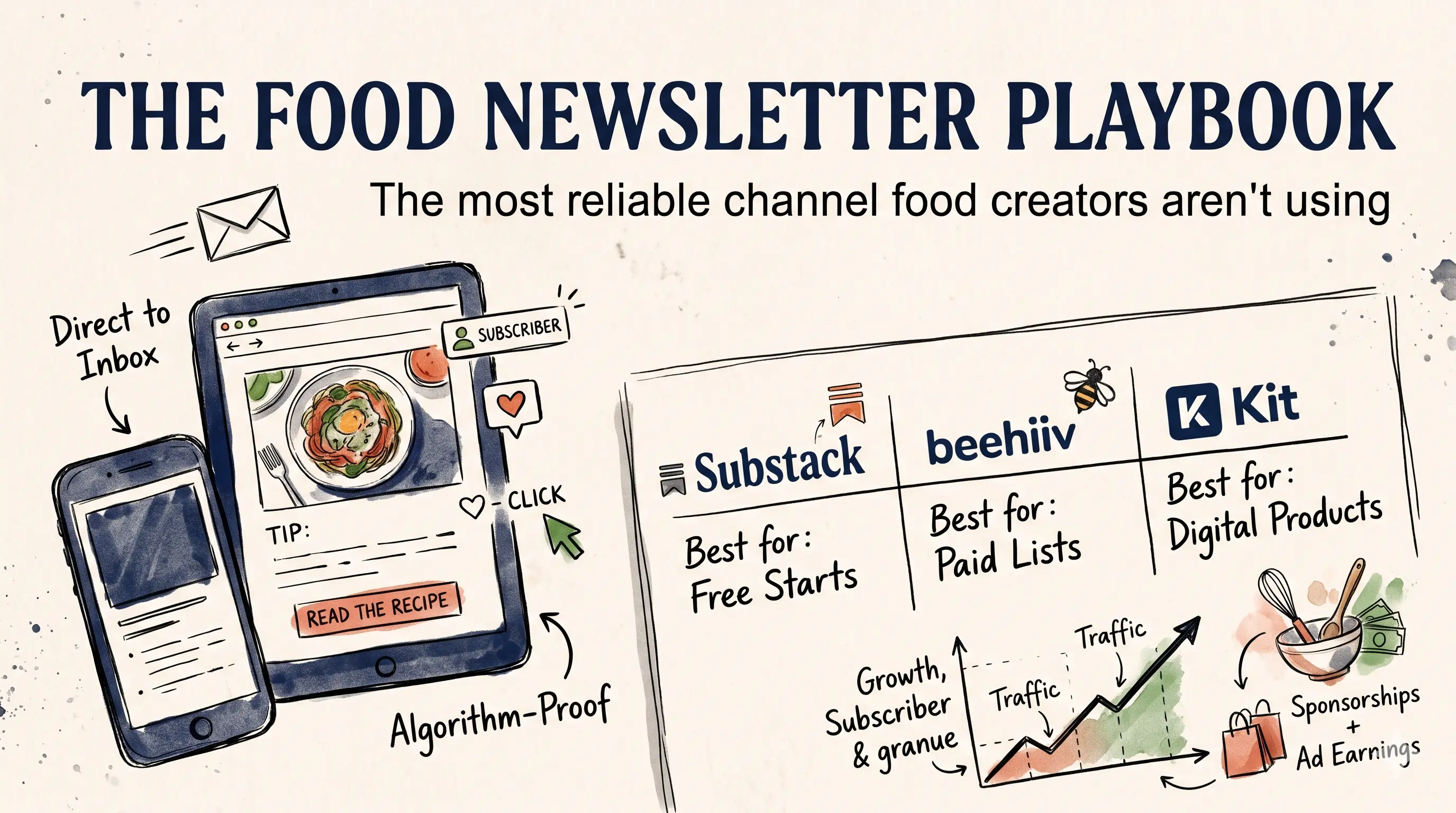
A food blog newsletter is the most reliable channel most food creators aren't using. You can have a big Instagram following and still lose half your reach overnight when the app changes what it shows.
Our point of view: start the list before you think you need it. Every recipe post that goes out without a sign-up link is a reader you might not reach again. The platform matters less than starting.
Why a food blog newsletter protects food creators
An email list is the one audience no app controls. Social posts reach whoever the algorithm chooses. An email reaches every subscriber's inbox.
That matters for income too. A weekly send brings readers back to your recipe pages, which lifts ad earnings and grocery commissions. It also gives you something brands value: an audience you can reach on a set date.
Substack vs beehiiv vs Kit
All three can run a free food newsletter. They differ most in what they charge when you add paid subscriptions.
Platform | Free to start | Cut of paid subscriptions | Worth knowing |
|---|---|---|---|
Substack | Yes, at any list size | 10%, plus Stripe fees | Built-in reader network and app |
beehiiv | Yes, up to 2,500 subscribers | 0% on paid plans, plus Stripe fees | Paid tiers need a paid plan |
Kit | Check current plans | 3.5% plus 30 cents per transaction | Strong automations and digital product sales |
Sources: Substack's pricing help page, beehiiv pricing and Kit pricing. Substack lists Stripe card processing at 2.9% plus 30 cents per payment for US cards. Prices change, so check each page before you choose.
A simple rule: Substack is the easiest start, beehiiv suits a growing paid list, and Kit suits creators who sell digital products like meal plans or ebooks.
What should you send each week?
Keep the format simple enough to repeat. A long magazine-style email is hard to keep up, and a skipped week costs more than a short one.
A weekly format that works:
One new recipe. A photo, two lines on why it's good, and a link to the full recipe page.
One tip. A technique, a swap or a shortcut that took you years to learn.
One thing from the archive. A seasonal recipe readers may have missed.
One personal line. What you're cooking this week, so it reads like a person.
Always link to the recipe page rather than putting the full recipe in the email. The page is where ads, ratings and shoppable ingredients live.

Turn followers into readers and buyers
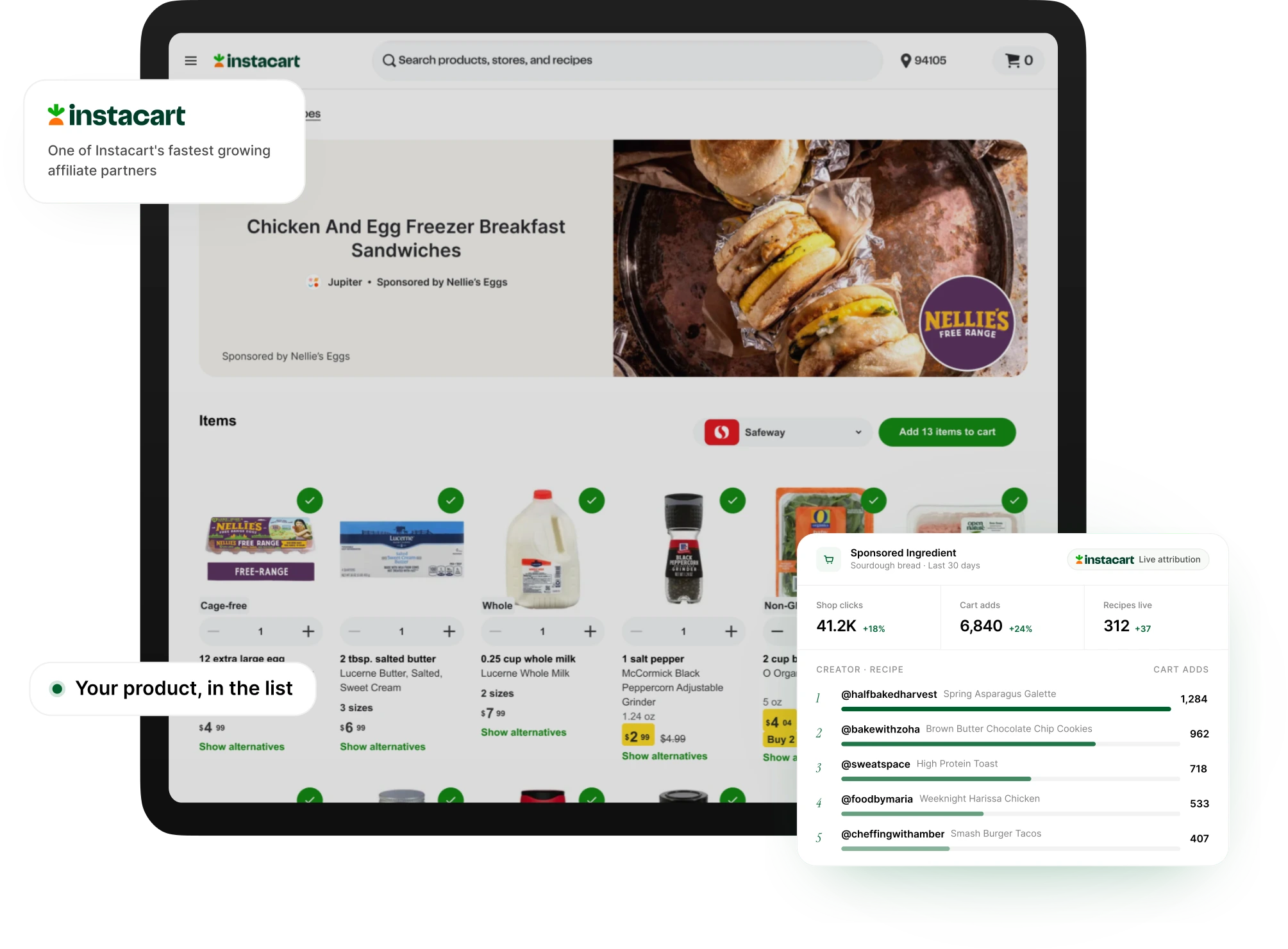
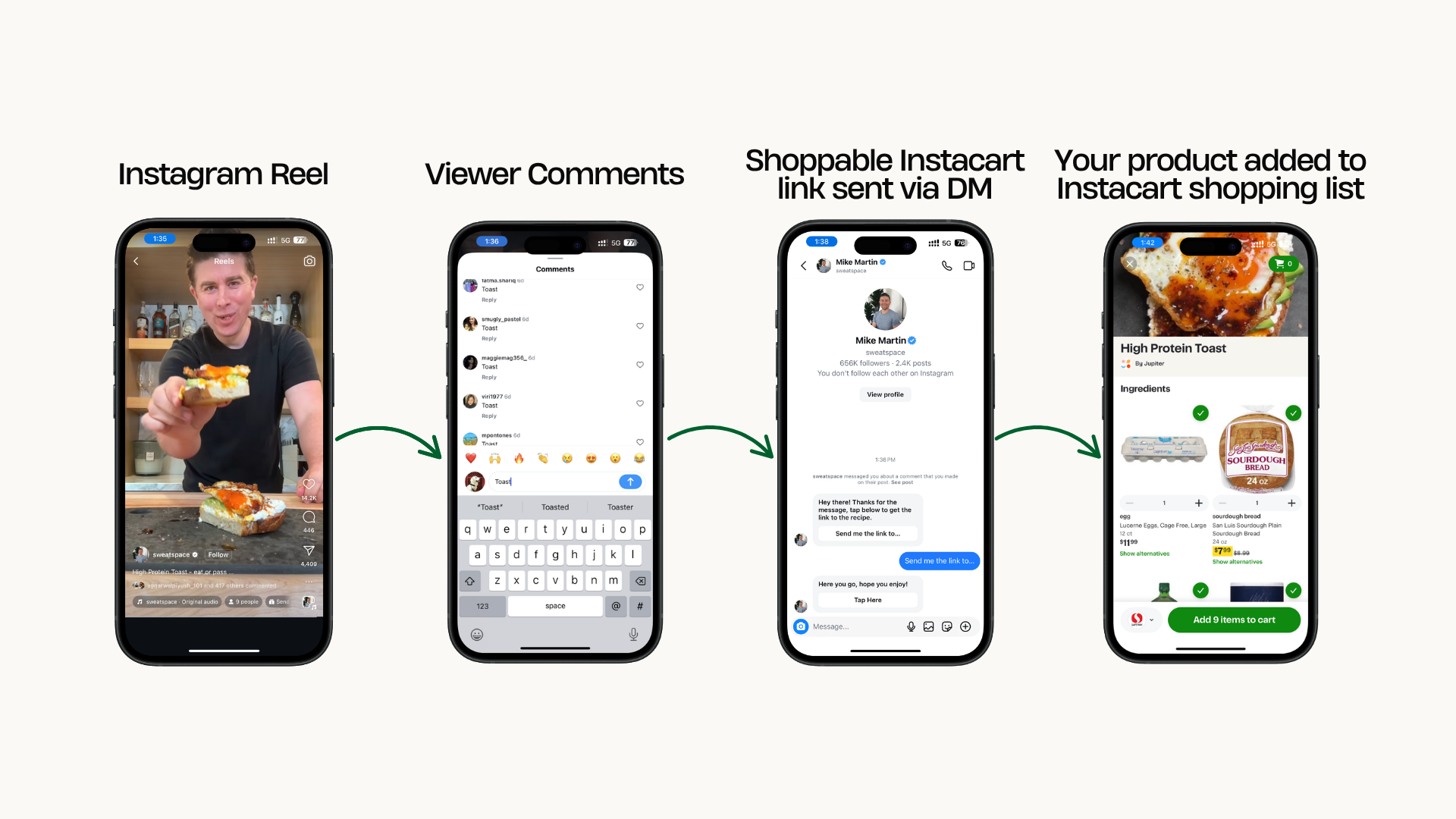
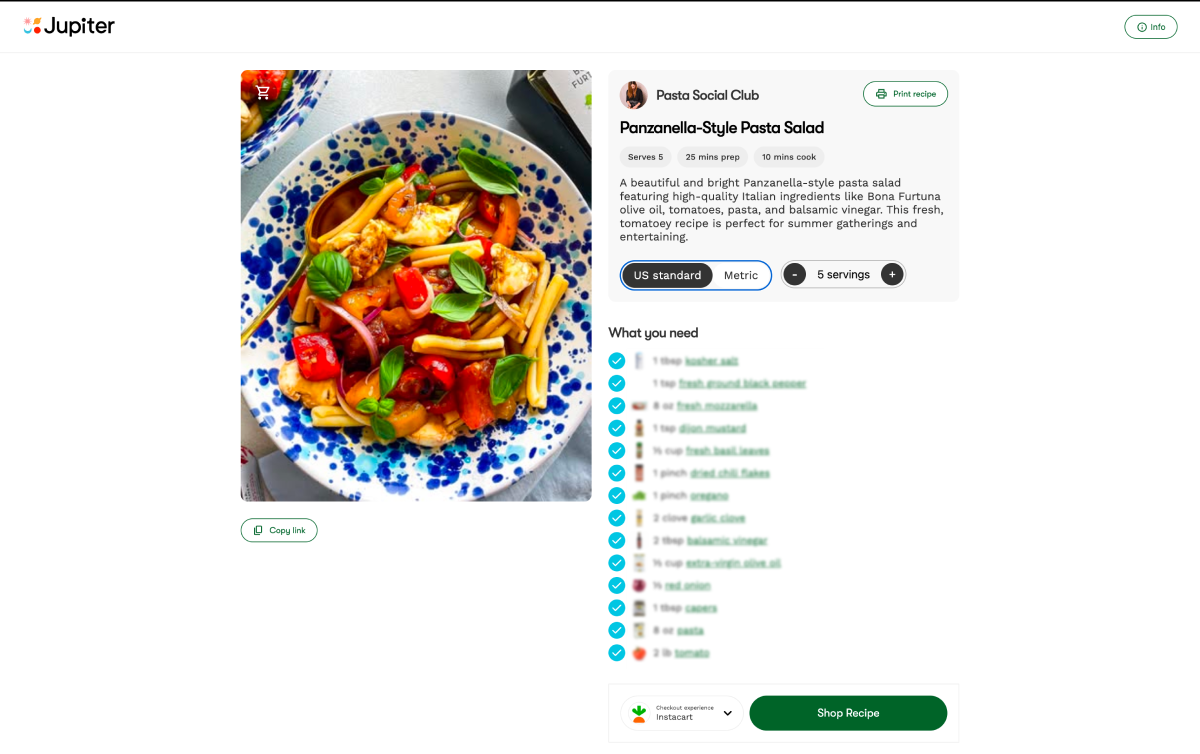
Jupiter sends followers a shoppable ingredient list by DM and builds recipe pages from the content you already post.
How do you make money from a recipe newsletter?
Newsletter income for food creators comes from four places:
Traffic to recipe pages. Each click earns through ads and grocery commissions on the site.
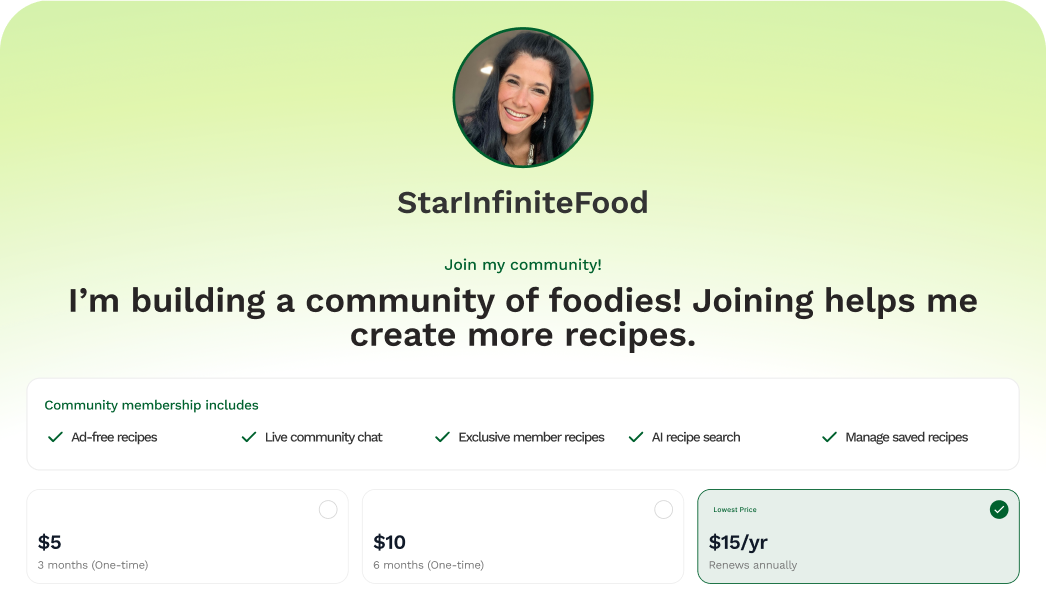
Paid tiers. Members-only recipes, meal plans or early access.
Sponsorships. A brand pays for a feature in one send.
Affiliate links. Kitchen gear and pantry items you use.
Start free. Add a paid tier once you can see which emails readers open and click most, since that tells you what they'd pay for. Our guide to how food bloggers make money covers how these streams fit together.
Growing your list from Instagram
Most food creators' future subscribers already follow them on Instagram. The job is giving them a reason to sign up.
Offer a specific freebie, such as a printable weekly meal plan or a holiday baking collection.
Mention it in captions and Stories, not just in your bio.
Use comment-to-DM automation so followers who comment a keyword get the sign-up link straight away.
Our guide to Instagram DM automation for food creators explains how keyword DMs work. For the rest of your stack, see the best tools for food bloggers.
Where the newsletter fits in your growth plan
Social brings new people in, recipe pages earn from them, and email brings them back. The creator growth playbook shows how the three connect.
How Jupiter fits into this
Jupiter is built around Instagram and TikTok. Automatic DMs send followers a shoppable ingredient list, recipe pages with schema are created from your posts, and you earn commission on what readers buy. Those recipe pages are what your newsletter links to.
You can join Jupiter free. There's no follower minimum and it isn't exclusive, so it works with whichever newsletter platform you choose.
Join Jupiter and earn from every recipe
Get recipe pages, grocery commissions and brand campaigns built around the content you already shoot.
FAQs
Quick answers to common questions.
Do food bloggers need a newsletter?▼
Not on day one, but it's worth starting early. An email list is the one audience you own, so a reach drop or a lost social account doesn't cut you off from your readers, and each send brings traffic back to your recipe pages.
Is Substack or beehiiv better for a food blog newsletter?▼
It depends on how you plan to earn. Substack is free to start and keeps 10% of paid subscriptions. beehiiv has a free plan up to 2,500 subscribers and takes 0% of paid subscriptions on its paid plans, which suits creators who want a paid tier at scale.
How often should a food blogger send a newsletter?▼
Weekly is a good default, because it's regular enough to build a habit without needing a new recipe every day. Pick a day and keep it, since consistency matters more than length.
How do I grow a food newsletter from Instagram?▼
Offer something specific in return for an email, such as a printable meal plan or a recipe collection, and mention it in captions, Stories and your bio link. Automated DMs can send the sign-up link when followers comment a keyword.
Can a food newsletter make money?▼
Yes, through paid subscriptions, sponsorships, affiliate links and traffic back to your ad-supported recipe pages. Most food creators start free and add a paid tier once they know what readers value most.
Related Posts
Browse more from our blog.