Sponsored Ingredients for Food Creators: How You Earn
A sponsored ingredient puts a brand's product in the ingredient list of a recipe you already make, instead of buying a whole sponsored post. Here's how the placement works for creators, how it stacks with grocery commissions, and when to say no.
Sponsored ingredients for food creators let a brand own one ingredient slot in your recipe, so its product is the one listed and added to the cart when readers shop. You earn from the placement and from grocery commissions on what readers buy. It suits recipes that already call for that ingredient and needs a clear disclosure.
Key takeaways
- A sponsored ingredient is a paid placement where a brand's product fills one ingredient slot in a creator's shoppable recipe, such as the sourdough in an avocado toast.
- Sponsored ingredients differ from sponsored posts because the creator doesn't make new content for the brand; the placement sits inside recipes the creator already publishes.
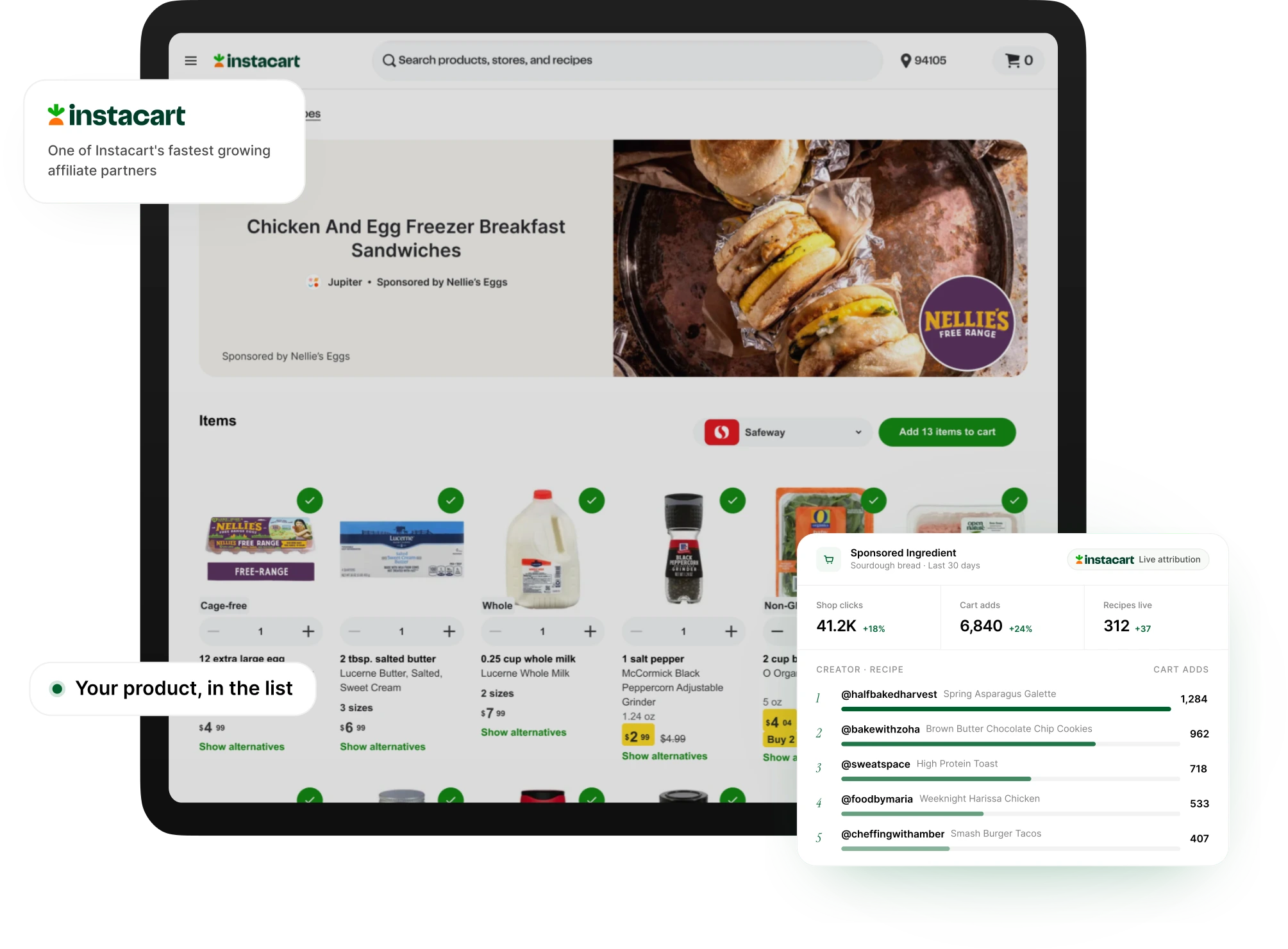
- On Jupiter, a sponsored ingredient appears in three places: the creator's recipe site, automatic Instagram DMs and the Jupiter app.
- Grocery commissions and sponsored placements stack, because the same shoppable ingredient list that carries the brand's product also earns commission when readers buy.
- US creators must disclose sponsored ingredients under the FTC Endorsement Guides, and a placement only works when the creator would cook with that product anyway.
On this page
▼
- What is a sponsored ingredient?
- How is a sponsored ingredient different from a sponsored post?
- Where does a sponsored ingredient appear?
- How do sponsored ingredients and grocery commissions stack?
- Worked example: which recipes are worth a slot
- How do you keep a sponsored ingredient honest?
- Sponsored ingredients for food creators: who is a good fit?
- How Jupiter fits
Sponsored ingredients for food creators are the quietest brand deal you can take. A brand pays to own one ingredient slot in a recipe you already publish, so its product is the one readers see and add to their cart. You don't shoot a new video or write a new post.
Our view: for most recipe creators, this beats a one-off sponsored post when the recipe already calls for that ingredient, and it's a bad deal when it doesn't. The rest of this post explains how the placement works on the creator side, how it stacks with grocery commissions, and how to tell the two cases apart.
What is a sponsored ingredient?
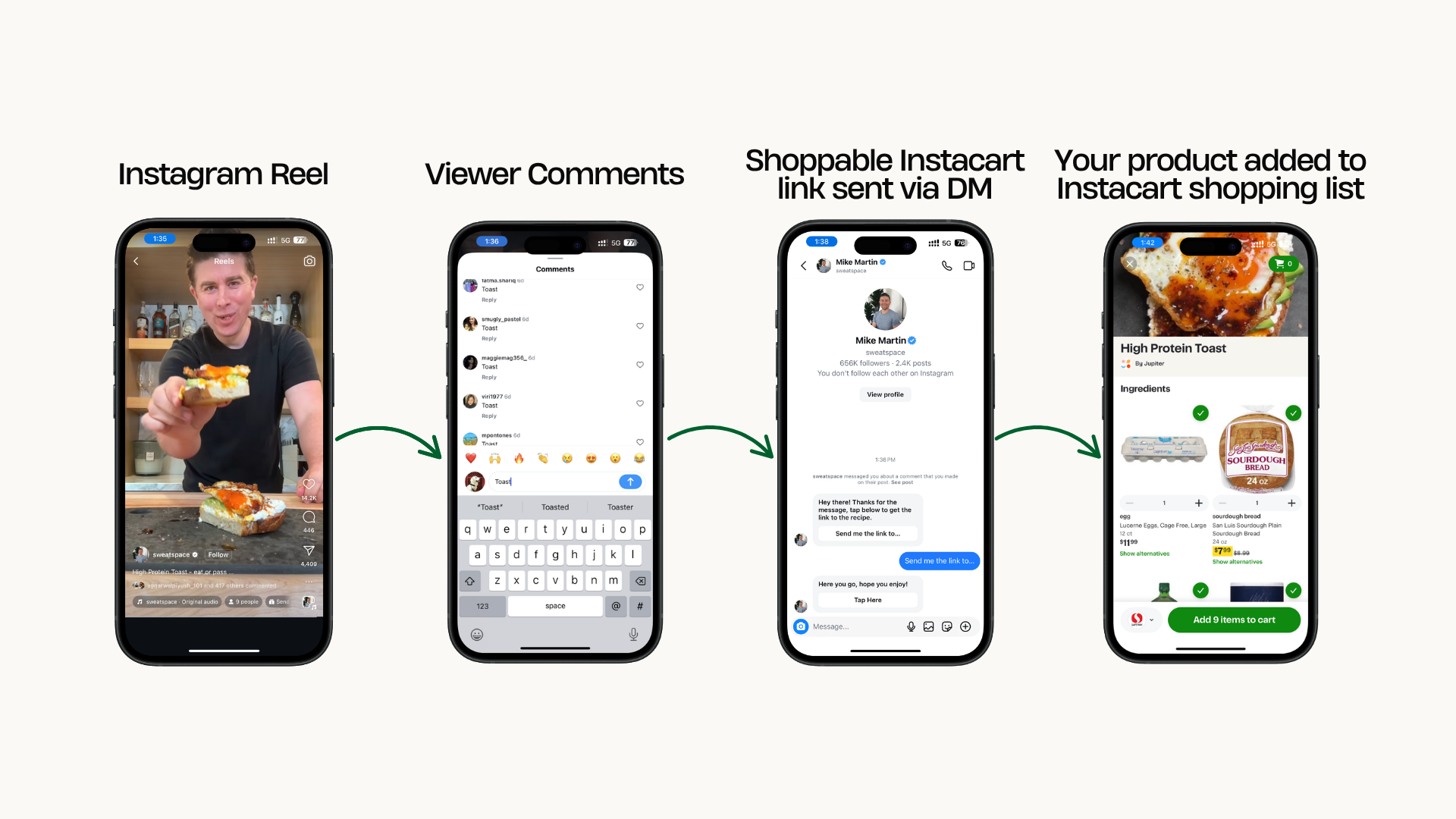
A sponsored ingredient is a paid placement where a brand's product becomes the named item in one slot of your recipe's shoppable ingredient list. If your avocado toast lists "1 loaf sourdough bread", a bakery brand can own that line, so readers who shop the recipe get that loaf in their cart.
The recipe stays yours. The method, the photos and the other ingredients don't change. Only one line in the list carries a brand.
How is a sponsored ingredient different from a sponsored post?
A sponsored post is new content made for a brand. A sponsored ingredient is a placement inside content you've already made. That difference changes the workload, the timeline and the risk.
Factor | Sponsored post | Sponsored ingredient |
|---|---|---|
New content needed | Yes, a new recipe, video or story set | No, uses recipes you already publish |
Brand brief and approval rounds | Usually | Rarely, since the recipe already exists |
Where it shows | The post and your social channels | The ingredient list on your recipe page, DMs and app |
How long it earns | Mostly the week it goes live | As long as the placement runs and readers shop |
Best fit | Launches and storytelling | Staple ingredients your recipes already use |
If you want to make a full sponsored recipe, our guide to sponsored recipe content that converts covers the brief and the shoot. This post stays on the placement model.
Where does a sponsored ingredient appear?
On Jupiter, a sponsored ingredient appears in three places, according to Jupiter's Sponsored Ingredients page:
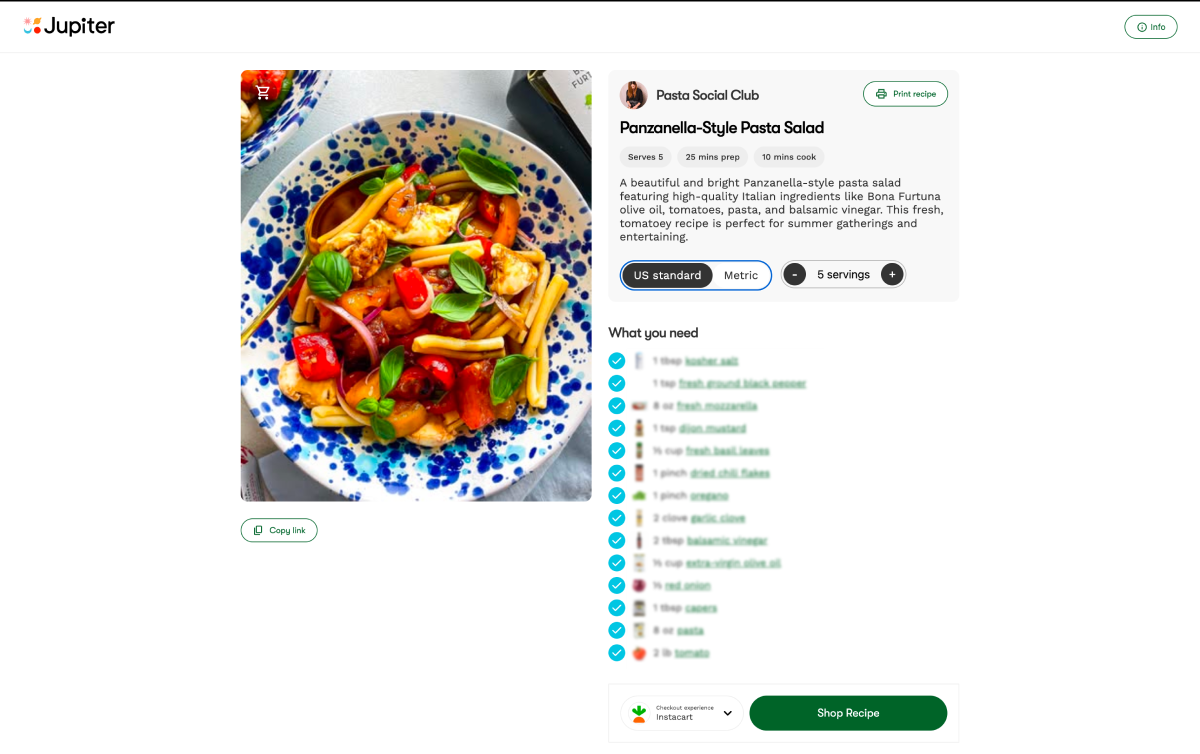
Your recipe website, in the shoppable ingredient list on the recipe page.
Automatic Instagram DMs, when a follower comments asking for the recipe and gets the link with a shoppable list.
The Jupiter app, where creator recipes have Instacart shopping built in.
The DM surface matters more than most creators expect. A follower who types "recipe please" under a Reel is already planning to cook. Our post on Instagram DM automation for food creators shows how those comment triggers work.
The same page says brands get one brand per ingredient category per month. For you, that means your sourdough slot won't show two competing loaves in the same recipe.

Let your existing recipes carry brand placements
Join Jupiter free. We build shoppable recipe pages from your posts, then book you on brand campaigns, including sponsored ingredients.
How do sponsored ingredients and grocery commissions stack?
They stack because both run on the same shoppable ingredient list. Readers who shop the recipe earn you a grocery commission on what they buy, and the sponsored slot means one of those items is a brand that paid for the spot.
Jupiter describes the two income lines for creators who apply to Jupiter: commission on what readers actually buy, attributed to the exact post, and brand campaigns where you're "paid for the post itself, or for making a brand's product the ingredient in your recipe."
Jupiter doesn't publish a payout split for sponsored ingredients as of October 2026. Ask for the terms of each campaign in writing before you accept it, and check whether the fee is flat or tied to performance.
Worked example: which recipes are worth a slot
This is an illustrative way to rank your own recipes, not a forecast. Open your analytics and list your top recipes by monthly views, then score each one on fit.
Recipe (illustrative) | Monthly views | Ingredient a brand could own | Fit score (1 to 3) | Worth offering? |
|---|---|---|---|---|
Avocado toast | 12,000 | Sourdough bread | 3 | Yes, the bread is the dish |
Weeknight chili | 8,000 | Canned beans | 3 | Yes, a swap changes nothing |
Lemon olive oil cake | 5,000 | Olive oil | 2 | Only if you'd use that oil |
Grandma's pierogi | 9,000 | Flour | 1 | No, readers expect your method |
Recipes with high views and a fit score of 3 are your first placements. A low score means the brand is buying a slot your readers will notice and resent.
For how grocery commissions work on their own, see Instacart affiliate for food creators.
How do you keep a sponsored ingredient honest?
Keep it honest by disclosing it every time and only accepting products you'd cook with anyway. US creators fall under the FTC's Endorsement Guides, which say a material connection must be disclosed clearly and conspicuously. Payment and free product both count, and the same section covers affiliate links on blogs.
A practical checklist before you accept a slot:
You've cooked the recipe with that exact product and it works.
The product is sold where your readers shop, or the cart will fail.
A plain label such as "Sponsored" sits next to the ingredient itself, with a second one in the footer if you like.
Any Reel or story that promotes the recipe also says it includes a paid placement.
You'd still publish the recipe the same way if the placement ended tomorrow.
This post doesn't cover what brands pay for a slot. That's a brand-side question, and our sister site explains how ingredient category exclusivity works for brands.
Sponsored ingredients for food creators: who is a good fit?
Creators whose recipes lean on everyday grocery staples are the best fit: bread, pasta, beans, broth, eggs, dairy, oils and sauces. A brand can own one of those lines without changing the dish.
Creators who mainly post restaurant reviews or highly regional cooking with hard-to-find ingredients will see fewer slots, since the product has to be in stock where readers shop.
Follower count matters less than you'd think. Jupiter says there's no follower minimum, and brands look at whether your audience actually cooks. Our guide to how CPG brand partnerships work for food creators covers what brands check first.
Across Jupiter's creator network, recipes drive 10M+ shop clicks a year. Every one of those clicks passes through an ingredient list, which is where a sponsored ingredient lives.
How Jupiter fits
Jupiter builds or connects your recipe site, turns your posts into shoppable recipe pages, and sends recipes by DM to followers who ask. Sponsored ingredients ride on that setup, so there's nothing extra to build. Jupiter isn't exclusive, so you keep your own brand relationships and your blog.
If you're working toward a premium ad network as well, our Mediavine requirements guide shows the traffic bar. Sponsored ingredients don't wait for it.
Put your best recipes to work
Join Jupiter free, with no follower minimum, and get shoppable recipe pages, grocery commissions and brand campaigns in one place.
FAQs
Quick answers to common questions.
What is a sponsored ingredient?▼
A sponsored ingredient is a paid placement where a brand's product becomes the named item in one slot of a recipe's shoppable ingredient list. When readers shop the recipe, that product is the one that goes in their cart.
How do food creators get paid for sponsored ingredients?▼
Jupiter says creators can be paid for making a brand's product the ingredient in their recipe, on top of commission on what readers buy. Jupiter's public pages don't list a payout split as of October 2026, so confirm the terms for each campaign before you accept it.
Is a sponsored ingredient the same as a sponsored post?▼
No. A sponsored post is new content made for a brand, with its own brief, deliverables and approval rounds. A sponsored ingredient sits inside recipes you already publish, so there's usually no extra shoot.
Do I have to disclose a sponsored ingredient?▼
Yes, if you're paid or get free product. The FTC Endorsement Guides say a material connection must be disclosed clearly and conspicuously, and affiliate commissions count too. Put a plain label next to the ingredient and in any post that promotes the recipe.
Can I turn down a sponsored ingredient?▼
You should turn down any product you wouldn't cook with or that changes the recipe's result. A swap that makes your dish worse costs you reader trust, which is worth more than one placement.
Related Posts
Browse more from our blog.