Food Brands That Work With Influencers in 2026 (and How to Get Picked)
A working list of food brands with open creator programs, what they actually offer, and how to find and land brand partnerships as a food creator.
Food brands with open creator programs in 2026 include Almond Roca, Munch Better, Lexington Bakes, Pamela's Products, Jacobsen Salt Co. and Seven Sons, with Organic Valley and Cabot reopening for 2027. Most pay in product, store credit or 5% to 15% commission rather than cash, and many prefer micro creators with a clear niche who already use the product.
Key takeaways
- Most food brands don't advertise creator programs, so check their site footer, affiliate networks like Awin and paid partnership tags in your niche.
- Many programs pay in product, store credit or commission rather than cash, so read each program page before you apply.
- Snack and pantry affiliate programs on Awin mostly pay 5% to 15% with a 30-day cookie, and Jacobsen Salt Co. pays up to 20%.
- You don't need a big following: brands pick creators who already use the product, post on a steady schedule and show it cooked in real recipes.
- Programs open and close fast. Two snack brands left Awin while we were writing this, so check every link before you apply.

Plenty of food brands work with creators. The hard part is finding the ones taking people on right now, and knowing what you'll get in return. Some pay cash. A lot pay in product, store credit or commission. Hidden Valley offered four fans a paid summer traveling Europe.
This is a working list of food brands with open creator programs as of November 2026, how to spot brands that pay creators even when they don't advertise it, and what gets you picked. Programs open and close all the time (two snack brands we planned to list left Awin while we were writing this), so check each link before you apply.
How to tell if a food brand works with creators
Most brands don't put "we work with influencers" on their homepage. Four quick checks:
Look at the footer. Search the brand's site for "ambassador," "affiliate," "creators" or "partners." That's where application pages usually live.
Check affiliate networks. A lot of snack and pantry brands run their affiliate programs through networks like Awin. If a brand has a listing there, it wants creators who can drive sales.
Watch the paid partnership tags. Scroll your niche on Instagram and TikTok and note which brands show up with "Paid partnership" or #ad. Tools like Modash track this publicly. Its Siete Foods breakdown, for example, counts 188 sponsored posts across TikTok, Instagram and YouTube in the last 12 months.
Look at what you already buy. Brands care most about creators who already use their products. The brand you've cooked with for two years is your easiest pitch.
Food brands with open creator programs right now
These all had live program pages when we checked in late November 2026.
Brand | Program | What you get | Good fit if |
|---|---|---|---|
Founding ambassador cohort, one year | Monthly product shipment, welcome kit, discount code for your audience | You have 1K to 50K Instagram followers and post food, lifestyle, parenting, gifting or regional content | |
Affiliate (Awin) | 10% of every validated sale, 30-day cookie | You make high-protein or fitness food content | |
Affiliate (Awin) | 10% on orders under $50, 12% at $50 to $99, 15% at $100+, 30-day cookie; product seeding for review, recipe and gifting content | You make protein snack or dessert content | |
Affiliate (Awin) | 5% commission, 30-day cookie | You make gluten-free content | |
Affiliate (Awin) | 20% on select products, 15-day cookie | You cook or bake with finishing salts and seasonings | |
Farm Ambassador (affiliate) | $100 in store credit when you're accepted, then $30 in store credit for every order you refer | You cook with pasture-raised meat and are happy to film simple cooking or unboxing clips within 14 days of your box arriving |
A few more are worth bookmarking even though they're between rounds:
Organic Valley's 2026 ambassador applications are closed. It says to watch its newsletter and socials for 2027 applications.
Cabot Creamery's 2026 program is closed and will reopen for 2027.
If you're a college student, Poppi runs a paid student ambassador program. It's competitive: Poppi hired 250 ambassadors for fall 2026, and more than 11,000 people applied. It has recruited for both spring and fall semesters, so watch for the next round.
Hidden Valley ran a paid summer 2026 "Ranch-bassador" job with seven weeks of expenses-paid travel in Europe. Big brands run one-off gigs like that, so follow the ones you love.
If you also post about restaurants, chains run programs too. Sweetgreen's ambassador program gives regular credit, merch and invites to exclusive events.
Tired of waiting for applications to open?
Jupiter books creators onto campaigns from 60+ food and beverage brands all year. Applying takes about two minutes, and you'll hear back within 24 hours.
Brands to study before you pitch
Some of the most active creator brands in food don't list an open creator application for everyday food creators. They find people through agencies, platforms and their own social teams. We've broken down how several of them run their programs:
Read the breakdown before you pitch any of them. You'll see what kind of creator they already pick and which posts they repost, and you can shape your pitch around that.
What food brands actually look for
You don't need a huge following. When we read through these programs, the same things kept coming up:
You already use the product. Almond Roca's page asks for creators who already know and love the brand. Organic Valley says the same about its ambassadors. It shows in the content.
A clear niche. "Gluten-free baking" or "15-minute weeknight dinners" is easier for a brand to say yes to than "food."
Consistent posting. Many programs set a posting cadence. Almond Roca asks for one original post a month. If you post twice a quarter, you're unlikely to get picked.
Content that shows the product cooked. Food brands want to see their product in a real recipe, not just held up to the camera.
No competitors in the feed. Some programs ask you not to post competing brands while you're in. Almond Roca rules out competitor candy for the year.
If you want help with the pitch itself, our guide on how to get brand deals as a food creator walks through rates, media kits and negotiation. For the kit, see how to create a food blogger media kit.
No follower minimum
Brands on Jupiter regularly book nano and micro creators. What matters is recipe content your audience actually cooks from.
Know how you're getting paid
"Brand partnership" covers very different deals. Before you say yes, check which one you're signing up for.
Type | How it pays | What to watch |
|---|---|---|
Ambassador program | Usually product, store credit or a discount code; sometimes cash | Post requirements and exclusivity |
Affiliate program | Commission on sales through your link or code | Commission rate, cookie length, returns policy |
Paid campaign | Flat fee per post or package | Usage rights and how long the brand can run your content |
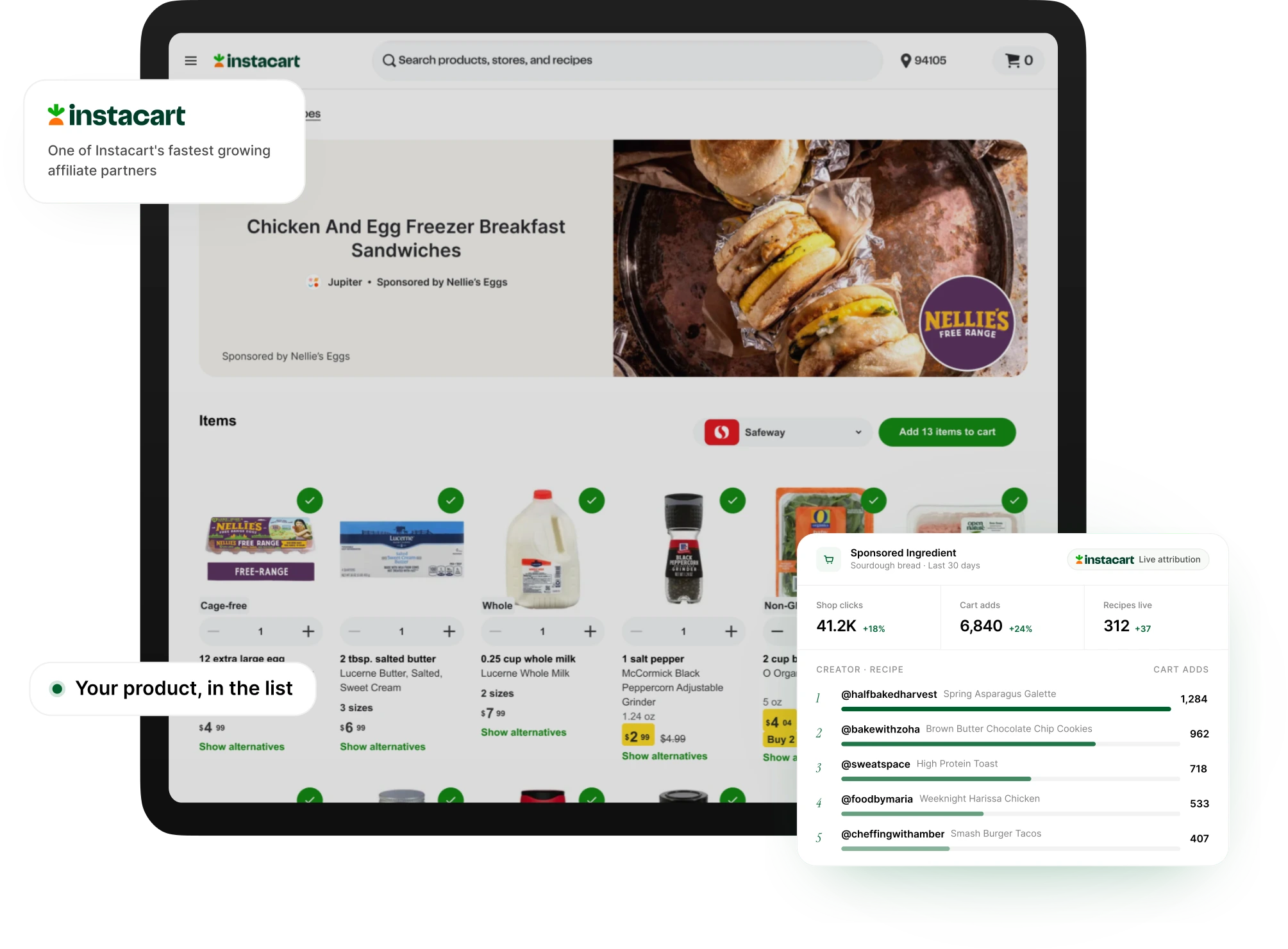
Sponsored ingredient placement | Paid when readers shop your recipe with the brand's product in it | Fit with your recipe and audience |
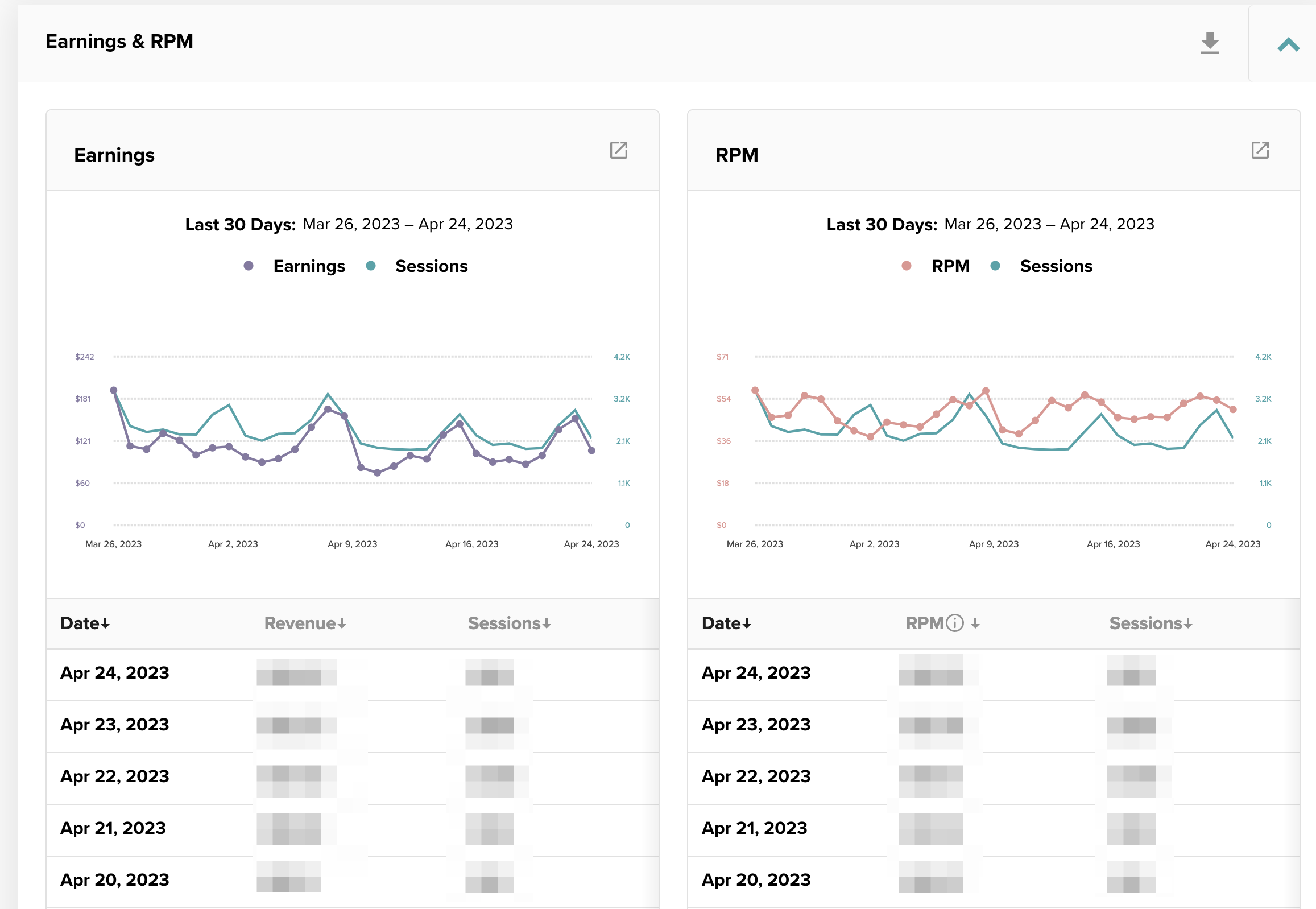
Most of the snack and pantry affiliate programs we looked at on Awin pay 5% to 15% with a 30-day cookie. That only adds up if your audience actually buys what you cook with. If they do, affiliate income can beat a one-off post.
Skip the cold pitch
Cold pitching can work, but it's slow, and a lot of pitches never get an answer.
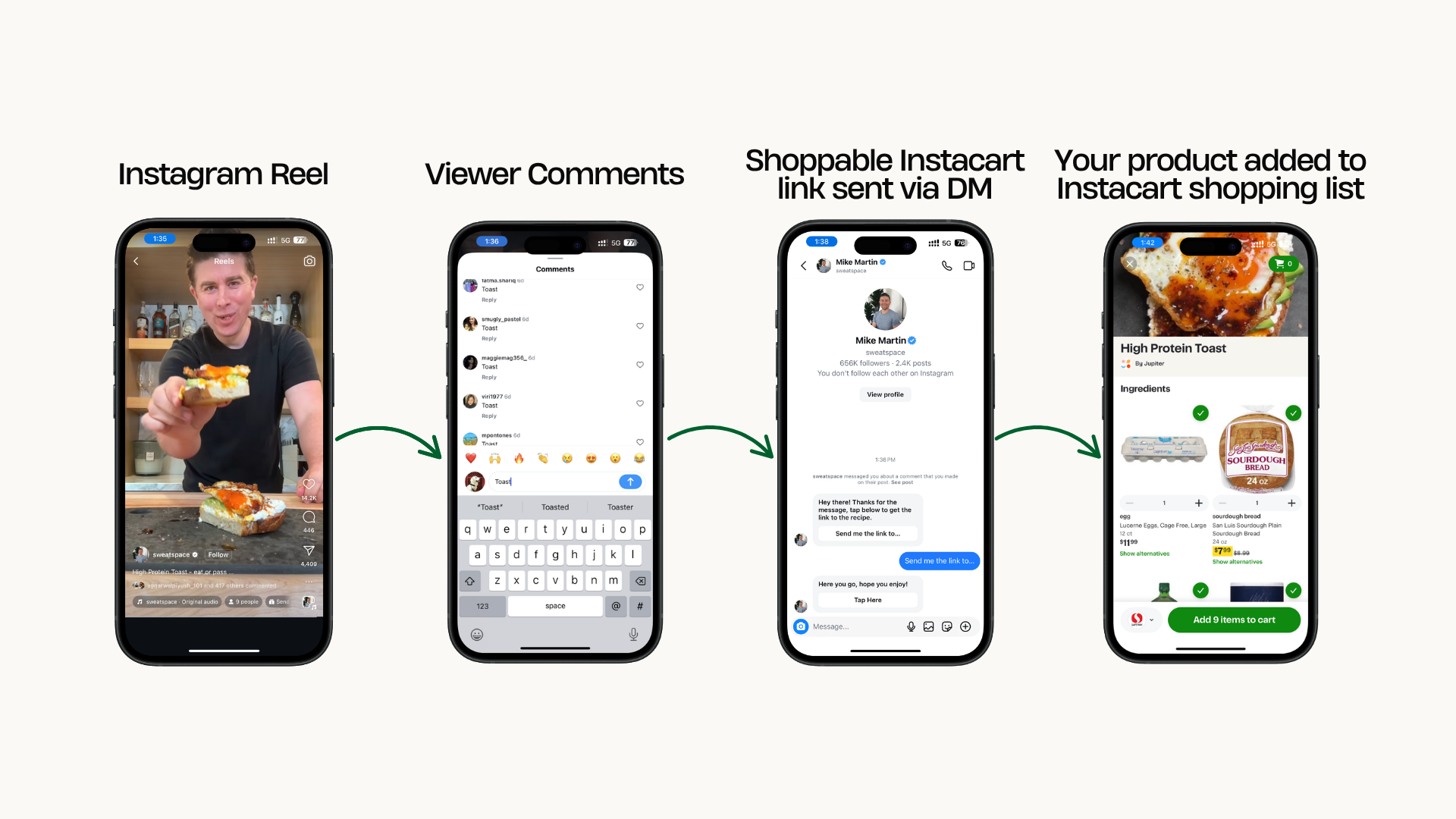
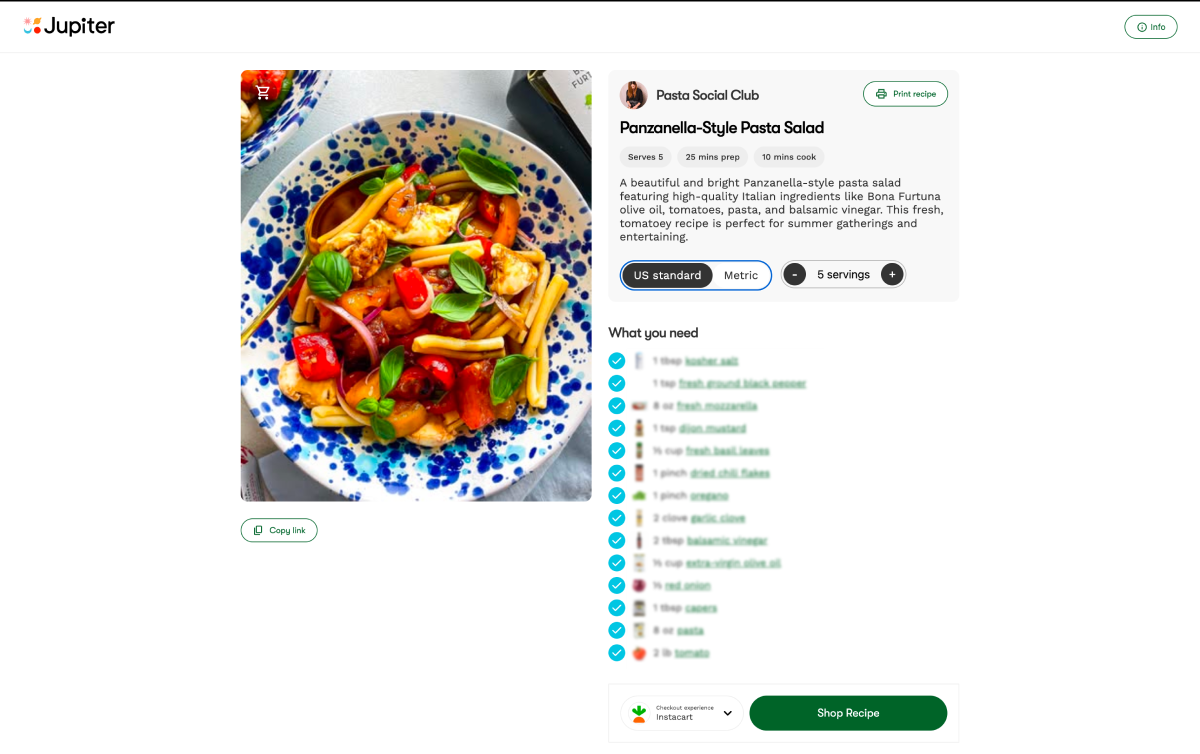
Jupiter works the other way around. It sells campaigns to 60+ food and beverage brands, then books creators from its network of 1,400+ vetted recipe creators onto them. Through Sponsored Ingredients, brands pay to put their product in the ingredient list of recipes you've already published, and you earn per shop click without filming anything new. With Instacart affiliate links, you also earn commission on your reader's whole grocery cart, not just your recipe's ingredients.
If you'd rather have brands find you, apply to join Jupiter.
$3M+ paid to food creators so far
Brand deals, grocery commissions, ad revenue and memberships, all from one free platform. No exclusivity, so you keep the deals you already have.
More for creators: How to get brand deals as a food creator · How to land CPG brand deals · Real food blog income reports
Tags
- food brand partnerships
- brand deals
- food influencer
- ambassador programs
- affiliate programs
- food creators
FAQs
Quick answers to common questions.
Do food brands work with micro influencers?▼
Yes, and a lot of them prefer it. Almond Roca's 2026 ambassador cohort, for example, is only open to creators with 1K to 50K Instagram followers. Smaller food creators with an engaged, specific audience often get picked over bigger accounts.
How do I find food brands looking for influencers?▼
Check the footer of brands you already buy for an ambassador, affiliate or creator page. Search affiliate networks like Awin for food brands. Look at who's tagging paid partnerships in your niche. Or join a creator network like Jupiter, where brands come to you.
Do food brand ambassador programs pay?▼
Many pay in product, store credit or discount codes rather than cash. Affiliate programs pay a commission on sales. Paid campaigns pay a flat fee, and sponsored ingredient placements pay when readers shop your recipes. Read the program page closely so you know which one you're signing up for.
What commission do food affiliate programs pay?▼
Most of the snack and pantry programs we looked at on Awin pay between 5% and 15% of the sale, usually with a 30-day cookie. Jacobsen Salt Co. goes higher, with 20% on select products and a 15-day cookie.
Do I need a media kit to work with food brands?▼
For application-based programs, usually not. For direct pitches and paid campaigns, yes. A simple one-page kit with your niche, audience, engagement and a few past examples is enough.
More for creators
Browse more from our blog.